Understanding Your Komondor's Coat: The Complete Guide to Those Incredible Cords
Understanding Your Komondor's Coat: The Complete Guide to Those Incredible Cords
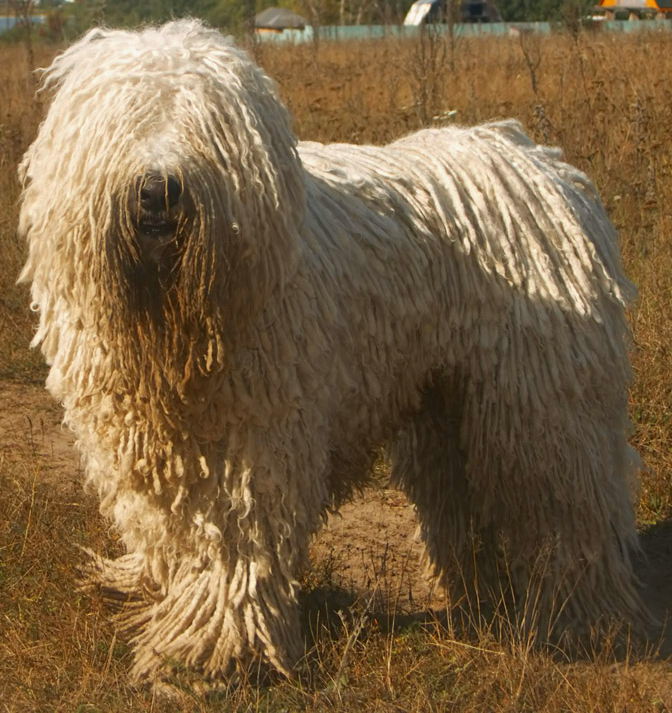
The Komondor's coat is arguably the most dramatic and recognizable in the entire dog world. Those thick, rope-like cords that cascade from the body to the ground are not just a fashion statement -- they are a centuries-old functional design that protected these livestock guardian dogs from predators, weather, and the teeth of wolves on the Hungarian plains.
Understanding how this coat works, how it develops, and what it needs from you is the difference between a healthy, comfortable Komondor and one suffering under its own fur.
The Architecture of a Corded Coat
The Komondor's coat is made of two distinct layers:
The undercoat: Soft, fine, and dense. This is the insulation layer. It provides warmth in winter and, counterintuitively, some heat protection in summer by creating an air barrier against the body.
The outer coat: Coarser, longer, and slightly wavy. This layer grows through and past the undercoat.
As the dog matures, these two layers begin to intertwine. The softer undercoat wraps around the coarser outer hairs, and over time, these tangles tighten and elongate into the distinctive cords. Each cord is essentially a tightly felted rope of combined hair types.
A fully mature Komondor can have over 2,000 individual cords. The cords grow continuously throughout the dog's life, with some dogs developing cords that reach the ground at four to five years of age.
The Cord Formation Timeline
This is where most new Komondor owners need the most guidance. Cord formation is not instant, and it does not happen without human help.
Birth to 8-9 months: The puppy coat is soft, fluffy, and loosely wavy. It looks nothing like the adult coat. Some breeders gently separate the puppy coat into sections to guide future cord placement, but this is not strictly necessary.
9-14 months: The adult coat starts growing in. The texture changes -- you will notice coarser hairs pushing through the soft puppy coat. This is when the tangling begins. The coat feels clumpy and messy. This is normal.
14-24 months: Active cord formation. The coat tangles aggressively, and this is the critical period where human intervention determines the outcome. The tangles must be separated by hand into individual cords of consistent thickness -- roughly pencil to thumb width. Without separation, the tangles fuse into large, flat mats.
The Komondor Club of America emphasizes that the formation period requires "many hours of dedicated work" and recommends checking and separating cords at least weekly during this phase.
2-3 years: Cords are established and beginning to lengthen. The coat still needs regular separation checks but the intensive formation work is done.
3+ years: Cords grow slowly in length. Maintenance shifts to hygiene, bathing, drying, and skin checks.
How Cords Protect the Komondor
The corded coat was not developed for the show ring. It was developed for working in the elements.
- Predator defense: The thick cords act as armor. A wolf biting a Komondor's neck would get a mouthful of felt rather than flesh. This is why the cords are densest around the neck and chest.
- Weather resistance: The cords insulate against cold and rain. The outer surface of each cord sheds water while the air spaces between cords provide insulation.
- Sun protection: The dense covering protects the skin from UV radiation, which is particularly important for the Komondor's typically pale skin.
- Camouflage: The white, corded coat allowed the Komondor to blend in with the sheep flock it guarded, giving it the element of surprise against predators.
The Drying Reality
This is the single most important practical aspect of owning a Komondor's coat, and there is no sugarcoating it: a wet Komondor takes an extraordinarily long time to dry.
Each cord is a dense, felted rope that absorbs water throughout its entire length and diameter. The outer surface can feel dry while the core remains wet for hours. Professional groomers with high-velocity dryers report two to four hours of active drying time for a Komondor with medium-length cords. Air-drying can take six to twenty-four hours depending on cord length, humidity, and airflow.
A Komondor that is not thoroughly dried will develop problems. Mildew grows at the base of the cords where moisture lingers. Bacterial infections thrive in the warm, damp environment between cords. The musty smell that people associate with Komondors is not inherent to the breed -- it is the smell of a coat that was not dried properly.
One practical approach many experienced Komondor owners take: maintain cords at a moderate length (6-10 inches) rather than allowing them to reach the ground. Shorter cords dry faster, collect less debris, and are easier to maintain while still providing the coat's protective benefits.
Climate Considerations
The Komondor's coat was designed for the Hungarian plains -- hot summers, cold winters, and moderate humidity. Different climates affect the coat differently:
- Hot, humid climates are the most challenging. Humidity slows drying, increases mildew risk, and makes the coat less comfortable for the dog. Komondors in the American South need more frequent professional grooming and shorter cords.
- Dry climates are generally favorable. Lower humidity means faster drying and less risk of fungal issues. However, extreme dryness can make cords brittle.
- Cold climates are where the coat performs best. The insulating properties keep the dog warm, and low humidity makes maintenance easier.
Common Coat Problems and Solutions
Cord Fusion
Problem: Adjacent cords merge together at the base or along their length. Cause: Insufficient separation during formation or between maintenance checks. Solution: Carefully tear fused cords apart from the tips toward the skin. If fusion is severe and reaches the skin, have a professional handle it to avoid causing pain.
Mildew and Odor
Problem: Musty smell, visible discoloration at cord bases. Cause: Incomplete drying after bathing or swimming. Solution: Thorough drying with high-velocity dryer. In severe cases, an antifungal shampoo may be needed. Going forward, never let the dog air-dry without fan assistance.
Debris Collection
Problem: Leaves, twigs, burrs, and dirt embedded in cords. Cause: Normal outdoor activity. Solution: Regular visual inspection and manual removal. Keeping cords at a moderate length reduces debris collection.
Skin Issues
Problem: Hot spots, bacterial infections, or yeast infections under the cords. Cause: Moisture retention, insufficient airflow, or missed hygiene. Solution: Professional skin inspection at every grooming appointment. Part cords at home weekly to spot-check the skin.
A Fact That Surprises Most People
Here is something even many Komondor owners do not know: despite appearances, the Komondor's corded coat actually sheds very little. The shed hair gets trapped within the cords rather than falling out, which is what causes the cords to thicken and lengthen over time. A well-maintained Komondor leaves almost no loose hair on furniture or clothing. According to veterinary dermatology research, corded breeds release approximately 65-70% less loose hair into the home environment compared to standard double-coated breeds of similar size.
The trade-off is obvious: the hair that would have ended up on your couch stays in the cords, which is why they grow continuously and require ongoing maintenance.
Living With the Coat
Owning a Komondor's coat means accepting a lifestyle adjustment. You need a drying strategy. You need a groomer (or the skills and equipment to handle it yourself). You need patience during the formation period. And you need to accept that your dog is going to look like a walking mop and strangers are going to want to touch it.
But that coat is doing exactly what it has done for centuries -- protecting a magnificent guardian breed from everything the world throws at it. Understanding and maintaining it properly is one of the most rewarding aspects of Komondor ownership.
PawOps helps grooming salons price corded breed care accurately using time-based and condition-based assessment -- because a Komondor grooming session bears no resemblance to a standard breed groom, and pricing should reflect the skill and time involved. Use our free pricing calculator →