Understanding Your French Bulldog's Coat: What Every Owner Should Know
Understanding Your French Bulldog's Coat: What Every Owner Should Know
The french bulldog coat is deceptively simple. Short, smooth, fine — it looks like the easiest coat in the dog world. And the hair itself is easy. But with Frenchies, the conversation isn't really about the coat. It's about what's underneath it.
Coat Structure: Simple on Top
French Bulldogs have a single-layer coat of short, fine hair. No undercoat. No feathering. No double-coat complications. The hair lies flat against the body and rarely tangles or mats.
This simplicity is real — you won't need a slicker brush arsenal or dematting tools. A rubber curry brush or grooming mitt handles the coat itself perfectly well.
But simplicity of coat does not mean simplicity of care. The skin beneath that short coat is where the real work lives.
Shedding: More Than You'd Expect
For a short-coated breed, Frenchies shed a surprising amount. They're not heavy shedders like double-coated breeds, but they're not the minimal-shedding breed many buyers expect.
Frenchies shed lightly year-round with a moderate increase in spring and fall. The short hairs are particularly stubborn — they embed in fabric, upholstery, and clothing more stubbornly than longer hairs that sit on the surface.
A surprising fact: French Bulldog hair, because of its short length and stiffness, can actually embed in fabric fibers like tiny needles. This is why Frenchie owners often find that lint rollers work poorly — the hairs are stuck in the weave, not sitting on top. A rubber brush or damp cloth works better on furniture.
Skin: Where the Real Story Is
French Bulldog skin is:
Sensitive: Reacts to harsh products, environmental allergens, and even friction
Fold-heavy: Deep wrinkles on the face, rolls on the body, and a tail pocket create hidden environments where problems develop
Allergy-prone: The breed has one of the highest rates of atopic dermatitis in the canine world
Thin: Less protective than many breeds, making Frenchies more susceptible to cuts, irritation, and sun damage
Understanding the Wrinkles
Frenchie wrinkles aren't just skin folds — they're microenvironments. Each fold creates:
- A warm, dark, moist space with limited airflow
- A trap for food, water, tears, saliva, and environmental debris
- An ideal growth medium for bacteria and yeast
Nose rope: The fold above the nose and below the eyes. This is the most visible and usually the first to develop problems.
Lip folds: Creases alongside the mouth that trap saliva and food.
Body folds: Some Frenchies (especially those carrying extra weight) develop folds along the body.
Tail pocket: The crevice where the tail meets the body. Deep in some dogs, shallow in others. Always needs attention.
Color Variations and Coat Care
French Bulldogs come in several colors, and some affect care considerations:
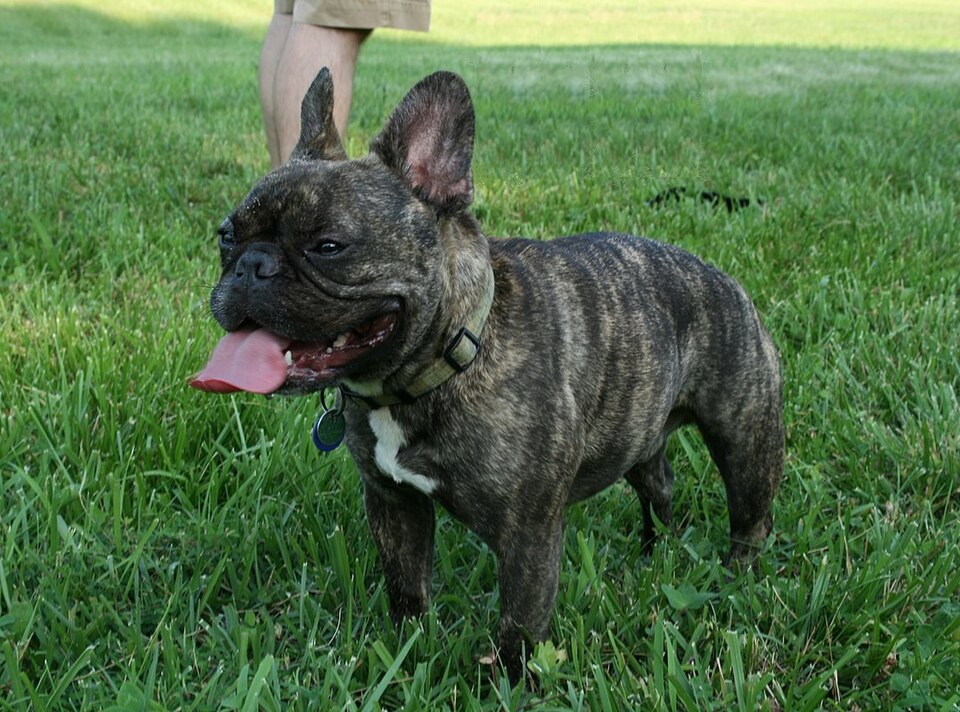
Brindle: Dark base with lighter streaking. Standard care.
Fawn: Light tan to deep gold. Shows dirt more readily.
Cream/White: Most visible tear and wrinkle staining. Higher maintenance for cosmetic appearance.
Blue/Lilac: These dilute colors are associated with Color Dilution Alopecia (CDA) — a condition where hair shafts are structurally weak and break easily, causing patchy hair loss and dry, flaky skin. If your Frenchie has a dilute coat color and is experiencing hair thinning, discuss CDA with your veterinarian.
Merle: This pattern brings its own health considerations beyond coat care.
What to Tell Your Groomer
Communication matters more with Frenchies than with most breeds:
Home Care Routine
Daily
- Wipe facial folds with a clean, damp cloth or unscented wrinkle wipe
- Dry folds thoroughly after cleaning — moisture left behind defeats the purpose
- Quick visual check of ears for debris or redness
- Wipe around eyes if tear staining is present
Every 2-3 Days
- Clean the tail pocket (if your dog has one)
- Run a rubber brush over the coat to remove loose hair
- Check between toes for redness or debris
Weekly
- Full ear cleaning with a vet-approved ear solution
- Check all skin folds for redness, odor, or discharge
- Inspect belly and armpits — common allergy hot zones
Monthly
- Assess overall skin condition
- Note any changes in coat density, texture, or coverage
- Review product effectiveness — is the current routine working?
When Coat Changes Signal Problems
Watch for:
- Patchy hair loss: Could indicate allergies, CDA, demodex mites, or fungal infection
- Excessive flaking: May signal dry skin, allergies, or seborrhea
- Greasiness: Could indicate sebaceous gland issues or yeast overgrowth
- Persistent redness in folds: Fold dermatitis requiring veterinary attention
- Coat thinning along the flanks: May suggest hormonal imbalances
---
Ready to streamline your grooming workflow? PawOps Board Manager helps salons track every French Bulldog from check-in to pickup with real-time visibility. Start your free 30-day trial →
Related Reading: