Understanding Your Cavapoo's Coat: What Every Owner Should Know
Understanding Your Cavapoo's Coat: What Every Owner Should Know
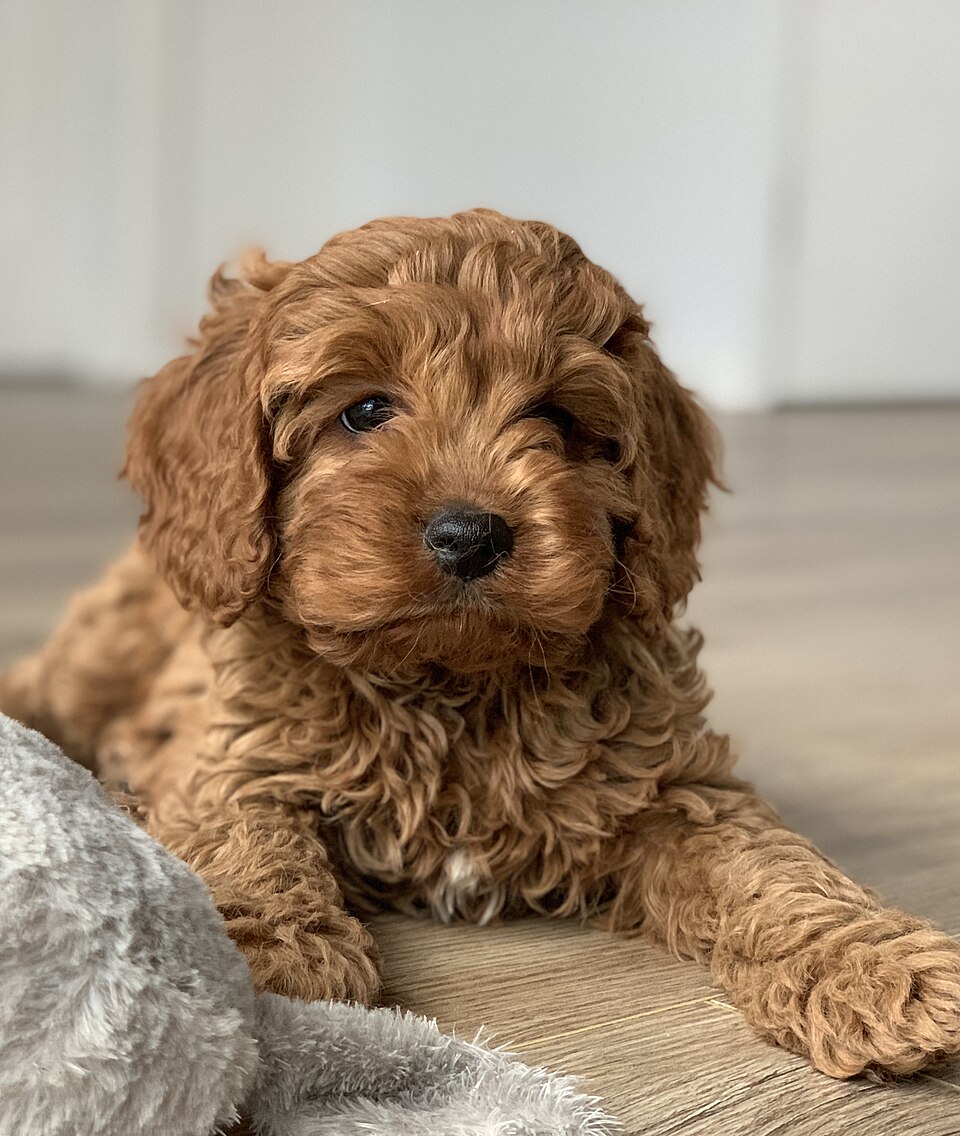
The Cavapoo coat is one of the main reasons people fall in love with the breed. It's soft, it's fluffy, and it gives every Cavapoo that irresistible teddy bear quality. But behind all that cuteness is a coat that's more complex than it looks -- and understanding it is the key to keeping your Cavapoo healthy and comfortable.
Where the Cavapoo Coat Comes From
A Cavapoo is a cross between a Cavalier King Charles Spaniel and a Poodle. These two breeds have very different coat profiles:
- Cavalier King Charles Spaniel: Silky, medium-length, single-layer coat. Sheds moderately. Naturally straight with some wave, particularly around the ears and chest feathering.
- Poodle: Dense, tightly curled, single-layer coat. Sheds very little. Grows continuously and requires regular cutting.
The Three Cavapoo Coat Types
1. Curly Coat
Most similar to the Poodle parent. Defined curls throughout the body.
- Lowest shedding of the three types
- Highest matting risk -- curls trap dead hair and tangle easily
- Needs professional grooming every 4 weeks
- Requires daily brushing at home
- Grows continuously and needs regular haircuts
2. Wavy (Fleece) Coat
The most common Cavapoo coat type. Soft waves that give the breed its signature look.
- Low to moderate shedding
- Moderate matting risk -- easier to manage than curly but still tangles
- Professional grooming every 4-6 weeks
- Brush 3-4 times per week
- The classic "teddy bear" texture most people picture
3. Straight (Silky) Coat
Closest to the Cavalier parent. Smooth, silky hair that lies flat or has a very gentle wave.
- Sheds the most of the three types
- Least prone to matting
- Professional grooming every 6-8 weeks
- Brush 2-3 times per week
- Doesn't grow as long, so fewer haircuts needed
The Cavapoo Coat Is Influenced by More Than You Think
Here's something that sets Cavapoos apart from other doodle breeds: the Cavalier parent contributes a finer, silkier hair texture that affects the entire coat, even in curlier Cavapoos.
This means:
- Cavapoo curls tend to be softer and looser than Poodle curls or other doodle curls
- The coat feels more luxurious but is also more fragile
- Mats in a Cavapoo can form tighter and closer to the skin because the fine hair weaves together more easily
- Harsh brushing can damage the coat more than it would on a coarser-haired doodle
The Puppy-to-Adult Coat Transition
Like all doodle breeds, Cavapoos go through a coat change. It typically happens between 5 and 10 months old -- slightly earlier than larger doodles because Cavapoos mature faster.
During the transition:
- The baby-soft puppy coat starts to shed
- The thicker, denser adult coat grows in underneath
- Both textures exist at the same time, creating maximum tangle potential
- Mats can form within 24-48 hours during the worst of it
- Brushing that used to take 5 minutes now takes 15-20
Don't panic if your puppy's coat looks awkward during the change. It's temporary. But do increase both your home brushing and your grooming appointments during these months.
How Generation Affects Your Cavapoo's Coat
| Generation | Cross | Coat Expectation | |------------|-------|-----------------| | F1 | Cavalier x Poodle | Most unpredictable -- any coat type | | F1B | F1 Cavapoo x Poodle | Usually wavy to curly, less shedding | | F1BB | F1B x Poodle | Almost always curly, minimal shedding | | F2 | F1 x F1 | Highly variable | | Multigen | Various | Depends on breeder selection |
F1B Cavapoos dominate the market because they offer the best balance of low shedding and manageable grooming. But "low shedding" doesn't mean "low maintenance" -- the less a Cavapoo sheds, the more grooming the coat typically needs.
Caring for Your Cavapoo's Coat at Home
Your daily and weekly routine is the difference between a coat that stays manageable and one that requires an emergency shave.
Tools you need:
- Small slicker brush: Sized for a small dog. Oversized brushes miss areas on compact bodies.
- Fine-tooth metal comb: For checking that your brushing reached the skin. If the comb snags, there's a tangle hiding.
- Detangling spray: Makes brushing gentler and more effective.
- Soft bristle brush: For the face and ears, where the hair is finer and more delicate.
- Curly: Brush every day, 10-15 minutes. Line-brush in sections from the skin outward.
- Wavy: Brush 3-4 times per week, 8-12 minutes. Focus on friction areas.
- Straight: Brush 2-3 times per week, 5-10 minutes. Use the comb on feathering areas.
Check these spots every time you brush, even if you don't do a full-body session.
The Cavalier Influence: What Makes Cavapoo Coats Unique
Compared to other doodle breeds, Cavapoo coats have some distinctive characteristics thanks to the Cavalier parent:
- Ear feathering: Many Cavapoos develop longer, silkier hair on and around the ears. This looks gorgeous but mats very easily.
- Chest feathering: A longer, flowing section on the chest that can tangle if not brushed regularly.
- Finer texture overall: Even curly Cavapoos tend to have a softer, finer curl than, say, a Goldendoodle or Labradoodle.
- More prone to tear staining: The Cavalier influence on face structure means more Cavapoos deal with tear staining than many other doodle breeds.
Seasonal Coat Changes
Even low-shedding Cavapoos can show seasonal coat changes:
- Spring: Some additional shedding as the coat lightens for warmer weather. Increase brushing frequency.
- Summer: Consider a shorter cut for comfort. Make sure the coat isn't too tight to the skin to avoid sunburn.
- Fall: The coat may thicken slightly. Stay on top of brushing as density increases.
- Winter: The coat provides natural insulation. Keep it well-maintained but don't over-bathe -- dry winter air plus frequent bathing strips natural oils.
Common Cavapoo Coat Issues and Solutions
Know Your Coat, Love Your Dog
Your Cavapoo's coat is a direct reflection of the care they receive. A shiny, tangle-free coat means a comfortable, healthy dog. A matted, neglected coat means a dog in discomfort.
Learn your Cavapoo's specific coat type. Build a brushing routine that works for both of you. Partner with a groomer who understands the breed's unique needs. And don't be caught off guard by the puppy coat transition -- it's coming, and preparation makes all the difference.
The Cavapoo coat takes work. But when it's properly cared for, it's one of the most beautiful, touchable coats in the dog world -- and your Cavapoo will feel as good as they look.
---
Ready to streamline your grooming workflow? PawOps Board Manager helps salons track every Cavapoo from check-in to pickup with real-time visibility. Start your free 30-day trial →