Why Your Bull Terrier Needs Professional Grooming (That Egg Head Needs More Than a Wipe-Down)
Why Your Bull Terrier Needs Professional Grooming (That Egg Head Needs More Than a Wipe-Down)
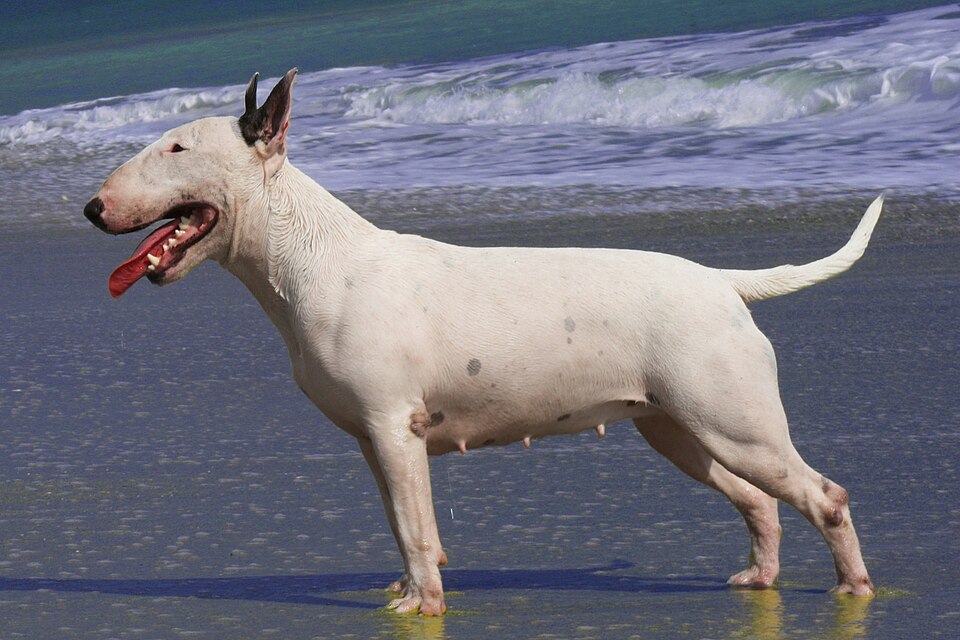
Bull Terriers are the clowns of the dog world -- muscular, goofy, and built like a tank with an egg-shaped head. They've got a short, flat, glossy coat that screams "zero maintenance." And honestly, compared to a Poodle or a Sheltie, they are low-maintenance. But zero maintenance? Not even close.
Bull Terrier professional grooming addresses breed-specific needs that most owners don't think about until problems show up.
The Short Coat Illusion
Bull Terriers have a short, flat, harsh-textured coat that lies close to the body. It feels hard and glossy to the touch -- like polished leather when the dog is in good condition. This coat type creates an illusion of needing nothing.
But underneath that sleek exterior:
- Bull Terriers shed more than you'd expect
- Their skin is surprisingly sensitive
- The breed is prone to specific skin and coat conditions
- Those thick, dark nails are a trimming challenge
- Ear health needs monitoring
Bull Terriers and Skin: A Complicated Relationship
Here's where Bull Terrier grooming gets serious. The breed has a well-documented history of skin issues:
Acne and folliculitis: Bull Terriers commonly develop bacterial infections of the hair follicles, particularly on the chin, muzzle, and belly. That short coat provides less protective barrier, and the breed's skin is predisposed to bacterial colonization.
Allergies: Both environmental and food allergies are common. Symptoms show up as itching, redness, hives, and recurring ear infections. White and predominantly white Bull Terriers tend to be more allergy-prone than colored varieties.
Demodectic mange: Bull Terriers have a higher-than-average incidence of demodicosis, especially in young dogs. Professional groomers who see your dog regularly are often the first to spot the patchy hair loss and skin changes that indicate early mange.
Zinc-responsive dermatosis: Some Bull Terriers develop skin lesions related to zinc deficiency or poor zinc absorption. This manifests as crusting and hair loss, particularly around the face.
Surprising fact: a study published in the Journal of Small Animal Practice found that Bull Terriers have one of the highest rates of hereditary skin conditions among all terrier breeds. Roughly 20-30% of Bull Terriers will experience at least one significant skin condition during their lifetime. Regular professional grooming with skin inspection is essentially preventive medicine.
Those Nails Are No Joke
Bull Terrier nails are thick, hard, and dark -- a triple threat for home trimming. Most Bull Terrier owners either:
- Avoid nail trimming until nails are overgrown (bad for the dog)
- Attempt it at home and cut the quick (bad for trust)
- Let a professional handle it (the right call)
Shedding: The Bully Surprise
Bull Terriers shed. Constantly. Those short, bristly hairs embed in everything -- furniture, car seats, your black dress pants. They're essentially tiny needles that weave into fabric and resist removal.
The shedding is moderate year-round with seasonal increases in spring and fall. Professional deshedding treatments using rubber curry tools and high-velocity dryers remove the bulk of loose hair more effectively than home brushing alone.
What Professional Bull Terrier Grooming Covers
The skin inspection alone justifies regular professional grooming. A groomer runs hands over every inch of your dog, checking for lumps, bumps, rashes, hot spots, and parasites. For a breed with this level of skin predisposition, that hands-on assessment is invaluable.
Ear Health Matters
Bull Terriers have erect, pointed ears that generally get good airflow -- better than floppy-eared breeds. But they still accumulate wax and debris. The breed is prone to ear infections, particularly dogs with allergies, and professional cleaning keeps ears healthy.
White Bull Terriers are also at higher risk for congenital deafness (affecting roughly 1% of colored and up to 18% of all-white Bull Terriers). While grooming can't address deafness, a groomer who knows your dog can adapt their handling approach for hearing-impaired dogs.
Grooming Frequency
- Professional grooming: Every 6-8 weeks
- Between visits: Weekly brushing with a rubber curry brush or grooming mitt
- Nails: Every 3-4 weeks (faster growth rate than many breeds)
- Ears: Weekly home checks, professional cleaning at grooming appointments
Finding a Groomer for Your Bull Terrier
Look for:
- Experience with bully breeds: Handling a muscular, sometimes stubborn 60-pound terrier requires confidence
- Skin awareness: A groomer who understands Bull Terrier skin predispositions and uses appropriate products
- Calm demeanor: Bull Terriers are sensitive to handler energy. A rushed or anxious groomer creates a stressed dog
- Willingness to communicate: Report skin findings, nail condition, and any concerns
FAQ
Do Bull Terriers need professional grooming?
Yes. Despite their short coat, Bull Terriers benefit from regular professional grooming for skin inspection, nail trimming (their thick dark nails are challenging to trim at home), deshedding, and ear care.How often should a Bull Terrier be groomed?
Every 6-8 weeks for professional grooming. Nails may need trimming more frequently -- every 3-4 weeks. Weekly home brushing with a rubber tool between appointments.Do Bull Terriers shed a lot?
Moderately, year-round, with seasonal increases. Their short, bristle-like hairs embed in fabric and are difficult to remove. Regular brushing and professional deshedding help manage the constant hair loss.Are Bull Terriers prone to skin problems?
Yes, significantly. Acne, folliculitis, allergies, demodectic mange, and zinc-responsive dermatosis are all more common in Bull Terriers. Regular professional grooming with skin inspection is an important part of preventive care.Why are Bull Terrier nails so hard to trim?
Bull Terrier nails are thick, hard, and typically dark-colored, making the quick invisible. Their strong, compact build adds to the challenge. Professional groomers have the tools and experience to handle these nails safely.---
Ready to streamline your grooming workflow? PawOps Board Manager helps salons track every Bull Terrier from check-in to pickup with real-time visibility. Start your free 30-day trial →