Understanding Your Bull Terrier's Coat: Short, Glossy, and Tougher Than It Looks
Understanding Your Bull Terrier's Coat: Short, Glossy, and Tougher Than It Looks
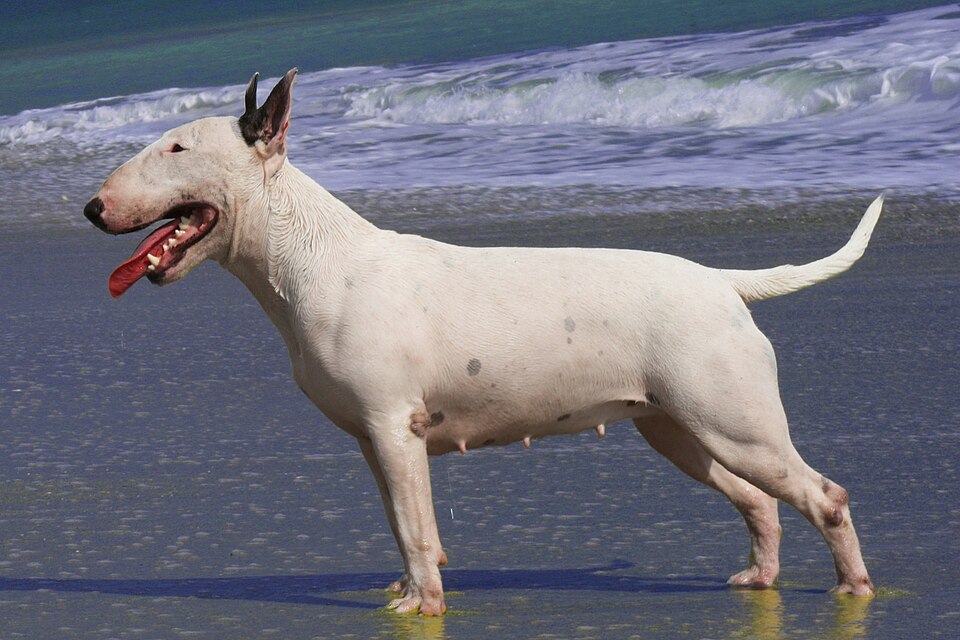
The Bull Terrier coat is one of the simplest in structure but one of the most important to understand -- not because the hair itself is complicated, but because what's underneath it needs your attention. The skin-coat relationship in Bull Terriers is more significant than in most breeds, and understanding how they interact keeps your bully comfortable and healthy.
Bull Terrier Coat Structure
The Bull Terrier has a single coat (no undercoat) that's characterized by:
- Length: Short, close-lying, less than 1 inch
- Texture: Hard, flat, glossy when healthy
- Density: Moderate -- not as sparse as a Greyhound, not as dense as a Labrador
- Growth pattern: Uniform across the body with no feathering or variation
Surprising fact: the Bull Terrier's coat texture varies slightly with the seasons. In winter, the coat becomes marginally thicker and slightly softer. In summer, it thins and hardens. This seasonal adaptation is subtle but measurable -- and it means your Bull Terrier's grooming needs shift slightly throughout the year.
Coat Colors and Patterns
Bull Terriers come in two classification groups:
White
Predominantly white, may have colored markings on the head only. White Bull Terriers have some specific coat considerations:- Sun sensitivity: White coat provides minimal UV protection. Pink skin underneath is vulnerable to sunburn.
- Higher allergy rates: White Bull Terriers statistically experience more skin allergies than colored varieties.
- Staining visibility: Tear stains, drool, and environmental staining show readily on white coats.
- Deafness link: About 18% of all-white Bull Terriers are deaf in one or both ears (related to the piebald gene, not the coat itself).
Colored
Any color other than white predominant -- brindle, red, fawn, black, tricolor. Colored Bull Terriers tend to have:- Better UV protection: Pigmented coat and skin offer natural sun resistance.
- Lower allergy rates: Statistically fewer skin issues than white varieties.
- Less visible staining: Darker coats hide minor discoloration.
Shedding: What to Expect
Bull Terriers shed moderately year-round with seasonal increases. Here's the reality:
- Daily shedding: Light to moderate, constant
- Spring and fall: Noticeable increase as the coat transitions
- Hair type: Short, bristle-like hairs that embed in fabric like tiny needles
- Removal difficulty: Bull Terrier hairs are notoriously hard to remove from clothing and upholstery because of their stiff, needle-like structure
Managing Bull Terrier Shedding
- Rubber curry brush: The best tool for Bull Terrier coats. Use 2-3 times weekly to capture loose hairs.
- Grooming mitt: Works well for daily light maintenance and doubles as massage.
- High-velocity dryer: Professional groomers use these to blast out loose coat more effectively than any brush.
- Quality vacuum with pet attachment: An essential household tool for Bull Terrier owners.
- Lint rollers: Keep them everywhere -- car, office, bathroom, kitchen.
Skin Health: The Heart of Bull Terrier Coat Care
The Bull Terrier coat cannot be discussed separately from the skin it sits on. Understanding the breed's skin tendencies is essential:
Acne and Folliculitis
Bacterial infection of hair follicles is common, particularly in younger Bull Terriers. Appears as red bumps, pustules, or blackheads, most often on the chin, muzzle, and belly. Management:- Keep affected areas clean
- Use benzoyl peroxide or chlorhexidine-based products (vet-recommended)
- Avoid plastic food and water bowls (harbor bacteria)
- Regular professional grooming with antibacterial shampoos
Allergies (Atopic Dermatitis)
Bull Terriers are predisposed to environmental allergies (pollen, dust mites, grass) and food allergies. Symptoms:- Persistent itching, especially face, paws, armpits, and groin
- Redness and inflammation
- Recurring ear infections
- Chronic paw licking
- Skin thickening over time
Zinc-Responsive Dermatosis
Some Bull Terriers develop crusting, scaling, and hair loss related to zinc metabolism. This is a breed-specific concern that responds to zinc supplementation under veterinary guidance.Solar Dermatitis
White Bull Terriers in sunny climates can develop sun-related skin damage. Areas with thin coat coverage (belly, inner ears, nose bridge) are most vulnerable. Dog-safe sunscreen and limiting peak-sun exposure help prevent this.Nutrition and the Bull Terrier Coat
Diet has a direct, visible impact on Bull Terrier coat quality:
- High-quality animal protein: Named meat as the first ingredient supports healthy hair growth and that characteristic glossy sheen
- Omega-3 fatty acids: Fish oil (1,000mg EPA/DHA per 50 lbs body weight daily) reduces skin inflammation and improves coat luster. This is arguably the most important supplement for a Bull Terrier.
- Zinc: Some Bull Terriers benefit from zinc supplementation. Discuss with your vet -- excess zinc can be harmful.
- Limited ingredient diets: If food allergies are suspected, elimination diets help identify triggers
- Adequate fat content: Bull Terriers need sufficient dietary fat for coat health. Low-fat diets produce dull, dry coats.
Seasonal Care
| Season | Key Concern | Action | |--------|-------------|--------| | Spring | Increased allergen exposure, shedding uptick | Monitor for allergy symptoms, increase brushing | | Summer | Sun exposure (especially white Bull Terriers) | Sunscreen on exposed areas, limit peak-sun time | | Fall | Coat transition | Standard maintenance | | Winter | Dry skin, cold sensitivity | Moisturizing products, limit bath frequency |
Bathing Your Bull Terrier
Bathing guidelines:
- Frequency: Every 4-6 weeks for healthy skin. More frequent if medicated baths are prescribed.
- Shampoo: Gentle, moisturizing formula for healthy coats. Medicated for dogs with skin conditions.
- Temperature: Lukewarm -- never hot. Bull Terrier skin is sensitive to temperature extremes.
- Rinsing: Extremely thorough. Shampoo residue causes itching and irritation.
- Drying: Complete drying, especially in skin folds and under the chest.
- Over-bathing: Stripping natural oils worsens skin problems. Don't bathe more than necessary.
Reading Your Bull Terrier's Coat
The coat is a daily health indicator:
| Coat Appearance | What It May Indicate | |-----------------|---------------------| | Glossy and smooth | Healthy, well-nourished | | Dull and rough | Nutritional deficiency or underlying health issue | | Patchy hair loss | Mange, allergies, fungal infection | | Flaking and dandruff | Dry skin, seborrhea, zinc deficiency | | Bumps or pustules | Folliculitis, acne, allergic reaction | | Redness visible through coat | Inflammation, allergies, sunburn | | Excessive shedding | Stress, hormonal changes, dietary issues |
Pay attention to changes. A coat that was glossy last month but looks dull now is telling you something.
Your Bull Terrier's coat may be the simplest thing about them (they certainly make up for it in personality), but it's a window into their health. Keep it clean, well-nourished, and professionally maintained, and that natural bully shine will tell the world your dog is thriving.
FAQ
Do Bull Terriers shed?
Yes, moderately year-round with seasonal increases. Their short, bristle-like hairs embed in fabric and are particularly difficult to remove. Regular brushing with a rubber curry tool is the most effective management.Why does my Bull Terrier's coat look dull?
Dull coat typically indicates a nutritional issue -- insufficient protein, fat, or omega fatty acids in the diet. Fish oil supplementation often produces visible improvement within 3-4 weeks. If diet changes don't help, consult your vet about underlying health conditions.Do white Bull Terriers need sunscreen?
Yes, white Bull Terriers benefit from dog-safe sunscreen on exposed skin areas during extended outdoor time, especially on the belly, nose bridge, and inner ears. Their white coat provides minimal UV protection.What's the best brush for a Bull Terrier?
A rubber curry brush is the ideal tool. It captures loose hairs, stimulates skin circulation, distributes natural oils, and most Bull Terriers enjoy the sensation. Use 2-3 times weekly for best results.Are white or colored Bull Terriers easier to maintain?
Colored Bull Terriers are generally easier coat-wise. They have better natural UV protection, statistically fewer skin allergies, and staining is less visible. White Bull Terriers need more sun protection and skin monitoring.---
Ready to streamline your grooming workflow? PawOps Board Manager helps salons track every Bull Terrier from check-in to pickup with real-time visibility. Start your free 30-day trial →