Understanding Your Borzoi's Coat: A Guide for Every Owner
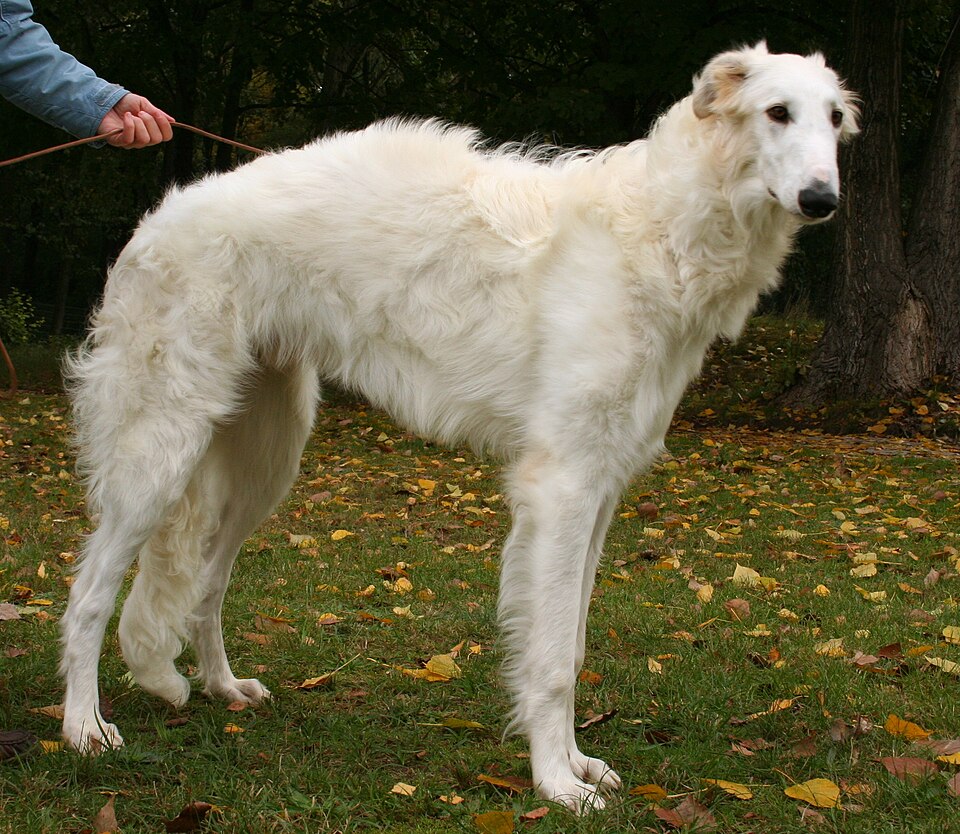
Understanding Your Borzoi's Coat: A Guide for Every Owner
The Borzoi's coat is one of the breed's most defining features -- and one of the most misunderstood. New owners often expect a long-haired dog that behaves like other long-haired breeds. But the Borzoi coat has its own set of rules, its own textures, and its own challenges. Understanding how it works will change how you care for your dog and help you avoid the most common grooming mistakes.
The Borzoi Coat Structure: Not One Coat, But Several
If you look closely at your Borzoi, you will notice that the coat is not uniform. Different parts of the body grow different types of hair, and each type needs different care.
The Body Coat
The main body coat is long, silky, and either flat, wavy, or slightly curly. The texture varies between individual dogs -- some Borzois have a smooth, flowing coat that lies close to the body, while others have a more abundant coat with a noticeable wave. Both are correct for the breed.
The body coat is fine-textured, which gives it that beautiful flowing quality but also makes it prone to tangling. Unlike coarse or wiry coats that resist matting, the silky hairs slide against each other and interlock when disturbed by movement, moisture, or friction.
The Neck Ruff
The neck and chest carry a heavier, denser ruff of longer hair. In mature males, this ruff can be quite pronounced -- almost mane-like. The ruff is thicker than the body coat and is the area most likely to develop deep mats because it sits in a high-movement zone where the collar rests and the head turns.
The Feathering
Borzois have extensive feathering on the backs of the front legs, the thighs, and the hindquarters. This feathering is long, fine, and flows downward. On a well-groomed Borzoi in motion, the feathering creates that iconic sweeping silhouette that makes the breed look like it is gliding.
The feathering is the most maintenance-intensive part of the coat. It drags near the ground (or on the ground in heavy-coated individuals), collects debris, and tangles after every walk.
The Tail Plume
The Borzoi's long, low-carried tail is covered in a generous plume of silky hair. It is one of the breed's most elegant features and one of the most annoying to maintain. The tail drags through water bowls, sweeps through mud puddles, and picks up everything on the floor.
The Head and Front Legs
In contrast to the rest of the body, the head and the fronts of the legs have short, smooth hair. This creates a clean, refined look on the face and provides a visual contrast with the flowing body coat.
The Borzoi Shedding Pattern
Borzois shed. There is no way around it. The good news is that the shedding pattern is predictable.
Borzois go through two major shedding periods per year -- spring and fall -- when the coat adjusts density for seasonal temperature changes. During these periods, you will find silky hair everywhere. On the couch. On your clothes. Floating through the air. Rolled into tumbleweeds under the furniture. It is substantial.
Outside of these seasonal transitions, shedding is moderate but constant. You will always find some Borzoi hair in your life, but the daily volume is manageable.
Spayed and neutered Borzois sometimes shed more consistently throughout the year rather than having dramatic seasonal blowouts. Intact females may experience a heavier coat loss after their heat cycle.
A surprising fact: the Borzoi's coat actually grows in response to daylight hours, not temperature. The shortening days of autumn trigger the winter coat to come in thicker, while the lengthening days of spring trigger the lighter summer coat. This is why indoor-only Borzois sometimes have less distinct seasonal shedding patterns -- artificial lighting partially disrupts the photoperiod signal that drives coat changes.
Coat Texture Variations: What Is Normal
Borzoi coat texture is more variable than many breeds, and new owners sometimes worry that their dog's coat is wrong.
All of these are normal and correct:
- Flat and silky -- lies close to the body, smooth and flowing
- Wavy -- gentle waves throughout the body coat, especially on the sides
- Slightly curly -- loose curls or ringlets, particularly on the hindquarters and behind the ears
Puppies often have a different texture than adults. A puppy with a flat coat might develop wave as an adult, and vice versa. The adult coat typically comes in fully between 18 and 24 months.
How to Care for the Borzoi Coat at Home
Brushing: The Non-Negotiable
Brush your Borzoi two to three times per week minimum. During shedding season, daily brushing is strongly recommended.
Use a pin brush for the body coat and feathering, and a wide-tooth metal comb for checking tangles close to the skin. Avoid slicker brushes with very fine metal bristles -- they can break the silky hair and scratch the thin skin underneath.
Brushing protocol by area:
When you encounter a tangle, hold the hair above the mat (between the tangle and the skin) and work it apart with your fingers or a comb. Pulling a tangle through silky coat breaks the hair and hurts the dog.
Bathing
Bathe your Borzoi every 4 to 6 weeks, or as needed. Key guidelines:
- Always brush before bathing -- water tightens mats, making them nearly impossible to remove
- Use a gentle, moisturizing shampoo -- the silky coat needs hydration
- Always condition -- a lightweight conditioner dramatically reduces post-bath tangling
- Dry completely -- this is critical; a damp Borzoi coat will mat within hours
- Use a high-velocity pet dryer on moderate heat -- brush while drying to straighten the coat
- Never air dry a Borzoi if you want to prevent mats
Seasonal Care
Spring/Fall (shedding season):
- Increase brushing to daily
- Consider a professional de-shedding treatment
- Run a shedding rake through the undercoat areas (neck, chest) to remove loose hair in bulk
- The coat naturally thickens; do not fight this
- Watch for snow and ice balls forming in the feathering -- melt them gently rather than pulling
- Indoor heating dries out the coat; a humidifier helps
- Never shave a Borzoi -- the coat provides sun protection and temperature regulation
- Check for foxtails and burrs in the feathering after outdoor activity
- Rinse the feet and feathering after swimming
Common Borzoi Coat Problems
Mat Bands
Mats in Borzoi coats tend to form in bands rather than isolated clumps. A band of matting along the neck or across the thigh is common and requires careful sectioning and detangling. Attempting to pull a mat band out in one piece will pull the skin and cause pain.
Coat Breakage
The fine, silky hairs break easily if handled roughly. Over-brushing, using the wrong tools, and pulling through tangles all cause breakage. A Borzoi with broken coat hairs looks thin and scraggly rather than flowing and full. Gentle handling preserves coat length and fullness.
Tail Damage
The tail plume takes more abuse than any other part of the coat. It gets stepped on, caught in doors, dragged through water, and snagged on furniture. Many Borzoi owners braid or wrap the tail plume during muddy walks to protect it.
Staining
Light-colored Borzois can develop staining around the mouth, eyes, and rear from moisture and body fluids. Regular cleaning of these areas and ensuring the dog's face is dried after drinking helps prevent discoloration.
When the Borzoi Coat Changes
Borzoi puppies have a much shorter, softer coat than adults. The adult coat begins developing around 6 months and continues filling in until 18 to 24 months. The feathering and ruff are usually the last to reach full length.
Do not panic during the awkward adolescent phase between 8 and 14 months, when the puppy coat sheds out unevenly and the adult coat comes in patchy. This is normal, and the adult coat will fill in.
Senior Borzois may develop thinner feathering and a less luxurious ruff. The coat's natural luster can diminish with age. Omega-3 supplements and more frequent conditioning treatments help maintain coat quality in older dogs.
PawOps tracks coat condition and grooming history for every pet, helping salons deliver consistent, breed-appropriate care whether it is a puppy's first visit or a senior's regular maintenance.