Understanding Your Azawakh's Coat: What Every Owner Should Know About Sahelian Skin
Understanding Your Azawakh's Coat: What Every Owner Should Know About Sahelian Skin
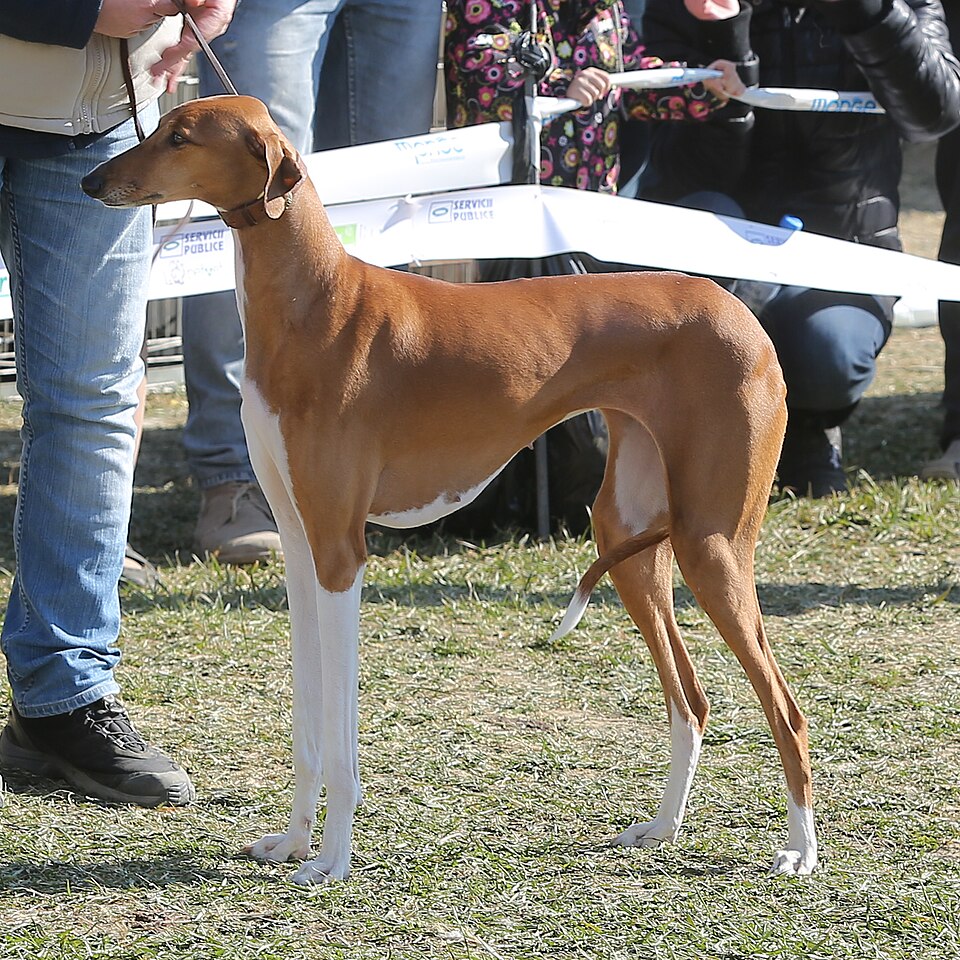
The Azawakh's coat is a masterpiece of evolutionary minimalism. In the Sahel region of West Africa -- where temperatures routinely exceed 110 degrees Fahrenheit, water is scarce, and shade is rare -- every ounce of unnecessary insulation is a survival liability. The result is a dog with barely any coat at all: a thin, fine layer that exists primarily as sun protection rather than insulation.
Understanding what this coat is (and what it is not) is essential for keeping an Azawakh healthy outside its native environment.
Coat Structure: Almost Nothing
The Azawakh has the thinnest coat of almost any recognized dog breed:
Structure:
- Single coat (no undercoat whatsoever)
- Extremely short guard hairs: 1/8 to 1/4 inch
- Fine, flat-lying texture
- On belly and inner thighs: may be absent entirely
- On legs below the knee: may be extremely sparse or absent
| Breed | Coat Length | Texture | Density | |-------|-----------|---------|----------| | Azawakh | 1/8 - 1/4 inch | Ultra-fine | Minimal (belly may be bare) | | Sloughi | 1/4 - 1/2 inch | Fine, smooth | Light but complete | | Whippet | 1/4 - 1/2 inch | Smooth, slightly firmer | Moderate (complete coverage) | | Greyhound | 1/4 - 1/2 inch | Smooth, hard | Moderate | | Saluki (smooth) | 1/4 - 1/2 inch | Silky | Moderate |
The Azawakh consistently ranks as having the least coat of any sighthound variety. Some individuals -- particularly those from African bloodlines closest to the original type -- have so little belly coat that they are effectively partially hairless.
Color Varieties
Azawakhs come in a wide range of colors:
- Clear sand to dark fawn (most common, the "classic" Azawakh)
- Brindle (dark stripes on lighter base)
- Red (deep rich red to mahogany)
- Blue/cream (rare in the West but present in African populations)
- Black (rare but occurring)
- All with or without white markings (white stockings, chest, tail tip, facial markings)
Skin: The Real Story
With so little coat, Azawakh skin is functionally the dog's exterior surface. Understanding the skin is more important than understanding the coat:
Characteristics:
- Extremely thin (among the thinnest-skinned breeds)
- Taut and close-fitting over the lean muscular frame
- Minimal subcutaneous fat beneath it
- Rich blood supply (Azawakhs feel warm to the touch)
- Low sebaceous output (minimal oil production -- desert adaptation)
- Highly elastic and flexible but tears more easily than thicker-skinned breeds
- Healthy Azawakh skin is smooth, warm, and pliable
- Color should be consistent with the individual's pattern (darker-skinned dogs have dark skin; lighter dogs have pink to light skin)
- Tenting test (pulling up skin on the back of the neck) should snap back instantly -- slow return indicates dehydration
- No flaking, cracking, or dry patches
- Dry skin in winter: Indoor heating removes humidity that Sahelian skin expects. Flaking and itching result.
- Cold sensitivity: Thin skin + no fat + no coat = rapid heat loss. Visibly uncomfortable below 50 degrees.
- Abrasions from equipment: Collars, harnesses, and clothing can rub thin skin raw. All equipment must be well-fitted and soft.
- Sun damage: Despite originating in intense sun, the thin coat provides less protection than you might expect. Prolonged direct exposure can cause damage, particularly on pink/light-skinned areas.
The No-Fat, No-Coat, No-Undercoat Equation
What this means in practice is that an Azawakh has essentially zero environmental buffering:
- Cold goes straight to muscle
- Heat radiates directly from blood-close-to-surface skin
- Sharp objects contact skin with almost no coat barrier
- UV reaches skin with minimal filtering
- Water evaporates from skin instantly (good for cooling, bad for hydration)
Shedding: Barely Measurable
Azawakh shedding is so minimal that many owners report never finding hair on furniture or clothing:
- No seasonal blow (no undercoat to shed)
- Light, consistent individual hair turnover year-round
- Shed hairs are so short and fine they are nearly invisible
- Weekly brushing with a soft cloth captures whatever is loose
Climate Adaptation Challenges
The Azawakh evolved in one of Earth's most extreme climates (Sahel: 100-120 degrees F in summer, 60-70 degrees F in winter, extremely low humidity). Moving this breed to temperate or cold climates creates real management needs:
Heat tolerance (natural environment):
- Excellent up to 100+ degrees
- The thin skin radiates heat efficiently
- Minimal coat prevents heat trapping
- Low body fat means less stored thermal mass
- Evolved to conserve water (low panting threshold)
- Begins showing discomfort below 55 degrees Fahrenheit
- Needs clothing at 50 degrees and below
- Needs insulated clothing at 40 degrees and below
- Should not be outside for extended periods below 35 degrees
- Hypothermia risk is real in cold weather without protection
- Central heating dries the air, which dries thin skin
- Use humidifiers in winter months
- Provide warm bedding (these dogs burrow under blankets instinctively)
- Avoid cold floor exposure (tile, hardwood in winter)
Nutrition and Coat/Skin Health
With so little coat to maintain, nutritional needs focus on skin health:
- Omega-3 fatty acids: Essential for maintaining skin moisture barrier. Fish oil supplementation is nearly universal among Azawakh breeders.
- Quality protein: Supports skin cell turnover and wound healing (important for thin-skinned dogs)
- Adequate fat in diet: The breed's naturally low body fat means dietary fat is used efficiently rather than stored. Do not restrict fat thinking the dog should be lean -- they are lean by structure, not by diet restriction.
- Zinc: Supports skin integrity and healing
- Vitamin E: Antioxidant protection for exposed skin
Home Care Protocol
Daily (1-2 minutes):
- Visual body scan (any new scrapes, bumps, or skin changes)
- Check the dog's comfort level with ambient temperature
- Soft cloth wipe-down of the body
- Check between toes, in ear folds, and inner thighs
- Nail visual check
- Gentle bath with ultra-mild, fragrance-free cleanser
- Immediate toweling (do not leave wet in cool air)
- Light moisturizer if skin seems dry (especially winter)
- Thorough nail assessment
- Adjust wardrobe to temperature
- Modify moisturizing routine based on humidity
- Check all equipment (collars, harnesses) for rubbing spots
The Bottom Line
Your Azawakh's coat barely exists. What does exist is a thin layer of fine hair over even thinner skin over a body with essentially no fat. This is a dog that makes every environmental factor immediately felt -- every cold draft, every harsh product, every rough handling moment.
Caring for this coat means caring for the skin beneath it with gentleness, warmth, appropriate products, and regular assessment. The grooming itself takes minutes. Getting it right takes understanding.
PawOps helps grooming professionals understand that breeds like the Azawakh require less physical work but more knowledge -- pricing models should reflect the expertise needed for safe, appropriate care of these rare, thin-skinned sighthounds. Use our free pricing calculator →