Understanding Your Swedish Vallhund's Coat: What Every Owner Should Know
Understanding Your Swedish Vallhund's Coat: What Every Owner Should Know
Swedish Vallhunds have a coat that defies expectations. You look at a 25-pound dog standing barely a foot tall and think the grooming commitment should be modest. Then you brush them for the first time and realize this little Viking packed enough fur for a dog three times their size.
The Vallhund's coat is a direct product of their heritage -- over a thousand years of herding cattle on Swedish farms, working outdoors in Nordic weather year-round. Every characteristic of the coat makes sense when you understand what it was built to do.
Coat Architecture
The Swedish Vallhund has a medium-length double coat consisting of two functionally distinct layers.
The Outer Coat
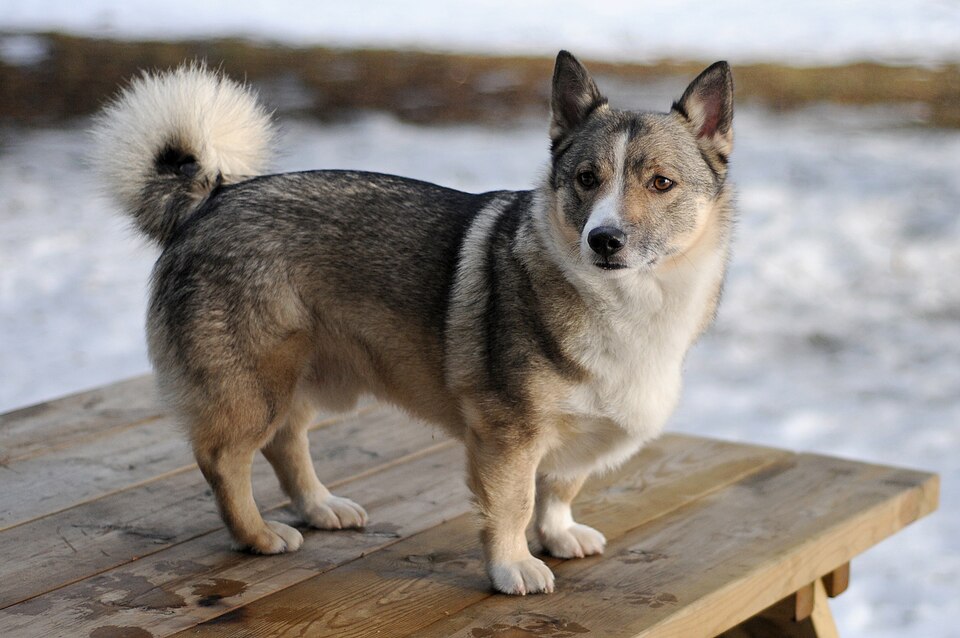
The topcoat is described by the AKC breed standard as "harsh" -- meaning it has a coarse, tight texture that lies close to the body. This is not a fluffy coat. It is a working coat designed to shed water, resist wind, and deflect debris. The hairs are straight to slightly wavy and medium in length, longer on the neck and chest than on the body.
Vallhund colors range from gray to red to a combination, with a characteristic "harness markings" pattern -- lighter fur on the shoulders, chest, and lower legs creating the visual impression of a harness draped over darker body fur. The coloring comes from banded individual hairs similar to other Nordic breeds.
The harsh texture has a practical benefit for owners: dirt tends to dry and flake off rather than embedding in the coat. Vallhund owners frequently note that their dog can roll in mud and look clean the next day without a bath.
The Undercoat
Beneath the outer coat sits a soft, dense undercoat that provides insulation. This is the layer that makes the Vallhund feel plush when you pet them and the layer responsible for the astounding amount of fur they shed.
The undercoat is significantly thicker than what you would find on most dogs under 35 pounds. It is comparable in density to Norwegian Elkhounds, Siberian Huskies, and other Nordic breeds -- dogs that outweigh the Vallhund by 20 to 40 pounds.
This undercoat grows and sheds on a seasonal cycle driven by photoperiod (daylight hours), with two major shedding events annually.
Shedding: The Honest Report
Swedish Vallhunds shed. A lot. More than their size suggests.
The Annual Shedding Cycle
| Period | Shedding Level | Description | |--------|---------------|-------------| | Spring (March-May) | Heavy to extreme | Winter undercoat blows out over 3-5 weeks | | Summer (June-August) | Moderate | Continuous turnover of guard coat hairs | | Fall (Sept-November) | Heavy | Summer coat sheds, dense winter undercoat grows in | | Winter (Dec-February) | Light to moderate | Full undercoat in place, minimal shedding |
During spring blowout, the volume of undercoat that comes off a Vallhund is genuinely surprising. Owners of this breed consistently report that first-time visitors assume they have a second, larger dog somewhere because the quantity of shed fur seems impossible from such a small animal.
A study published in Veterinary Dermatology found that double-coated breeds shed approximately 55-65% of their undercoat volume during seasonal transitions. For a Vallhund, this happens in concentrated bursts over three to five weeks.
Indoor Living and Shedding
Vallhunds living in temperature-controlled homes often shed more evenly throughout the year, with less dramatic blowouts but more consistent daily hair loss. The artificial lighting and stable temperatures confuse the natural photoperiod signals, resulting in a more diffuse shedding pattern.
This is not necessarily better -- it means there is no "off season" for shedding, just a constant moderate level punctuated by slightly heavier seasonal periods.
Coat Variations Within the Breed
Not all Vallhund coats are identical:
- Ruff: Males especially develop a thicker ring of fur around the neck and upper chest. This is one of the densest areas and the most prone to undercoat packing.
- Breeches: The backs of the thighs carry longer feathering that can tangle if not combed regularly.
- Belly: Shorter, softer fur that mats when it contacts bedding or the ground.
- Tail: Vallhunds can be born with full tails, natural bobtails, or anything in between. Full-tailed dogs have a plume that needs regular combing. Bobtailed dogs have less tail coat to manage.
- Feet: Fur grows between and around the paw pads, collecting debris and causing traction issues on smooth floors.
Common Coat Issues
Undercoat Compaction
The most frequent problem. Dead undercoat that is not removed becomes packed against the skin, creating a dense felt layer. Because the harsh outer coat lies flat and looks normal, owners often do not realize the undercoat is compacted until a groomer finds it.
Check by parting the coat to the skin at several points along the back, sides, and ruff. You should see skin. If the undercoat is so dense that skin is not visible, professional extraction is needed.
Hot Spots
Vallhunds in warm or humid climates are prone to hot spots, especially when undercoat is compacted. The combination of trapped moisture and warmth against the skin creates ideal conditions for bacterial growth. Common locations: behind the ears, along the neck, and on the hip area.
Paw Pad Matting
Fur between the toes and around paw pads grows continuously and mats when moisture gets trapped. For a breed that stands as low as the Vallhund, paws are closer to wet grass, puddles, and ground-level moisture than taller dogs. Regular trimming between pads is essential for traction and comfort.
Post-Spay/Neuter Coat Changes
Some Vallhund owners report coat texture changes after spaying or neutering. The coat may become softer or woollier, with the undercoat becoming proportionally thicker. Hormonal changes affect the hair growth cycle, and this is more noticeable in breeds with pronounced double coats. This is not harmful but may require adjusted grooming routines.
Your Home Care Toolkit
Essential tools:
- Undercoat rake (most important tool for this breed)
- Slicker brush (for topcoat maintenance)
- Steel comb (for checking feathering and trouble spots)
- Small scissors or trimmers (for paw pad fur)
- High-velocity pet dryer (dramatically improves home deshedding)
- Detangling spray (helps prevent breakage during brushing)
A Practical Brushing Routine
Twice weekly (15 minutes per session):
During blowout season, increase to daily sessions and add more undercoat rake work. A 10-minute daily session during blowout is more effective than one hour-long marathon session per week.
A Coat Fact That Surprises Owners
The Swedish Vallhund's coat has a natural mild odor resistance compared to many breeds. The harsh outer coat contains less of the oils that produce "doggy smell" in softer-coated breeds. Vallhund owners frequently report that their dog does not develop body odor between baths nearly as quickly as other breeds.
This is partly the coat texture and partly the coat's self-cleaning properties. However, if a Vallhund does develop a persistent odor, it almost always indicates compacted undercoat trapping bacteria and oils near the skin -- a maintenance issue, not a breed characteristic.
When the Coat Signals a Problem
- Sudden shedding increase outside normal cycles: Potential thyroid issues, stress, or allergies
- Loss of harsh texture in the outer coat: Could indicate nutritional deficiency or hormonal changes
- Bald patches or thinning: May signal alopecia X (black skin disease), which affects some Nordic breeds
- Excessive dandruff: Could be dry skin or the early stages of sebaceous adenitis
- Coat standing away from body: Usually indicates severe undercoat compaction pushing the guard coat outward
PawOps helps grooming salons assess compact double-coated breeds using condition scoring that accounts for coat density relative to body size -- ensuring your Swedish Vallhund gets grooming calibrated to their actual coat needs, not their weight class.
Related Reading: