Understanding Your Staffordshire Bull Terrier's Coat: What Every Owner Should Know
Understanding Your Staffordshire Bull Terrier's Coat: What Every Owner Should Know
The Staffordshire Bull Terrier's coat seems like the simplest thing about the breed. Short, smooth, tight to the body, no-fuss. And on the surface, that is accurate. There are no tangles to work through, no feathering to trim, no undercoat to blow out.
But that simple coat sits on complicated skin. Understanding what is happening beneath the surface is more important for Staffy owners than understanding the hair itself.
The Coat Basics
Structure
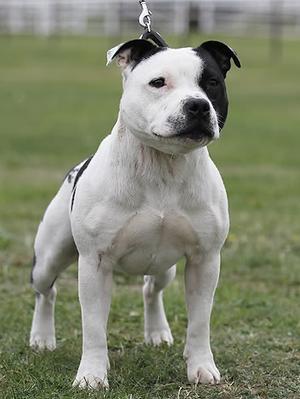
The Staffordshire Bull Terrier has a single-layer coat. No undercoat, no double-coat insulation system. Just one layer of short, stiff, close-lying hair that follows the contours of the body. Each individual hair is thick and slightly coarse, which gives the coat its smooth, hard feel.
The coat grows to a uniform length across the body and does not require cutting. It reaches its natural length and cycles through growth, rest, and shedding phases continuously.
Texture
Run your hand over a healthy Staffy's coat and it feels like velvet with a bit of grit. Smooth in one direction, slightly rough if you go against the grain. This texture comes from the individual hair diameter -- thicker and stiffer than what you feel on a fine-coated breed like a Whippet, but nowhere near the wire of a terrier with a broken coat.
Color Range
Staffordshire Bull Terriers come in a wide range of colors and patterns:
- Red
- Fawn
- White
- Black
- Blue
- Brindle (with variations)
- Any of the above with white
Shedding: The Honest Picture
Staffies shed moderately year-round with no dramatic seasonal blowouts. Because there is no undercoat, you avoid the tumbleweeds of fur that double-coated breeds produce. Instead, you get a steady supply of short, stiff hairs that embed themselves in everything.
Those short hairs are actually harder to remove from clothing and furniture than longer, softer hairs. They weave into fabric fibers and resist lint rollers. A rubber curry brush or grooming mitt used two to three times per week is the most effective way to manage shedding by removing dead hair before it falls.
A surprising statistic: according to pet industry cleaning product surveys, short-haired single-coated breed owners report spending roughly the same amount of time on hair cleanup as medium-coated double-coated breed owners. The difference is not volume -- it is the difficulty of removing the individual hairs.
The Skin Beneath the Coat
This is where things get serious. The Staffordshire Bull Terrier is one of the breeds most commonly seen by veterinary dermatologists, and there are specific reasons why.
Atopic Dermatitis
Staffies are genetically predisposed to environmental allergies that manifest as skin reactions. A study published in Veterinary Dermatology found that Staffordshire Bull Terriers rank among the top five breeds for atopic dermatitis prevalence. Symptoms include:
- Itching (face, paws, belly, ears)
- Redness
- Recurrent ear infections
- Skin thickening in chronically affected areas
- Paw licking and chewing
Food Sensitivities
Food allergies in Staffies often present as skin symptoms rather than digestive issues. Chronic itching, skin rashes, and ear infections that do not respond to environmental allergy treatment may have a dietary component.
Contact Dermatitis
The single coat provides minimal barrier between the skin and the environment. Grass, cleaning chemicals, certain fabrics, and even some dog bed materials can trigger contact reactions in sensitive Staffies. The belly and inner legs are most commonly affected because they have less hair coverage.
Skin Fold Issues
Some Staffies -- particularly those with broader heads and shorter muzzles -- have skin folds on the face and sometimes on the body. These folds trap moisture, warmth, and bacteria. Without regular cleaning, fold dermatitis develops.
What a Healthy Staffy Coat Should Look Like
Knowing the baseline helps you spot problems:
- Sheen: A healthy Staffy coat has a natural gloss. It should look smooth and slightly shiny, not dull or flat.
- Color: Even and consistent. Patchy discoloration can indicate skin issues.
- Texture: Firm and smooth. If the coat feels rough, dry, or brittle, something is off.
- Skin beneath: Pink and clean when you part the hair. Not red, flaky, oily, or bumpy.
- No excessive odor: Staffies should not smell strongly between baths. A persistent odor suggests yeast, bacteria, or sebaceous gland issues.
A Surprising Coat Fact
Here is something most Staffy owners do not realize: the coat color can affect sun sensitivity. White Staffies and those with large white patches on areas of thin hair coverage (belly, inner legs, nose bridge) are susceptible to sunburn. The single coat provides minimal UV protection, and lightly pigmented skin beneath white fur has no melanin defense. Veterinary dermatologists recommend pet-safe sunscreen on exposed areas for light-colored Staffies that spend significant time outdoors. Repeated sunburn can lead to solar dermatitis and, in severe cases, increases the risk of cutaneous squamous cell carcinoma in chronically sun-exposed skin.
Home Care Guide
Weekly Brushing
Use a rubber curry brush or grooming mitt. These tools grip and pull loose hairs out of the coat better than bristle brushes. Brush once or twice a week, working in the direction of hair growth, applying moderate pressure to stimulate the skin and distribute natural oils.
Bathing at Home
Between professional grooming visits, a home bath every two to three weeks is reasonable. Use a gentle, hypoallergenic shampoo. Avoid human shampoo -- the pH is wrong for dog skin and will worsen any existing sensitivity.
For Staffies with known skin issues:
- Oatmeal shampoo: Soothes general irritation
- Chlorhexidine shampoo: Antibacterial, useful for recurrent skin infections
- Antifungal shampoo: For yeast-related skin problems
- Your vet's recommendation: Always takes priority over general advice
Skin Fold Cleaning
If your Staffy has facial folds, clean them two to three times per week. Use a damp cloth or a veterinary wipe to clean between the folds, then dry thoroughly. Moisture left in folds causes bacterial and yeast growth.
Paw Maintenance
After walks, wipe your Staffy's paws with a damp cloth. This removes allergens (pollen, grass chemicals) that cause paw licking and irritation. For dogs prone to interdigital issues, this simple habit makes a measurable difference.
Dietary Impact on Coat and Skin
Diet has a direct, visible effect on the Staffy coat:
- Omega-3 fatty acids: Reduce inflammation and improve coat sheen. Fish oil supplements are commonly recommended by veterinary dermatologists for atopy-prone breeds.
- Quality protein sources: Support healthy hair growth and skin repair.
- Limited ingredient diets: Useful for identifying and managing food-related skin reactions.
- Adequate hydration: Supports skin elasticity and barrier function.
When to See a Professional
Beyond regular grooming appointments, see your groomer or vet if:
- New lumps, bumps, or skin lesions appear
- Scratching or licking becomes excessive
- The coat loses its sheen without obvious cause
- Bald patches develop
- Skin odor increases between baths
- Ears become red, hot, or produce discharge
PawOps helps grooming salons assess every breed's specific needs using condition-based scoring. For Staffordshire Bull Terriers, that means focusing on skin health, coat condition, and the breed-specific vulnerabilities that professional groomers are positioned to monitor.
Related Reading: