Why Your Spanish Water Dog Needs Professional Grooming (Cords, Curls, and Everything Between)
Why Your Spanish Water Dog Needs Professional Grooming (Cords, Curls, and Everything Between)
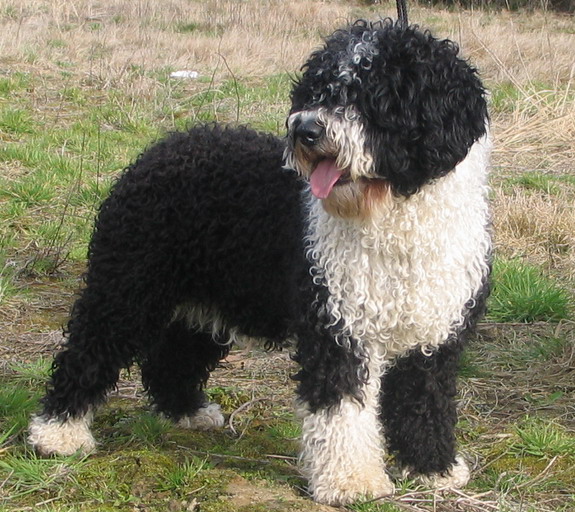
The Spanish Water Dog -- Perro de Agua Espanol -- is a versatile working breed from Spain's Iberian Peninsula. Historically a herder, water retriever, and fisherman's assistant, this breed carries a coat unlike any other: one that naturally forms cords if allowed to grow, or presents as tight curls when kept shorter. Either way, professional grooming knowledge is essential.
Here is why your SWD needs a groomer who understands this unique coat.
The Spanish Water Dog Coat: One Breed, Two Presentations
The SWD coat is genuinely unique. It is a single-layer, curly coat that behaves differently depending on length:
Short (under 2 inches): Presents as tight, defined curls. Can be brushed (carefully). Looks similar to other curly-coated breeds.
Medium (2-4 inches): Curls begin to interlock and form proto-cords. Brushing becomes counterproductive -- it disrupts natural cord formation.
Long (4+ inches): Fully cords into rope-like strands. Must NOT be brushed. Cords are maintained by hand-separation.
This dual nature -- brushable when short, corded when long -- creates a grooming challenge that requires professional guidance. The breed standard explicitly states: "The coat must never be brushed, aesthetically trimmed, or sculpted." However, functional pet grooming requires understanding when and how to manage either presentation.
Why Professional Guidance Is Essential
Cord vs. Curl Decision
Every SWD owner must decide: are you maintaining cords or keeping the coat clipped short? This decision affects every aspect of care:
| Factor | Corded (long) | Curly (clipped short) | |--------|--------------|----------------------| | Brushing | Never | Minimal (or none per standard) | | Bathing | Infrequent, long drying | Regular, faster drying | | Professional frequency | Every 3-4 months | Every 6-10 weeks | | Daily maintenance | Hand-separating cords | Minimal | | Professional skill needed | High (cord management) | Moderate (clipping) |
A professional groomer helps you make this decision and then implements the appropriate management plan.
The Clipping Protocol
The breed standard specifies that SWDs should be clipped to a uniform length -- not sculpted, shaped, or trimmed into patterns. The clip is simple in concept but requires understanding:
- Same blade length over the entire body (including head, ears, and legs)
- No blending, shaping, or contouring
- Annual or semi-annual clip to reset cord/mat formation
- Some owners clip completely and let regrow; others maintain a short curl
Cord Maintenance (If Chosen)
Corded SWDs need professional help for:
- Initial cord formation guidance (teaching you what to do)
- Periodic cord assessment (checking for problems hidden within cords)
- Bathing (corded coats take 24-48 hours to dry completely -- professional drying reduces this)
- Cord separation (preventing cords from merging into mats)
- Skin checks beneath the cords
Bathing and Drying Challenges
Regardless of coat presentation, the SWD coat presents drying challenges:
- The wool-like texture holds enormous amounts of water
- Corded coats can take 12-48 hours to air-dry
- Trapped moisture breeds mildew and bacteria if not managed
- Professional high-velocity dryers cut drying time dramatically
What Professional Grooming Looks Like
For clipped/short SWDs:
- Bath with gentle shampoo (no conditioner -- it can soften the coat too much)
- Thorough drying with forced air
- Uniform clip if due (typically 1-2x per year)
- Light hand-separation if cords are beginning to form
- Ear cleaning and hair management
- Nail trimming
- Sanitary trim
- Assessment of cord condition (length, tightness, any problems)
- Bathing with diluted shampoo worked through cords
- Extended drying (professional dryers, potentially 45-90 minutes)
- Cord separation where needed
- Skin inspection between cords
- Ear cleaning
- Nail trimming
The Annual Clip: A Defining Event
Many SWD owners follow the traditional approach: allow the coat to grow for 8-12 months, then clip the entire dog down to approximately 1/4 to 1/2 inch. This annual clip:
- Resets the coat completely
- Removes any matting or problematic cord formation
- Allows skin inspection and sun exposure
- Gives the dog relief (especially in summer)
- Starts the growth cycle fresh
Grooming Frequency
| Coat Presentation | Frequency | Service Type | |-------------------|-----------|-------------| | Clipped short (under 2 inches) | Every 6-10 weeks | Bath, dry, nail, ear | | Growing out (pre-cord) | Every 8-12 weeks | Bath, hand-separation, monitoring | | Fully corded | Every 3-4 months | Bath, dry, cord maintenance | | Annual clip event | Once yearly | Full clip-down to short |
Finding a Groomer Who Understands SWDs
This is challenging. The Spanish Water Dog is rare enough that most groomers have never seen one, and the "do not brush, do not style" directive contradicts their training for every other curly breed.
Look for a groomer who:
- Is willing to learn the breed standard's grooming specifications
- Understands that NOT brushing is correct for this breed
- Will clip uniformly rather than attempting to shape or style
- Has experience with corded breeds (Komondor, Puli) if you plan to cord
- Accepts that the SWD trim is deliberately rustic and uniform
PawOps helps salons understand breeds with unusual grooming protocols like the Spanish Water Dog, pricing cord maintenance and uniform clips accurately based on actual time and expertise rather than assumptions from more common curly breeds. Use our free pricing calculator →