Understanding Your Sloughi's Coat: What Every Owner Should Know About North African Elegance
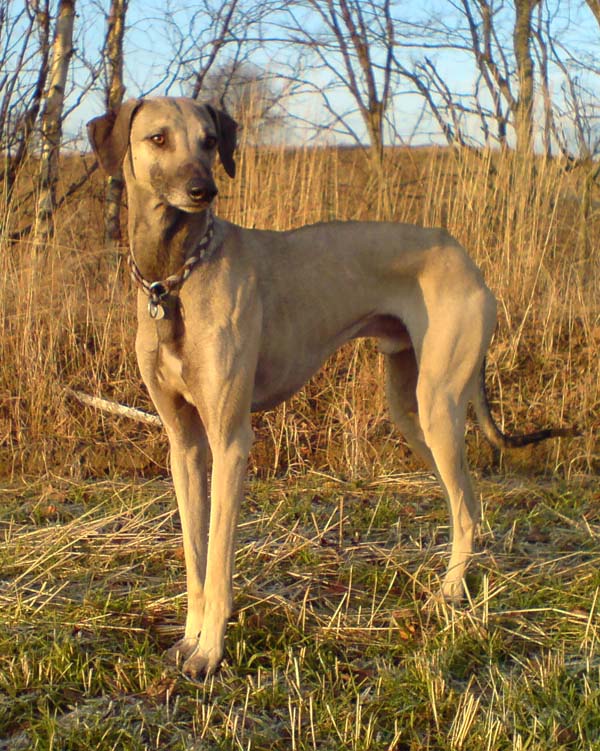
Understanding Your Sloughi's Coat: What Every Owner Should Know About North African Elegance
The Sloughi's coat is a study in efficiency. Evolved across thousands of years in the Maghreb -- Morocco, Algeria, Tunisia, Libya -- this breed developed a coat that provides precisely enough protection without an ounce of excess. It shields from desert sun and wind, does not trap heat, requires almost no water for maintenance (crucial for nomadic peoples), and presents a smooth, elegant appearance that the breed's traditional owners prized.
Understanding this coat means understanding desert engineering.
Coat Structure: Complete But Minimal
The Sloughi has a short, fine, single coat that covers the entire body without gaps:
- Length: 1/4 to 1/2 inch consistently across the body
- Texture: Fine, smooth, slightly satiny
- Density: Light but complete (no bare patches like the Azawakh)
- Undercoat: None
- Coverage: Full body including belly and inner legs (unlike the Azawakh)
Why the Sloughi has slightly more coat than the Azawakh:
The Maghreb climate includes cold winter nights, significant wind, and more temperature variation than the Sahel. The Sloughi needed marginally more protection -- enough to buffer wind and cooler temperatures without creating heat liability. The result is a complete single coat that is still among the thinnest in the dog world.
Color Varieties
Sloughis come in shades of sand, from light cream to dark red:
- Light sand: Pale cream to warm ivory
- Sand: Classic warm gold/beige
- Red sand: Rich reddish-gold to mahogany
- Brindle: Dark stripes on sand base (ranges from light to heavy brindling)
- Black overlay (sable): Sand base with black-tipped guard hairs creating a darker overlay
Color-specific notes:
- Lighter sand Sloughis show dirt immediately against the pale coat
- Dark sable or heavily brindled Sloughis absorb more solar radiation
- The sand coloring evolved as camouflage in desert terrain (predator/prey concealment)
- Color intensity can fade with sun exposure over time, particularly in lighter individuals
Shedding: Negligible
Sloughi shedding is so minimal it barely registers:
- No seasonal blow (no undercoat)
- Light individual hair turnover year-round
- Shed hairs are fine and short -- hard to spot on any surface
- Weekly soft-brush grooming captures the minimal loose hair
- Most owners report zero visible hair on furniture
Skin Characteristics
Beneath the thin coat, Sloughi skin has desert-adapted properties:
Thickness: Moderate for a sighthound -- slightly thicker than an Azawakh's but thinner than most other breeds. Still requires gentle handling.
Elasticity: Good when well-hydrated. The skin tenting test (pulling up skin on the scruff and timing how quickly it returns) is a quick hydration check. Healthy Sloughi skin snaps back within 1-2 seconds.
Oil production: Low. Desert breeds evolved with minimal sebaceous activity -- water-repellent oil has limited utility in arid environments, and oil production requires hydration resources. This means:
- Sloughis rarely develop the "doggy smell" associated with oilier breeds
- The coat stays cleaner longer (less oil to trap dirt)
- Dry skin is more likely than oily skin, particularly in non-native climates
- Bathing is needed less frequently (the coat stays presentable for weeks)
Climate Adaptation
In native climate (Maghreb):
- Daytime: 85-100+ degrees F in summer (the coat provides minimal sun protection without trapping heat)
- Nighttime: Can drop significantly (the coat provides basic wind buffer)
- Low humidity (skin stays naturally balanced)
- Strong UV (natural melanin in darker individuals provides protection)
| Challenge | Impact | Solution | |-----------|--------|----------| | Cold winters | Significant discomfort below 45-50F | Coats and clothing essential | | Dry heated air | Skin dries out, flaking | Humidifier, occasional light moisturizer | | Strong UV (summer) | Burn risk on lighter-skinned areas | Shade access, sun protection | | Humid summers | Generally well-tolerated | No specific intervention needed | | Wind/rain | Less protected than double-coated breeds | Raincoat in extended rain |
Sloughis adapted slightly better to temperate climates than Azawakhs due to their marginally more complete coat, but still require clothing management in any region with cold winters.
Nutrition and Coat Quality
The Sloughi coat is a quick-response health indicator. Because the hairs are so short, new growth reflects current nutritional status within 2-3 weeks (vs. 4-6 weeks for longer-coated breeds).
Signs of good nutrition:
- Satiny sheen to the coat
- Smooth, flat-lying hairs
- Supple skin underneath
- Strong, even coloring
- Dull, dry-looking coat without natural gloss
- Rough or standing texture
- Visible flaking or dandruff
- Color fading beyond normal sun lightening
- Omega-3 fatty acids: Maintain skin moisture barrier (critical in dry climates/heated homes)
- Quality protein: Supports rapid hair turnover
- Zinc: Skin integrity (deficiency shows quickly in short-coated breeds)
- Vitamin E: Antioxidant protection
- Adequate dietary fat: Supports minimal but important oil production
The Sand-Colored Advantage
The Sloughi's typical sand coloring is not random -- it is a product of natural selection that affects coat care:
- Heat reflection: Lighter colors reflect more solar radiation than dark colors. A sand-colored Sloughi in direct sun absorbs less heat than a black-coated dog of identical coat structure.
- Camouflage: In desert terrain, the sand coloring provides concealment from both predators and prey -- important for a hunting sighthound.
- Dirt concealment: Sand-colored coats show dirt less than white coats but more than dark coats. The natural earth tones blend with dust and dirt from the environment.
- UV protection: Lighter coats actually provide slightly LESS UV protection than darker coats (melanin absorbs UV). Lighter Sloughis may benefit from sun protection on very exposed days.
Home Care: Minimal and Effective
Weekly (2-3 minutes):
- Soft chamois cloth or silk mitt wipe-down (removes surface dust, distributes minimal natural oils)
- Brief visual and tactile body scan
- Gentle bath with mild shampoo only if needed (many Sloughis stay clean enough to skip months)
- Light moisturizer on any dry patches
- Nail assessment
- Ear cleaning
- Adjust clothing for temperature
- Modify any moisturizing routine based on humidity levels
- Increase bath frequency in summer if the dog is active outdoors
- Soft chamois cloth or silk grooming mitt: $8-$12
- Gentle, unscented shampoo: $12-$20
- Light moisturizer (optional, for dry skin): $10-$15
- Soft bristle brush (optional): $8-$15
What Not to Do
- Do not use rubber curry brushes -- too aggressive for thin sighthound skin
- Do not over-bathe -- the low-oil coat does not get dirty or smelly quickly; monthly bathing at most unless visibly dirty
- Do not use fragranced products -- sensitive skin reacts; the breed does not need scent to smell acceptable
- Do not air-dry in cold environments -- the single coat provides no insulation when wet
- Do not use heavy conditioners -- the fine coat does not need them and they weigh it down