Why Your Sealyham Terrier Needs Professional Grooming (That White Coat Does Not Stay White by Itself)
Why Your Sealyham Terrier Needs Professional Grooming (That White Coat Does Not Stay White by Itself)
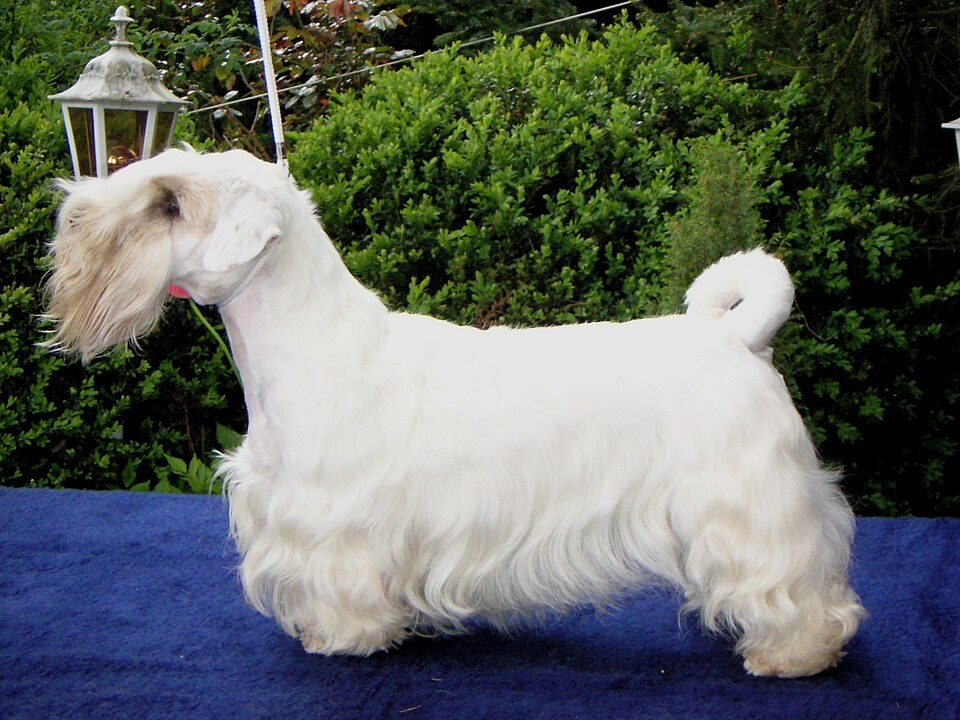
The Sealyham Terrier is a charming, sturdy little dog with a brilliant white coat that once made it one of the most popular terrier breeds in the world. These days, Sealyhams are rare -- genuinely endangered by some measures -- but the dogs that remain still carry that distinctive white wire coat that requires every bit as much professional grooming as it did when the breed was a Hollywood favorite in the 1930s and 1940s.
If you own a Sealyham, professional grooming is non-negotiable. That white coat is beautiful when maintained and a stained, matted mess when it is not.
The Sealyham Coat: White, Wire, and Demanding
Sealyham Terriers have a dense, wire outer coat over a soft, weather-resistant undercoat. The coat is predominantly white, often with lemon, brown, blue, or badger markings on the head and ears. Some Sealyhams are all-white.
The wire outer coat shares the same growth pattern as other wire-coated terriers -- dead hairs stay in the follicle instead of shedding out. But Sealyhams have an additional challenge that other wire-coated breeds do not: the white color shows everything. Dirt, staining, yellowing, tear marks, food debris in the beard -- all of it is immediately visible on a white coat.
This means Sealyham grooming is not just about coat texture management. It is about cleanliness on a level that darker-coated terriers never have to worry about.
What Professional Grooming Handles
A full Sealyham Terrier groom is a substantial appointment:
- Body coat stripping or clipping -- maintaining the wire texture and removing dead coat
- Whitening treatment -- specialty shampoos and conditioners that keep the white coat bright without harshness
- Beard and facial hair care -- the Sealyham's prominent beard collects everything and needs thorough cleaning
- Leg furnishing maintenance -- long, white leg hair that tangles and stains
- Undercoat removal -- the dense undercoat needs regular thinning
- Ear cleaning -- the fold ears need attention, and the ear markings mean colored and white hair meet at the ear, requiring different handling
- Tear stain management -- white-coated breeds show tear staining prominently
- Nail trimming -- standard care for a short-legged breed
- Sanitary trim -- essential for hygiene on a white, low-to-the-ground dog
- Belly and chest cleaning -- Sealyhams sit low; the underside gets dirty fast
Why a White Wire Coat Is Extra Work
Let us be specific about the white coat challenge. A Sealyham Terrier grooming session takes 20-30% longer than an equivalent dark-coated terrier groom because of the stain management and whitening work. Industry benchmarks show that white-coated breeds consistently require more time per appointment than dogs with colored coats of the same type and size.
Here is why:
- White wire hair stains from saliva, food, and environmental contact. Yellow-brown staining on the beard, chest, and feet is a constant battle.
- Urine staining on the rear and belly is visible on white in ways it never shows on darker coats.
- Tear staining from the eyes creates reddish-brown tracks on white facial hair.
- Grass staining on the feet and belly during outdoor activity.
What Happens When Grooming Lapses
- The white turns dingy. A neglected Sealyham goes from brilliant white to yellowish-gray within weeks. Once the staining sets into the coat, it takes multiple grooming sessions to restore brightness.
- Beard becomes unsanitary. The Sealyham's substantial beard collects food and water constantly. A neglected beard develops odor, bacterial buildup, and staining that can irritate the skin underneath.
- Matting hides in the furnishings. The white leg and body furnishings are long enough to mat seriously, and white mats against white skin are harder to spot visually than dark mats on dark dogs.
- Skin problems go unnoticed. Ironically, on a white dog, skin issues can be harder to detect under a dense double coat because the redness or irritation is hidden by the coat density. Professional groomers check the skin during every appointment.
- Ear infections develop. The fold ears trap moisture and warmth. The Sealyham's ear markings (often colored) can mask debris that would be more visible on all-white ears.
Grooming Frequency
| Method | Frequency | Home Care | |--------|-----------|----------| | Hand-stripping | Every 6-8 weeks | Twice-weekly brushing, daily beard cleaning, weekly whitening touch-ups | | Clipping | Every 5-7 weeks | Twice-weekly brushing, daily beard cleaning, weekly whitening touch-ups |
Note that home care for a Sealyham is more intensive than for darker terrier breeds. The daily beard cleaning and weekly stain management between appointments are not optional if you want to maintain a clean-looking white coat.
Finding a Groomer for a Sealyham
Sealyham Terriers are among the rarest terrier breeds -- the AKC registers very few annually, and the breed has been on endangered lists in the UK. Finding a groomer with Sealyham experience is unlikely in most areas.
Look for:
- Experience with white wire-coated breeds (if such a thing exists locally)
- Experience with wire-coated terriers generally
- Familiarity with whitening and stain management techniques
- Willingness to learn breed-specific shaping
The Investment Pays Off
A well-groomed Sealyham Terrier is genuinely stunning -- that white coat against the dark eyes and colored ear markings creates a look that few breeds can match. Professional grooming keeps that coat brilliant, functional, and comfortable. The wire texture resists dirt when properly maintained, the skin stays healthy under professional observation, and the staining stays under control.
Your Sealyham's coat is a statement piece. Treat it like one.
PawOps helps grooming salons handle rare and specialty breeds using coat condition scoring and whitening protocol assessments -- so your Sealyham Terrier gets expert care even at salons that specialize in more common breeds.