Understanding Your Russian Toy's Coat: What Every Owner Should Know
Understanding Your Russian Toy's Coat: What Every Owner Should Know
The Russian Toy is a breed of contrasts -- impossibly small but surprisingly sturdy in spirit, quiet but capable of dramatic terrier-like outbursts, and carrying a coat that ranges from sleek and nearly naked-looking to impressively fringed. Understanding both coat varieties helps you care for whichever version shares your home.
Two Varieties, One Breed
The Russian Toy (formerly the Russian Toy Terrier) comes in two distinct coat types that are treated as varieties of the same breed:
Smooth Coat (Gladkosherstnaya)
The smooth variety carries short, close-lying hair over the entire body. The coat:
- Lies flat against the skin
- Has a slight natural sheen when healthy
- Has no feathering, fringing, or ruff
- Shows the breed's elegant, deer-like structure clearly
- Is approximately uniform in length over the body
Longhaired (Dlinnosherstnaya)
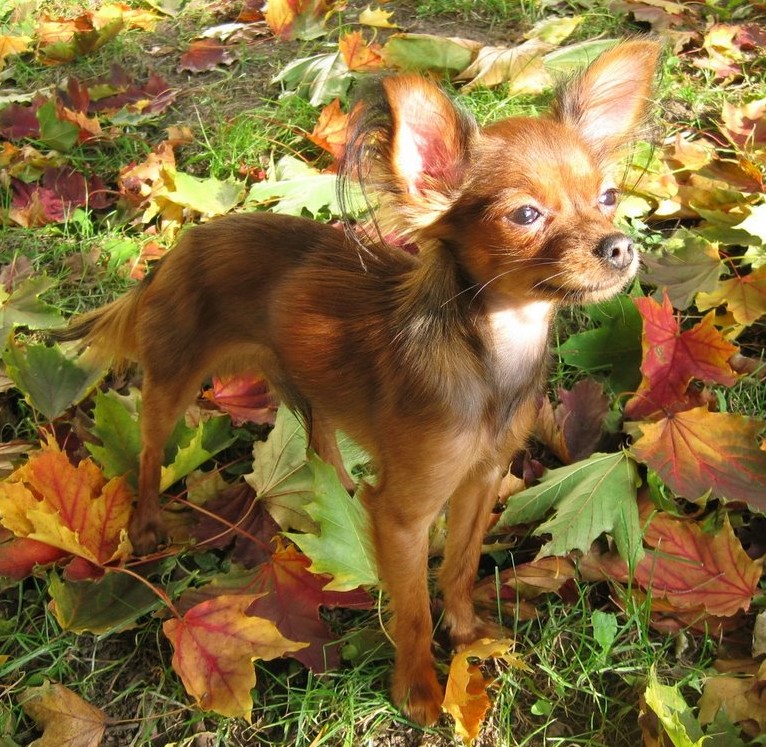
The longhaired variety has a body coat of moderate length (1-3 inches) that may be straight or slightly wavy, plus distinctive fringing on:
- Ears: The breed's signature feature. Long, silky hair extends beyond the ear tips, creating dramatic plumes that can reach 3-5 inches in length. Described as looking like butterfly wings or waterfalls.
- Backs of legs: Moderate feathering on the back of the forelegs and thighs.
- Tail: A flowing plume.
- Feet: Silky hair between and around the toes.
The Skin Underneath
Regardless of coat variety, the Russian Toy has notably thin, delicate skin. This is not just a grooming concern -- it is a health factor:
Sensitivity: Russian Toy skin reacts more readily to products, environmental irritants, and physical contact than most breeds. What would be a minor irritation on a Labrador can become a significant inflammatory response on a Russian Toy.
Fragility: The skin tears more easily than thick-skinned breeds. Rough handling during grooming, aggressive de-matting, or inappropriate tools can cause actual skin damage.
Temperature Transparency: With thin coat and thin skin, the Russian Toy has essentially no thermal insulation. They chill rapidly in cool environments and can overheat quickly in warm ones. The coat provides minimal protection either way.
Visibility: The thin coat means skin conditions are often visible earlier than in heavy-coated breeds -- redness, bumps, and dryness can be observed during routine handling. This is actually an advantage for early detection.
Breed-specific dermatological surveys from Russian and European kennel clubs note that skin sensitivity and allergic responses are among the top health considerations for the breed, affecting an estimated 20-25% of individuals to some degree.
Shedding Characteristics
Smooth Coat Shedding
The smooth Russian Toy sheds lightly to moderately year-round:- Short, fine hairs release steadily
- Seasonal increases in spring and fall
- The hairs are so fine they are less noticeable than larger-haired breeds on furniture
- Dark-colored smooth coats shed more visibly on light fabric
Longhaired Shedding
The longhaired variety sheds less noticeably:- Longer hairs stay in the coat rather than falling
- Regular brushing removes dead hair before it deposits on surfaces
- The fringing loses individual hairs that should be brushed out
- Overall household shedding impact is minimal
Color and Coat Quality
Russian Toys come in several colors:
- Black and tan: The classic and most common color. Rich black body with tan markings on muzzle, cheeks, chest, and legs.
- Brown and tan: Chocolate body with tan markings.
- Blue and tan: Dilute black, creating a steel-blue body with tan markings.
- Red/sable: Varying shades from light gold to deep red, sometimes with dark overlay.
- Cream: Very pale coloring.
The Ear Fringe: Crown Jewel of the Longhaired Variety
The ear fringing deserves its own section because it is the breed's most distinctive grooming feature:
Development: Ear fringe begins developing around 4-6 months and reaches full length by approximately 2-3 years. Some individuals develop more dramatic fringing than others.
Maintenance: The fringe needs gentle daily combing with a fine-toothed comb or small pin brush. Without daily attention, it tangles within days due to its fine, silky texture.
Common Problems:
- Matting at the base where the fringe meets the ear
- Breakage from rough handling or sleeping position
- Thinning from over-brushing or using wrong tools
- Weight pulling the ear tips down (excess fringe can cause this)
Care Routine by Coat Type
Smooth Coat Care
Weekly (5 minutes):- Gentle rubber curry brush over the body
- Soft cloth wipe-down for shine
- Eye area cleaning for tear staining
- Bath with hypoallergenic shampoo
- Gentle dry
- Skin inspection
- Nail trim
- Ear cleaning
Longhaired Care
Daily (5-10 minutes):- Pin brush or fine comb through ear fringe
- Check leg feathering and tail plume for tangles
- Eye area cleaning
- Full body brush-through
- Ear cleaning
- Bath with silky coat shampoo and light conditioner
- Detangling and conditioning of fringe
- Shaping and trimming as needed
- Nail trim
- Ear cleaning
Products for Sensitive Russian Toy Skin
The product selection matters more for this breed than most:
- Shampoo: Hypoallergenic, fragrance-free, pH-balanced for canine skin. No sulfates, no parabens.
- Conditioner (longhaired): Lightweight, silicone-free formula that does not weigh down fine hair.
- Leave-in spray: Light detangler for the longhaired variety. Avoid heavy products.
- Avoid: Human products, heavily fragranced products, medicated shampoos (unless prescribed), and any product that causes redness or itching.
Reading Your Russian Toy's Coat
The coat reflects health status clearly in this breed:
- Healthy: Smooth and shiny (smooth coat) or flowing and glossy (longhaired). Skin visible through smooth coat should be clean and evenly toned.
- Nutritional deficiency: Dull coat, dry skin, thinning. Fish oil supplements (veterinary-dosed) often help.
- Allergies: Excessive scratching, redness, coat thinning. Common in the breed.
- Stress: Coat dullness, increased shedding. Russian Toys are sensitive to environmental changes.
- Cold damage: Dry, brittle coat from excessive cold exposure. This breed needs protection in cool weather.
Respect the Fragility, Maintain the Beauty
The Russian Toy's coat -- whether smooth and sleek or flowing with dramatic fringe -- is part of what makes this breed so captivating. Understanding its delicacy means understanding the dog. Thin skin, fine hair, and extreme small size all point to the same principle: gentle, consistent, expert-informed care. When you provide that, the coat reflects a healthy, happy companion.
---
Ready to streamline your grooming workflow? PawOps Board Manager helps salons track every Russian Toy from check-in to pickup with real-time visibility. Start your free 30-day trial →
Related Reading: