Understanding Your Redbone Coonhound's Coat: What Every Owner Should Know
Understanding Your Redbone Coonhound's Coat: What Every Owner Should Know
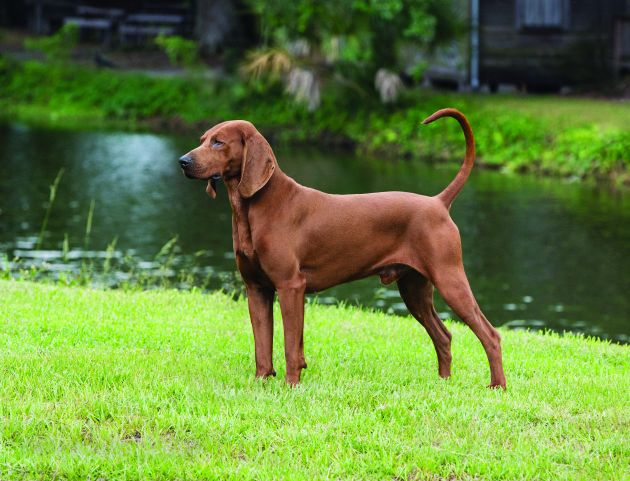
That rich, deep red coat is usually the first thing people notice about your Redbone Coonhound. It is stunning -- a uniform mahogany that catches the light and gives the breed its name. But understanding what that coat actually is, how it functions, and what it needs will make you a better owner and keep your Redbone more comfortable.
Let us look under the surface.
Coat Structure: Two Layers Doing Different Jobs
The Redbone Coonhound has a smooth, dense double coat consisting of:
Outer coat (guard hairs): Short, straight, hard-textured hairs approximately 1/2 to 1 inch long. These are the red hairs you see. They lie flat against the body, creating that sleek appearance. Guard hairs provide the first line of defense against sun, rain, brush scratches, and insect bites.
Undercoat: A softer, denser layer of fine hairs sitting close to the skin. The undercoat provides insulation -- keeping the dog warm in cold weather and, counterintuitively, helping regulate temperature in heat by creating an air buffer between the environment and the skin.
The dual-layer structure is why Redbones shed more than single-coated breeds of similar appearance. You are dealing with two coats' worth of hair turnover.
The Color: Why Redbones Are Red
The Redbone's color comes from a high concentration of pheomelanin, the pigment responsible for red and yellow tones in mammalian hair. The breed standard calls for a rich, deep red -- ideally a dark mahogany with minimal white markings (a small amount on the chest and feet is acceptable).
Color-related coat facts:
- Puppies are often lighter and darken as they mature over the first 1-2 years
- Sun exposure fades the red over time, particularly on the back and top of the head where UV exposure is highest
- Diet affects color intensity -- coats lacking adequate copper, zinc, and tyrosine (an amino acid) may appear lighter or develop a washed-out quality
- The darker the individual hairs, the slightly coarser they tend to be -- densely pigmented guard hairs have marginally more texture than lighter ones
Oil Production: The Defining Feature
More than any other coat characteristic, oil production defines the Redbone grooming experience. Coonhounds have denser sebaceous glands than most breeds -- a trait that served them well as working water-crossing hounds but creates challenges in home environments.
The oil serves multiple functions:
- Water repellency -- the oil coating on guard hairs causes water to bead and run off
- Skin protection -- the lipid layer protects against minor irritants and environmental damage
- Coat flexibility -- oil keeps the coat pliable rather than brittle
- Scent distribution -- for a scent hound, skin oil carries the dog's own scent profile (which is why they smell stronger to us)
Oil production is not constant -- it increases in response to:
- Warm weather (higher temperatures stimulate sebaceous glands)
- Stress or excitement
- Hormonal fluctuations (intact dogs produce more)
- Skin irritation (the body's defense response)
Shedding: What to Realistically Expect
Redbones shed year-round. There is no getting around this. The shed follows a pattern:
Baseline shedding (year-round): Guard hairs and undercoat hairs complete their growth cycle and fall out individually. You will find red hairs on everything you own. The stiff texture means they embed in fabric rather than sitting on top where they can be easily removed.
Seasonal blow (spring and fall): The undercoat responds to changing daylight hours by either thickening (fall) or thinning (spring). During the spring blow, you will notice dramatically increased shedding for 2-4 weeks as the winter undercoat releases. This is the most intense shedding period.
Stress shedding: Redbones can shed excessively in response to stress, illness, or major environmental changes. If shedding suddenly increases outside of seasonal patterns, investigate the cause.
Quantitatively, a healthy Redbone Coonhound produces enough shed hair to fill a standard sandwich bag every 1-2 weeks during normal periods, and a quart-sized bag weekly during seasonal blows. This is based on owner reports and groomer estimates for the breed.
What a Healthy Redbone Coat Looks Like
Learn to read your dog's coat as a health indicator:
Healthy:
- Deep, consistent red color with natural sheen
- Smooth, flat-lying guard hairs
- Coat feels slightly oily but not greasy when you run your hand along the body
- Skin underneath is light pink to pale, no redness
- Even coverage with no thin spots
- Color fading or uneven patches -- possible nutritional deficiency, thyroid issues, or fungal infection
- Excessive oiliness with odor -- may indicate seborrheic dermatitis, allergies, or skin infection
- Dry, flaky skin underneath -- over-bathing, environmental allergies, or dry climate effects
- Hair loss patches -- allergies (especially contact or food), mange, or hormonal imbalance
- Dull, rough texture without shine -- often the first sign of internal illness or poor nutrition
Climate and Environment Effects
Southern/warm climates: The Redbone was developed in the southern United States and handles heat reasonably well. The coat will be thinner year-round in warm climates, with less pronounced seasonal changes. Oil production increases, making more frequent bathing necessary.
Northern/cold climates: The undercoat thickens substantially. Redbones can tolerate cold better than their short coat suggests, but they are not cold-weather specialists. Below 25 degrees Fahrenheit, protection is needed for extended outdoor time.
Humid environments: Humidity amplifies hound odor by preventing oil from evaporating and creating optimal conditions for skin bacteria. Redbones in humid climates typically need bathing every 2-3 weeks rather than the standard 4-6 weeks.
Dry environments: Low humidity can dry the skin and cause flaking, despite the natural oil production. A humidifier in the dog's primary living area helps in very dry climates.
Nutrition and Coat Quality
The Redbone coat responds visibly to diet quality within 4-6 weeks:
Essential for coat health:
- Omega-3 fatty acids (fish oil, flaxseed) -- regulate oil production and reduce inflammation
- Omega-6 fatty acids (chicken fat, sunflower oil) -- maintain skin barrier function
- High-quality animal protein -- provides amino acids for keratin production
- Zinc -- critical for skin cell turnover and coat quality
- Copper -- supports pigmentation (important for maintaining red color depth)
- Biotin -- strengthens hair structure
Home Care Between Professional Grooms
Daily and weekly maintenance keeps the coat functional between professional appointments:
Daily (2-3 minutes):
- Ear check -- lift the flap, look and sniff for early infection signs
- Quick visual scan for ticks, scratches, or irritation after outdoor time
- Brush with a rubber curry brush or hound mitt to distribute oils and remove loose coat
- Wipe down with a damp grooming cloth if the dog has gotten into dirt
- Check paw pads for cracks or embedded debris
- Spot-clean with waterless shampoo between baths for odor management
- Ear wipe with vet-approved ear cleaner if wax is visible
The Bottom Line
Your Redbone's coat is a working system, not just an aesthetic feature. It regulates temperature, repels water, protects skin, and signals health status. Understanding how the oil, shedding, and double-coat structure work together helps you provide appropriate care rather than fighting against what the coat naturally does.
The goal is not to eliminate hound coat characteristics -- it is to manage them so your Redbone is comfortable, healthy, and pleasant to live with indoors.
PawOps helps groomers assess hound coat condition accurately, determining whether a Redbone needs a basic maintenance bath or a full de-shedding and odor treatment -- so every visit delivers exactly what the coat needs.