Understanding Your Miniature American Shepherd's Coat: The Shedding, the Feathering, and Everything Between
Understanding Your Miniature American Shepherd's Coat: The Shedding, the Feathering, and Everything Between
The Miniature American Shepherd wears one of the most attractive coats in the herding group -- medium length, richly colored, with flowing feathering and a distinguished mane. It is the kind of coat that makes people stop and compliment your dog. It is also the kind of coat that makes people stop and stare at the amount of fur on your clothes.
Understanding how this coat works, why it does what it does, and what it needs from you is essential knowledge for every MAS owner.
The Double Coat Architecture
The Miniature American Shepherd has a classic herding breed double coat with two distinct layers:
The Guard Coat (Outer Layer)
Medium length, straight to wavy, with a slightly coarse texture that provides weather resistance. The guard hairs are longer on certain body parts:
- Mane and frill -- a longer ruff around the neck and chest, more pronounced in males
- Feathering -- longer hair on the backs of the forelegs
- Britches -- longer hair on the rear legs
- Tail -- full and plumed
The Undercoat (Inner Layer)
Soft, fine, and dense, the undercoat is the insulation system. It traps air against the body, providing warmth in cold weather and, through air circulation, some heat regulation in warm weather.
The undercoat is also the shedding layer. It grows and sheds in response to daylight changes (photoperiod) rather than temperature. As days lengthen in spring, the dense winter undercoat sheds. As days shorten in fall, the lighter summer undercoat gives way to the incoming winter coat.
This means indoor dogs that live under artificial lighting may shed more continuously, while outdoor dogs tend to have more defined shedding seasons.
The Shedding Truth
Let us be honest about this: Miniature American Shepherds shed a lot. This is not a breed you choose if dog hair is a dealbreaker.
Year-round shedding: Light to moderate. You will find hair on your clothes, furniture, and car. Daily brushing reduces this but does not eliminate it.
Coat blows (spring and fall): Heavy. The undercoat comes out in clumps, tufts, and seemingly infinite quantities. Coat blows typically last two to four weeks. During this period, you could brush your MAS for 20 minutes, fill a bag, and find more loose undercoat the next day.
The AKC describes the MAS coat as "moderate length and density" with "seasonal shedding." Owners tend to describe it less diplomatically. One popular MAS owner forum puts it: "If you are not prepared to have dog hair in your coffee, get a different breed."
A study by a veterinary dermatology group found that herding breeds with medium-length double coats produce an average of 1.2 grams of shed hair per kilogram of body weight per day during peak shedding -- roughly double the amount during non-shedding periods.
Coat Colors and Patterns
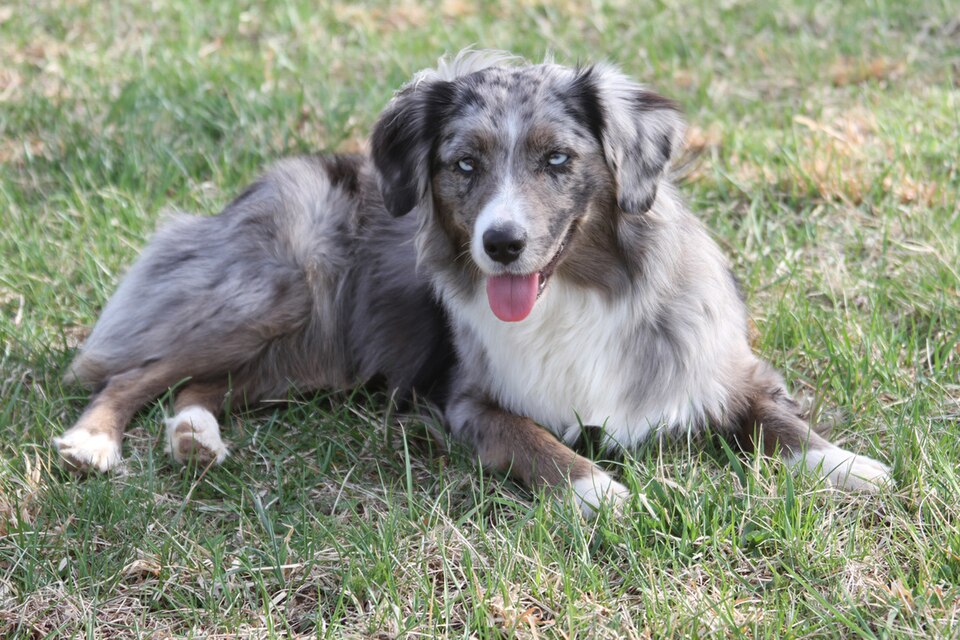
Miniature American Shepherds come in four recognized color patterns, each with their own visual appeal:
Black
Solid black or black with white markings and/or tan points (tricolor). The black coat tends to be slightly coarser in texture.Red (Liver)
Ranges from light cinnamon to deep liver. Red coats sometimes have a slightly softer texture than black coats. Sun exposure can lighten red coats over time.Blue Merle
A marbled pattern of gray, black, and white, often with tan points. No two blue merles look exactly alike. The merle gene creates a randomized pattern that can range from mostly gray with a few dark patches to heavily mottled.Red Merle
A marbled pattern of cream, red, and white. Like blue merle, each dog's pattern is unique.All four color patterns have the same coat structure and grooming requirements. The only practical difference is that lighter-colored dogs show dirt more easily and may need more frequent bathing.
Coat Development Timeline
Puppy coat (0-6 months): Soft, fluffy, and often lighter in color than the adult coat will be. Easy to maintain with gentle brushing a few times a week.
Adolescent transition (6-12 months): The adult coat grows in and the puppy coat sheds out. This is a matting-prone period as the two coat types tangle together. Increase brushing frequency to daily during this phase.
Adult coat (12+ months): The coat is fully established. Guard hairs are at full length, feathering is developed, and the undercoat has settled into its seasonal cycle.
Senior changes (8+ years): Some MAS dogs develop a slightly softer, thinner coat with age. Grooming needs may change as the coat texture shifts.
Common Coat Issues
Matting in Friction Zones
The most common coat problem in MAS dogs. Mat-prone areas include:
- Behind the ears
- In the armpits
- Under the collar
- In the britches (rear leg feathering)
- Where the chest ruff meets the forelegs
Undercoat Compaction
When dead undercoat is not removed, it packs down against the skin and forms a dense layer that restricts airflow. This can cause:
- Hot spots
- Bacterial skin infections
- Excessive panting in warm weather
- A persistent musty smell from trapped moisture
Post-Spay/Neuter Coat Changes
Some MAS dogs develop a softer, cottony coat texture after spaying or neutering. This is sometimes called "spay coat" and is related to hormonal changes. The altered coat texture can mat more easily and may require more frequent grooming. Not all dogs experience this, but it is common enough to be worth knowing about.
Essential Coat Care Tools
- Slicker brush -- daily maintenance, surface and mid-layer detangling
- Steel comb -- finding hidden mats after brushing
- Undercoat rake -- removing dead undercoat during shedding seasons
- Pin brush -- gentle option for face and ear areas
- High-velocity dryer (optional for home use) -- dramatically speeds up loose undercoat removal
The Never-Shave Rule
This comes up constantly with MAS owners, especially in warm climates: do not shave your Miniature American Shepherd.
Shaving removes the guard coat that protects against UV radiation and insulates against heat. The undercoat grows back faster than the guard hairs, creating a coat that is functionally worse at regulating temperature. In some cases, the guard coat never fully recovers its original texture.
If your MAS is hot, the correct approach is professional deshedding to remove dead undercoat and improve airflow to the skin, not shaving.
The Coat as Part of the Breed
Your MAS's coat tells a story. The colors, the patterns, the feathering, the seasonal changes -- all of it reflects centuries of breeding for function and beauty. Understanding the coat's structure helps you work with it rather than against it, keeping your dog comfortable, healthy, and looking like the stunning breed they are.
PawOps helps grooming salons assess and price double coats like the Miniature American Shepherd's using condition-based metrics -- because a well-maintained coat and a packed, matted coat are completely different grooming jobs that should be priced accordingly.