Understanding Your Lagotto Romagnolo's Coat: The Truffle Dog's Curly Challenge
Understanding Your Lagotto Romagnolo's Coat: The Truffle Dog's Curly Challenge
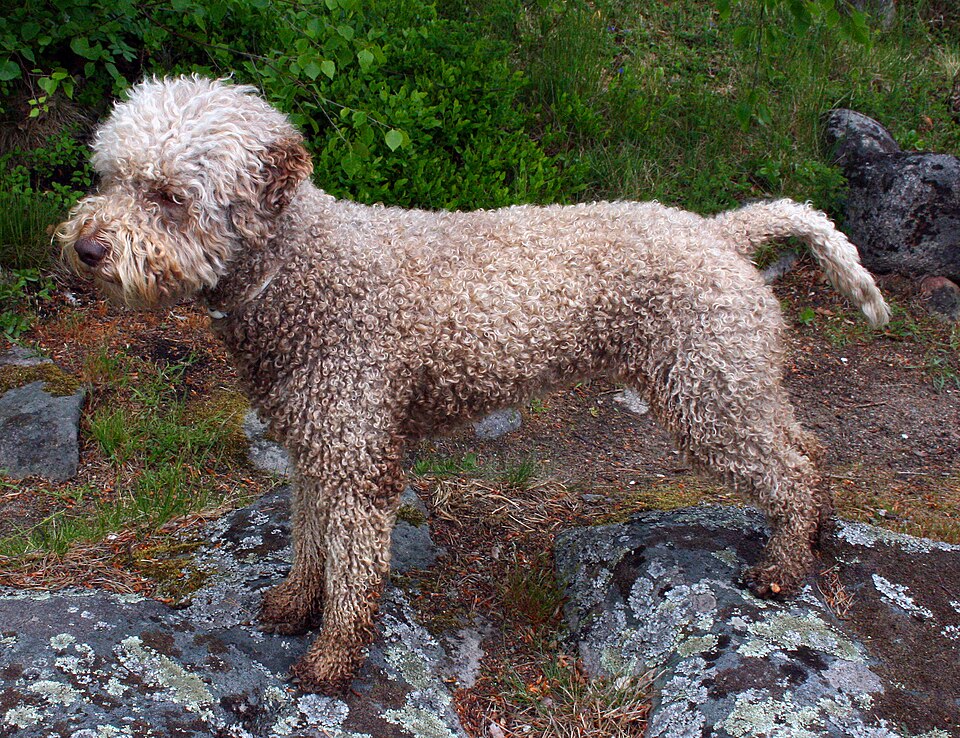
The Lagotto Romagnolo's coat is both its most attractive feature and its greatest maintenance demand. Originally developed as a water retriever in Italy's marshy Romagna region before transitioning to truffle hunting, this breed carries a coat engineered to work in water, cold, and dense undergrowth. Understanding what that coat is and how it behaves will make you a better Lagotto owner.
Coat Structure: A Working System
The Lagotto coat is a dense, waterproof, curly double coat with specific functional layers:
Outer coat:
- Thick, woolly, and curly
- Forms tight rings to loose spirals depending on genetics
- Rough-textured (not soft and silky like a show Poodle)
- Covers the entire body including face and legs
- Grows continuously without reaching a terminal length
- Dense and water-resistant
- Provides insulation and buoyancy in water
- Contributes significantly to matting when not maintained
- Traps moisture against the skin if not properly dried
The Curl Pattern
Lagotto curls vary between individuals:
- Tight rings: Small, defined circular curls close to the body. More common, traditional appearance.
- Loose spirals: Larger, more open curl pattern. Less common but acceptable.
- Wavy areas: Some individuals have wavier sections (often ears and top of head) mixed with curlier body coat.
| Curl Type | Matting Tendency | Brushing Difficulty | Drying Time | |-----------|-----------------|--------------------|-----------| | Tight rings | Highest (curls interlock) | Most difficult | Longest | | Loose spirals | Moderate | Moderate | Moderate | | Wavy | Lower | Easier | Shorter |
Tighter curls require more frequent and more thorough grooming. If your Lagotto has very tight curls, lean toward the shorter end of the recommended groom interval (every 4 weeks rather than 6).
The Non-Shedding Reality
The Lagotto is genuinely low-shedding. Dead hairs do not fall out of the coat and onto your furniture. However, this creates a specific maintenance obligation:
What happens to dead hair:
The equation is simple: Less shedding = more grooming. These are not separate facts -- they are cause and effect.
The Italian Club's breed documentation states that the Lagotto coat "requires regular maintenance to prevent matting" and specifically warns against the misperception that non-shedding means low maintenance. A 2024 survey of Lagotto owners found that 78% underestimated grooming needs before acquiring the breed.
Matting: Understanding the Enemy
Matting in Lagottos follows predictable patterns:
High-risk areas (mat first):
- Behind the ears
- Under the collar line
- Armpits (where legs meet body)
- Behind rear legs (pants area)
- Chest and belly
- Between toes
- Top of back
- Sides of body
- Top of head
- Water exposure without thorough drying
- Friction from collars, harnesses, or clothing
- Lack of brushing for 5+ days
- Coat kept too long for the owner's maintenance ability
- Seasonal undercoat changes
Coat Growth Cycle
Unlike many breeds where coat reaches a set length and stops growing, the Lagotto coat grows continuously:
- Growth rate: Approximately 1/2 to 3/4 inch per month (varies by individual)
- No terminal length: Will continue growing indefinitely if not trimmed
- Growth cycle: Individual hairs grow for an extended period before entering rest phase and dying (staying in the coat)
- Regular trimming is necessary (not just maintenance, but actual hair removal)
- A Lagotto that never visits a groomer will develop a massive, felted coat within months
- You are managing an ever-growing system, not maintaining a static one
Water and the Lagotto Coat
As a water dog breed, Lagottos were designed to work in water. Their coat has waterproofing properties -- but those properties create grooming complications:
The waterproof paradox:
- The coat repels external water (rain, splashes): Good
- The coat traps moisture underneath once saturated: Bad for drying
- Complete saturation takes significant time under running water
- Complete drying takes equally significant time with forced air
- The dense waterproof coat can take 2-4 hours to air-dry completely
- Air-drying promotes matting (wet curls tangle as they dry)
- High-velocity forced-air drying is essential: 20-40 minutes with professional equipment
- A damp-left Lagotto will develop mats within 24-48 hours in the wet areas
Seasonal Changes
Lagotto coats change somewhat through the year:
- Spring: Undercoat may loosen slightly. Increased matting risk as dead undercoat tangles with outer coat.
- Summer: Coat may thin marginally. Some owners clip shorter for comfort.
- Fall: Coat begins thickening. New growth may change curl pattern slightly.
- Winter: At maximum density. Thickest, warmest, and most prone to matting from compression (lying down, wearing coats).
Nutrition and Coat Health
The Lagotto's demanding coat benefits from nutritional support:
- Omega-3 fatty acids: Maintain moisture in curl structure, reduce brittleness
- Biotin: Strengthens keratin in continuously-growing hair
- Quality protein: Provides building blocks for constant new hair growth
- Zinc: Supports skin health under the dense coat
- Adequate fat: Supports the coat's natural oil balance
- Dry, brittle curls that break rather than form smooth rings
- Increased matting (damaged hair tangles more easily)
- Dull, lifeless appearance
- Slower regrowth after trimming
Home Care Protocol
Every 2-3 days (15-20 minutes):
- Line brush entire body using slicker brush and metal comb
- Work from skin to tip, section by section
- Check high-risk areas specifically
- Finish with comb-through to verify no tangles remain
- Dry thoroughly with forced air or high-velocity dryer
- Never leave a wet Lagotto to air-dry
- Brush once dry to separate any curls that tangled while wet
- Keep eye area clear (trim if needed for vision)
- Check ear canal for excessive hair growth
- Monitor coat length -- if you cannot brush effectively to the skin, it is time for a trim