Understanding Your Irish Water Spaniel's Coat: What Every Owner Should Know
Understanding Your Irish Water Spaniel's Coat: What Every Owner Should Know
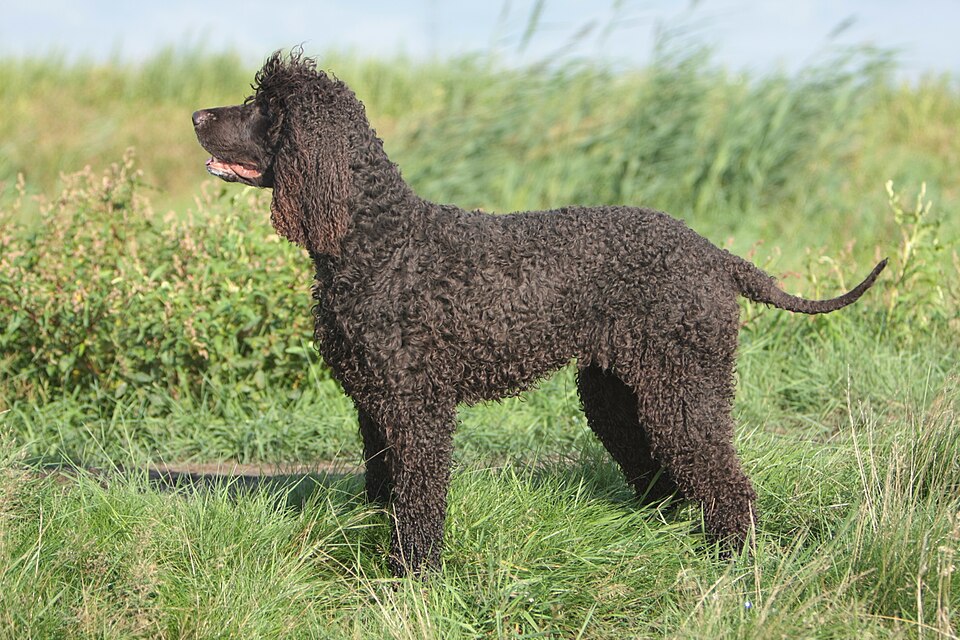
The Irish Water Spaniel looks like no other dog. From the mass of tight liver curls to the completely smooth "rat tail" and bare face, this is a breed that turns heads everywhere. Understanding what makes this coat work -- and what it needs from you -- is the difference between a magnificent dog and a matted, uncomfortable one.
Anatomy of the IWS Coat
The Irish Water Spaniel's coat is a study in contrasts. Different parts of the body carry dramatically different coat types:
The Curly Body Coat
The majority of the IWS body is covered in dense, tight, liver-colored curls. These curls are:
- Crisp in texture: Properly maintained curls feel springy and defined, not soft or woolly
- Uniform in density: Curls pack closely together creating a nearly waterproof layer
- Naturally oily: A key feature for water repellency
- Continuously growing: Like hair, not fur -- grows until cut rather than shedding at a set length
The Smooth Areas
In stark contrast to the curly body:
- Face: Smooth, short hair covers the muzzle and cheeks. The transition between smooth face and curly head is abrupt.
- Tail: The famous "rat tail" -- only the first 2-3 inches at the base carry curls, then the tail is covered in short, smooth hair. This is a breed hallmark, not a grooming choice.
- Throat: A V-shaped area of smooth, short hair on the front of the throat
The Topknot
Falling forward over the forehead is a natural topknot of long, loose curls. This is longer and less tightly curled than the body coat -- more like loose ringlets. The topknot grows continuously and needs regular trimming to keep it out of the eyes while maintaining its natural fall.
The Oil Factor: Functional Design
Irish Water Spaniels produce significantly more sebum (natural skin oil) than most breeds. This is not a flaw -- it is engineering for a water retriever.
Why the oil matters:
- Creates water repellency (water beads off rather than soaking in)
- Protects skin during extended time in cold water
- Adds weight to curls, helping them lie properly
- Provides natural coat conditioning
- Attracts and holds dirt particles
- Can develop a distinct "doggy" odor if not managed
- Acts as adhesive between hairs, accelerating mat formation
- Requires specific shampoo formulations to clean without stripping
Shedding: The Low-Shed Reality
One of the most attractive features of the Irish Water Spaniel for allergy-conscious families is their minimal shedding. However, "low-shedding" comes with caveats:
What low-shedding actually means for IWS:
- Dead hair stays trapped in the curl structure rather than falling out
- Without regular brushing, dead hair forms the foundation of mats
- You will not find tumbleweeds of fur on your floors
- You WILL find individual curly hairs occasionally
- The coat requires cutting/trimming because it grows continuously
This is why many IWS owners describe the breed as "high maintenance but not high shedding." Both statements are true simultaneously.
Hypoallergenic Claims: The Truth
Irish Water Spaniels are often listed as "hypoallergenic." Here is the nuanced reality:
- They produce less airborne dander than heavy-shedding breeds
- The tight curls trap dander close to the skin rather than releasing it into the air
- People with mild dog allergies often tolerate IWS better than shedding breeds
- No dog is truly hypoallergenic -- all produce the Can f 1 protein that triggers allergies
- The natural oil can be an irritant for some allergy sufferers
- Regular grooming significantly reduces allergen load in the home
How the Coat Changes Through Life
Puppy coat (0-12 months): Puppies are born with wavy, soft coat that gradually tightens into adult curls. The puppy coat is easier to maintain but begins transitioning around 8-10 months.
Adolescent coat (12-24 months): The most challenging period. The puppy coat mixes with incoming adult coat, creating a texture that mats easily. Extra grooming attention during this phase prevents problems.
Adult coat (2+ years): Full, crisp curls are established. Coat maintenance becomes predictable. Oil production reaches its adult level.
Senior coat (8+ years): Curls may soften slightly. Growth rate slows. Some dogs develop slightly thinner coat. Gentler grooming approach may be needed for aging skin.
Coat Condition Indicators
Your IWS coat is a health dashboard:
| Coat Condition | What It Means | |---------------|---------------| | Tight, springy, defined curls | Healthy, well-nourished | | Limp, flat, undefined curls | Nutritional deficiency or thyroid issue | | Excessive oiliness (beyond normal) | Possible seborrhea or hormonal imbalance | | Dry, brittle curls | Over-bathing, harsh products, or omega-3 deficiency | | Patchy curl loss | Allergies, fungal infection, or autoimmune condition | | Strong persistent odor despite bathing | Skin infection or yeast overgrowth |
Swimming and the Coat
The Irish Water Spaniel was bred to swim, and their coat is built for it. But water activities require specific coat care:
After freshwater swimming:
- Allow the dog to shake thoroughly
- No need to rinse (freshwater is fine)
- Brush through the entire coat once mostly dry
- Pay special attention to ears (dry thoroughly)
- Rinse thoroughly with fresh water (salt dries and damages curls)
- Apply a light leave-in conditioner
- Brush once dry to prevent salt-stiffened mats
- Rinse immediately and thoroughly
- Use a gentle shampoo if swimming was extended
- Condition to replace oils stripped by chlorine
- Chlorine is the most damaging water type for IWS coat -- limit exposure or rinse immediately
Home Maintenance Between Professional Grooms
Daily (5 minutes):
- Quick check of ears for odor or discharge
- Visual coat assessment -- any tangles starting?
- Full line-brushing session: part coat in sections, brush from skin outward
- Use a pin brush or long-pin slicker for best results on curls
- Follow with a metal comb to check for hidden tangles
- Work through topknot and ear feathering
- Ear cleaning with veterinary-approved solution
- Face trim of any stray hairs growing into smooth areas
- Paw pad check and trim if needed
Tools That Work for IWS Coats
- Long-pin slicker brush: Gets through dense curls without pulling
- Metal greyhound comb (wide and fine tooth): Confirmation tool -- if the comb passes through, the section is tangle-free
- Pin brush: Gentle daily maintenance
- Curved scissors: For face/feet touch-ups between grooms
- Ear cleaning solution: Weekly preventive care
- Leave-in conditioner spray: Aids brushing and defines curls between baths
What Makes the IWS Coat Special
The Irish Water Spaniel's coat represents centuries of selective breeding for a specific purpose: retrieving waterfowl from the cold waters of Ireland. Every characteristic -- the oil, the curl density, the water-resistant structure -- exists because it made dogs better at their job.
Understanding this history helps you understand the care. You are not maintaining a fashion choice. You are maintaining functional engineering that happens to also be beautiful. When you invest time and resources in proper coat care, you are honoring the generations of breeding that created something this remarkable.
---
Ready to streamline your grooming workflow? PawOps Board Manager helps salons track every Irish Water Spaniel from check-in to pickup with real-time visibility. Start your free 30-day trial →
Related Reading: