Why Your Greater Swiss Mountain Dog Needs Professional Grooming (Do Not Let That Short Coat Fool You)
Why Your Greater Swiss Mountain Dog Needs Professional Grooming (Do Not Let That Short Coat Fool You)
Greater Swiss Mountain Dogs -- Swissies to everyone who loves them -- are the breed that tricks owners into thinking grooming is easy. They have a short coat. No feathering. No mane. No elaborate styling required. How hard can it be?
The answer: harder than you think, and for reasons that have nothing to do with aesthetics.
Swissies carry a dense, tight double coat on a frame that can weigh 85 to 140 pounds. That combination creates grooming needs that a bath at home simply cannot address. Here is why professional grooming is not optional for this breed.
The Swissy Coat Is Deceptively Dense
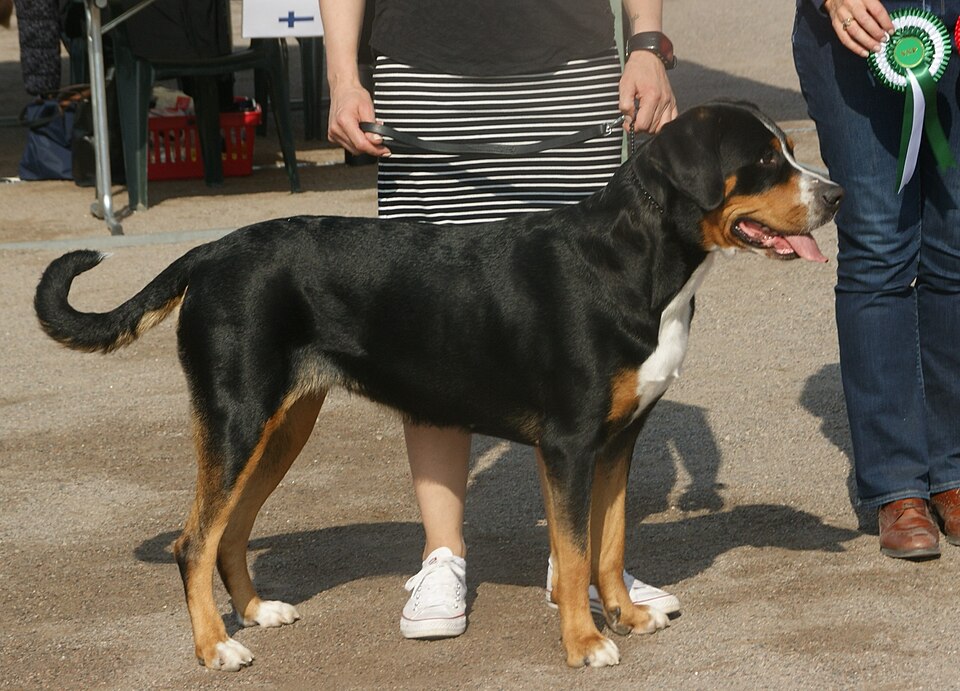
At first glance, the Greater Swiss Mountain Dog looks like a low-maintenance grooming prospect. The outer coat is short -- about one to two inches -- and lies flat against the body. The classic tricolor pattern (black, white, and rust) is striking without any trimming or shaping.
But underneath that tidy exterior sits a thick, dense undercoat that was developed for working in Swiss Alpine conditions. The Greater Swiss Mountain Dog was bred as an all-purpose farm dog in the Swiss Alps -- pulling carts, guarding livestock, and driving cattle in snow and cold rain. That undercoat was their survival tool.
The Greater Swiss Mountain Dog Club of America classifies the breed as a moderate to heavy shedder year-round with significant seasonal blowouts. The short outer coat actually makes shedding worse in some ways -- shorter hairs embed in furniture, clothing, and car upholstery more stubbornly than longer fur that sits on top of surfaces.
What Professional Grooming Does for a Swissy
Deep Undercoat Removal
This is the core reason your Swissy needs professional grooming. The tight, flat-lying outer coat presses the undercoat close to the skin. When dead undercoat accumulates, it packs into a dense layer that home brushing barely penetrates.
Professional groomers use high-velocity dryers that blast loose undercoat out from the skin level. On a Swissy, the amount of undercoat that comes out during a professional blow-dry session is astonishing for a short-coated breed. Owners who have never seen a professional Swissy deshed are genuinely shocked by the volume.
Without this removal, packed undercoat traps heat and moisture against the skin. For a breed that already runs warm and is prone to overheating (Swissies have relatively low heat tolerance for their size), this is a real health concern.
Skin Assessment on a Giant Breed
Swissies are prone to several skin conditions including hot spots, contact allergies, and lick granulomas. Their short coat makes skin problems visible earlier than in long-coated breeds, but only if someone is looking. A professional groomer examines the entire body during bathing and drying, catching irritation, dry patches, bumps, and parasites that you might miss during casual petting.
The GSMD Health Foundation reports that skin allergies are among the most common health concerns in the breed. Professional groomers trained in condition assessment can flag early signs during routine appointments.
Proper Bathing of a 140-Pound Dog
Let us be practical. Bathing a Greater Swiss Mountain Dog at home is an engineering project. You need a tub or shower area that can contain a dog that weighs as much as some adult humans, enough water pressure to saturate a dense double coat, appropriate shampoo dilution to actually reach the skin through that tight coat, and a way to rinse thoroughly enough that no residue remains to cause irritation.
Professional salons have raised tubs, adjustable spray nozzles, and the drainage to handle giant breed baths efficiently. The difference between a professional bath and a garden hose rinse is the difference between actually cleaning the skin and just wetting the topcoat.
Nail Care for Structural Health
At 85 to 140 pounds, nail length directly affects joint mechanics. Greater Swiss Mountain Dogs are predisposed to elbow dysplasia and osteochondritis, and overgrown nails alter weight distribution across already-stressed joints. According to the American Veterinary Medical Association, overgrown nails are one of the most common and most overlooked contributors to gait problems in giant breeds.
Professional nail trimming or grinding keeps nails at the correct length for proper weight distribution. The thick, hard nails on a Swissy can be difficult to trim at home without proper tools and confidence.
Anal Gland Monitoring
Swissies can have anal gland issues, and the grooming appointment is a natural checkpoint. Professional groomers assess whether the glands need expression and can flag problems before they become infections or abscesses.
What Happens When Grooming Gets Skipped
Swissy owners who assume the short coat means no grooming needed run into these issues:
- Shedding overload. Without professional undercoat removal, short hairs shed constantly and embed in every fabric surface. Owners describe it as a never-ending snowfall of tiny black and white hairs.
- Skin problems under the radar. Hot spots develop under packed undercoat and progress to veterinary-level issues before they are visible.
- Odor. Dead undercoat and skin oils accumulate without proper bathing, creating a strong doggy smell that home baths do not fully address.
- Nail-related gait changes. Overgrown nails on a 120-pound dog create mechanical problems that compound over time.
- Heat intolerance. A Swissy with packed undercoat overheats more quickly and recovers more slowly. Given the breed's known sensitivity to heat, this is a safety issue.
How Often Should a Swissy See the Groomer
Greater Swiss Mountain Dogs do well on a six to ten week grooming schedule, adjusted seasonally:
| Season | Recommended Frequency | Focus | |--------|-----------------------|-------| | Spring blowout | Every 4-6 weeks | Heavy deshedding, skin checks | | Summer | Every 6-8 weeks | Undercoat thinning, overheating prevention | | Fall blowout | Every 4-6 weeks | Deshedding as winter coat grows in | | Winter | Every 8-10 weeks | Standard maintenance, nail care |
Between visits, brush your Swissy once or twice a week with an undercoat rake and a rubber curry brush. The curry brush is particularly effective on short double coats -- it lifts loose undercoat that a bristle brush glides over.
Finding a Groomer for Your Swissy
The challenge with Swissies is not finding a groomer who knows the breed -- it is finding one who takes the coat seriously. Because Swissies look low-maintenance, some groomers give them a quick bath and call it done. You want a groomer who:
- Understands that short coat does not mean light coat
- Uses a high-velocity dryer on every visit, not just during blowout season
- Has equipment rated for dogs over 100 pounds
- Performs skin checks as part of the standard service
- Does not rush through a giant breed appointment
The Prevention Math
Professional Swissy grooming costs $65 to $110 per session. Use our free pricing calculator → A veterinary dermatology visit for a hot spot or skin infection costs $150 to $400. Treatment for a chronic skin condition runs $300 to $800 per episode. Correcting gait issues from long-term nail neglect involves veterinary orthopedic assessment at $200 to $500.
The grooming appointment is the cheaper option every time.
PawOps helps grooming salons assess short-coated giant breeds using condition scoring and coat density analysis -- because a Greater Swiss Mountain Dog's grooming needs are defined by what you cannot see, not what you can.
Related Reading: