Understanding Your Dogue de Bordeaux's Coat: Short Does Not Mean Simple
Understanding Your Dogue de Bordeaux's Coat: Short Does Not Mean Simple
The Dogue de Bordeaux has one of the most deceptively simple-looking coats in the dog world. It is short. It is fine. It lies flat against the body. On paper, it seems like the lowest-maintenance coat you could ask for. In practice, the coat exists as part of a system that includes deep wrinkles, heavy jowls, and sensitive skin -- and understanding how all these elements work together is the difference between a healthy DDB and a chronically uncomfortable one.
What the DDB Coat Is Actually Like
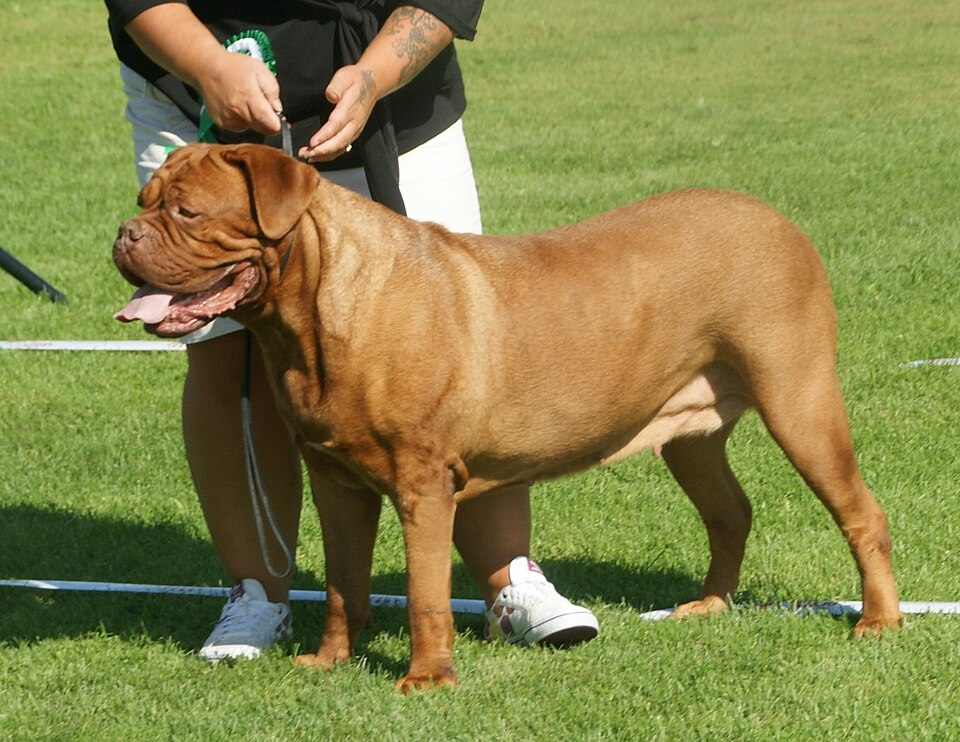
The Dogue de Bordeaux has a short, fine, single-layer coat. There is no undercoat to speak of, which means no undercoat-related shedding events and no woolly layer to manage. Individual hairs are fine, relatively soft, and lie close to the body.
Colors range from fawn to mahogany, with most dogs falling in the richer red-brown spectrum. Some DDBs have a darker mask on the face (black or brown), and white patches may appear on the chest and toes.
The coat is uniform in length across the body, with no feathering, fringe, or longer guard hairs. What you see is what you get -- and what you get is a coat that reveals the skin beneath it more readily than most breeds.
Why the Short Coat Actually Means More Skin Attention
With a long-coated breed, the coat creates a protective barrier between the environment and the skin. With the DDB's fine, short coat, that barrier is minimal. This means:
- Environmental allergens reach the skin more directly. Pollen, grass, dust, and cleaning products contact the skin without a thick coat buffer. This partly explains why DDBs have higher rates of contact dermatitis and environmental allergies.
- Sun exposure is more direct. Lightly colored DDBs and those with thinner coat areas (belly, inner thighs) can sunburn. Yes, dogs sunburn.
- Parasites are both easier to spot and more irritating. The short coat means you can see fleas, but it also means flea bites reach the skin immediately without any insulating coat layer.
- Temperature regulation is limited. The DDB does not have a double coat to insulate against cold or buffer against heat. These dogs are sensitive to temperature extremes on both ends.
The Wrinkle-Coat Connection
The DDB's coat does not exist in isolation. It wraps around deep facial folds, neck rolls, and body wrinkles. Inside these folds, the coat dynamics change entirely:
- Moisture retention -- The short hair inside folds wicks drool and moisture against the skin, holding it there
- Friction -- Skin-to-skin contact inside folds creates rubbing that irritates the fine-coated skin
- Bacterial environment -- The combination of moisture, warmth, and limited airflow inside wrinkles creates ideal conditions for bacterial and yeast growth
- Dead hair accumulation -- Even short coats shed, and shed hair collects inside folds where it mixes with oils and moisture
Shedding Patterns
Dogue de Bordeaux shed moderately year-round. The shedding is not dramatic -- you will not find tumbleweeds of fur rolling across your floor -- but the fine, short hairs have a particular talent for embedding themselves in clothing, upholstery, and car seats. They are like tiny needles that work into fabric and resist vacuum cleaners.
Seasonal shedding increases slightly in spring and fall. During these periods, weekly brushing with a rubber curry comb helps manage the volume. A professional deshedding treatment is worth considering during the heavier shed periods.
A surprising detail about DDB shedding: the shed hairs from this breed are among the hardest to remove from dark clothing. The short, fine, light-colored hairs contrast sharply against dark fabric and embed deeply into the weave. A lint roller becomes less of a convenience and more of a survival tool.
Common Coat and Skin Issues
Skin Fold Dermatitis
The most common issue by far. Red, irritated skin inside the wrinkles, sometimes with a discharge and odor. Prevention through daily fold cleaning and professional grooming far outweighs treatment costs. Use our free pricing calculator →
Environmental Allergies
DDBs are prone to allergic reactions that show up as itching, redness, bumps, and hair loss. The short coat makes these visible earlier than in long-coated breeds, which is actually an advantage for early treatment.
Demodectic Mange
The breed has a somewhat elevated susceptibility to demodex mites. Hair loss, redness, and scaly patches -- particularly around the face and legs -- may indicate mange. Regular skin checks during grooming help with early detection.
Acne
DDBs can develop chin acne, particularly in the folds around the muzzle and lower lip. Bacteria trapped in drool-saturated skin folds irritate hair follicles. Keeping the chin area clean and dry is preventive.
Dry, Flaky Skin
Some DDBs have naturally dry skin that flakes visibly through the short coat. Omega-3 fatty acid supplements and moisturizing shampoos help. Over-bathing makes this worse -- the fine coat and thin skin lose natural oils faster than heavy-coated breeds.
Seasonal Coat Care
- Spring and Summer: Shedding increases slightly. Sun protection matters for lightly pigmented areas. Humidity increases wrinkle infection risk -- step up fold cleaning. Allergens are highest -- watch for skin reactions.
- Fall and Winter: Shedding moderates. Dry indoor heating can worsen dry skin issues. The limited coat provides minimal cold weather protection -- DDBs should not spend extended time outside in cold weather.
Essential Home Care Tools
- Rubber curry comb or grooming mitt -- the ideal brushing tool for this coat type, lifts dead hair without irritating skin
- Soft bristle brush -- for finishing and distributing natural oils
- Gentle, unscented wipes -- for daily wrinkle cleaning
- Moisturizing dog shampoo -- avoid harsh formulas that strip the already-limited natural oils
- Chamois or microfiber cloth -- for thorough wrinkle drying
- Dog-safe sunscreen -- for lightly pigmented areas if your DDB spends time in direct sun
Reading Your DDB's Coat
Because the coat is short and fine, it becomes a transparent window into skin health. Learn to read it:
- Shiny, smooth coat = healthy skin, good nutrition
- Dull, rough coat = possible nutritional deficiency (especially omega fatty acids) or underlying health issue
- Red or pink visible through the coat = skin irritation, check for allergies or infection
- Flaking or dandruff = dry skin, potentially over-bathing or dietary issue
- Patchy hair loss = could indicate mange, allergies, hormonal imbalance, or fungal infection
- Excessive oiliness = possible sebaceous gland issue or yeast overgrowth
Working With Your Groomer
Your groomer sees your DDB's skin more thoroughly than almost anyone. They should be reporting what they find -- fold condition, skin health, coat quality, any concerns -- after every appointment. If your groomer does not mention the wrinkles, ask. If they cannot tell you the current condition of your dog's skin folds, they may not be checking them thoroughly enough.
The Dogue de Bordeaux coat is a thin, beautiful layer over a complex system of wrinkles, sensitive skin, and breed-specific challenges. Understanding that the coat is not the main event -- the skin underneath is -- changes how you approach care for this breed.
PawOps helps grooming salons assess short-coated wrinkle breeds using detailed condition scoring that prioritizes skin and fold health alongside coat care -- because for a Dogue de Bordeaux, what is under the coat matters more than the coat itself.