Why Your Dandie Dinmont Terrier Needs Professional Grooming (That Topknot Will Not Style Itself)
Why Your Dandie Dinmont Terrier Needs Professional Grooming (That Topknot Will Not Style Itself)
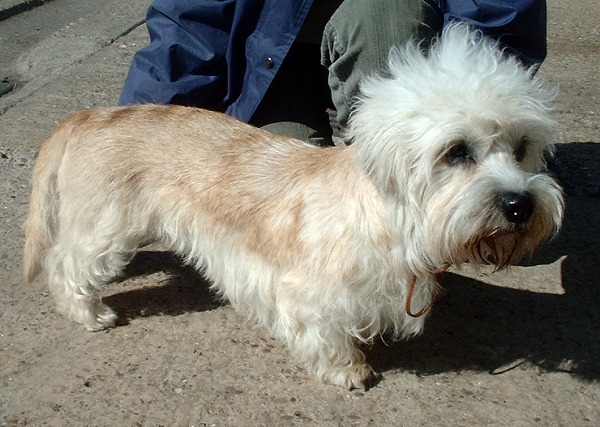
The Dandie Dinmont Terrier is one of the most distinctive-looking dogs in existence. Named after a character in a Sir Walter Scott novel -- the only breed with that distinction -- the Dandie carries a unique coat that combines crisp body hair with a silky topknot, creating a look that no other breed can replicate. It is also a look that absolutely requires professional grooming to maintain.
If you think the Dandie's effortless elegance just happens naturally, think again.
The Dandie Coat Is Unlike Any Other Terrier
Dandie Dinmont Terriers have what is called a "pencilled" coat -- a combination of about two-thirds hard, crisp hair and one-third softer hair. This blend creates the characteristic "crisp to the touch but not wiry" texture that sets Dandies apart from all other terrier breeds.
But the real showstopper is the topknot. Dandies have a crown of soft, silky hair on top of the head that is distinctly different in texture from the body coat. This topknot should look fluffy, rounded, and almost cloud-like -- a dramatic contrast to the crisper body coat.
The body coat comes in two colors:
- Pepper -- ranging from dark bluish-black to light silvery gray
- Mustard -- ranging from reddish-brown to pale fawn
Why Professional Grooming Is Essential
The Dandie's coat is a grooming challenge that genuinely requires professional skills. Here is why:
The Two-Texture Problem
Most terrier breeds have a uniform coat texture across the body. The Dandie has at least two distinct textures -- crisp body coat and silky topknot -- that require different tools, techniques, and products. A groomer needs to maintain the crisp texture on the body while keeping the topknot soft and fluffy. Using the wrong products or techniques on either area will compromise the texture.
The Strip-and-Shape Tradition
The traditional Dandie groom involves hand-stripping the body coat to maintain the crisp texture and carefully scissoring the topknot, ears, and body outline to create the breed's flowing, curved silhouette. This is one of the most technically demanding grooms in the terrier group.
The AKC grooming notes describe the ideal Dandie presentation as having a body that appears to flow in a continuous curve from head to tail. Achieving this requires a groomer who understands how to shape the coat to follow the breed's unique body proportions -- long body, short legs, large domed head.
What Professional Grooming Covers
- Body coat stripping or clipping -- maintaining the crisp two-thirds/one-third texture blend
- Topknot maintenance -- washing, conditioning, shaping, and fluffing the silky crown
- Ear work -- Dandies have long, pendant ears with a feathered edge that needs trimming to a point. Ear hair management is critical for ear health.
- Body silhouette shaping -- creating the flowing curve from head to tail
- Leg furnishing care -- the lighter-colored leg hair needs combing and shaping
- Undercoat management -- removing dead undercoat without disturbing the topcoat blend
- Eye area grooming -- keeping the area around the large, round eyes clear
- Nail care -- important for a short-legged breed
- Sanitary trim -- hygiene maintenance on a low-to-ground dog
What Goes Wrong Without Professional Grooming
Dandie Dinmont Terriers that miss regular grooming develop problems quickly:
- The topknot tangles and mats. That silky hair is beautiful when maintained and a knotted disaster when neglected. Matted topknots pull on the skin of the skull, which is painful for the dog.
- The body coat loses its pencilled texture. Without stripping, the crisp outer coat softens and the blend of hard and soft hairs becomes uniformly soft. The breed loses its characteristic feel and appearance.
- The silhouette disappears. The Dandie's flowing curve is maintained by grooming. Without shaping, the dog looks boxy and unkempt rather than elegantly curved.
- Ear infections develop. The long, pendant ears create a warm, moist environment. Combined with ear feathering that can block airflow, neglected ears are infection-prone. The Kennel Club (UK) lists ear problems among the top health concerns for Dandie Dinmont Terriers, with regular grooming cited as a key preventive measure.
- Skin issues hide under the double coat. Dandies can be prone to skin irritation, and a neglected coat traps allergens and moisture.
How Often Should a Dandie Dinmont Be Groomed
| Method | Frequency | Home Care | |--------|-----------|----------| | Hand-stripping | Every 8-12 weeks | Twice-weekly brushing, daily topknot check | | Clipping | Every 6-8 weeks | Twice-weekly brushing, daily topknot check | | Show maintenance | Ongoing weekly | Daily coat attention |
The topknot needs attention more frequently than the body. Some Dandie owners comb and lightly shape the topknot at home between professional visits.
Finding a Groomer for the Rarest of the Rare
Dandie Dinmont Terriers are among the most endangered native British breeds. The UK Kennel Club has placed them on the Vulnerable Native Breeds list, and annual AKC registrations in the US are extremely low -- often under 100. Finding a groomer who has ever seen one is a genuine challenge.
Your best strategies:
- Contact the Dandie Dinmont Terrier Club of America for groomer referrals
- Look for groomers experienced with other breeds requiring topknot work (like Bedlington Terriers)
- Bring breed-specific grooming guides and reference photos to your first appointment
- Consider a breeder grooming lesson -- many Dandie breeders will teach new owners the basics
The Bottom Line
The Dandie Dinmont Terrier is a one-of-a-kind breed with a one-of-a-kind coat. Professional grooming is not optional -- it is the only way to maintain the coat textures, the topknot, the ear feathering, the silhouette, and the overall health that makes a Dandie look and feel like a Dandie. This is a breed that rewards grooming investment with a truly spectacular appearance.
PawOps helps grooming salons handle rare and unusual breeds using coat condition scoring and breed reference profiles -- so your Dandie Dinmont Terrier gets expert-level care even in areas where the breed is virtually unknown.