Why Your Cockapoo Needs Professional Grooming (Those Curls Aren't Self-Maintaining)
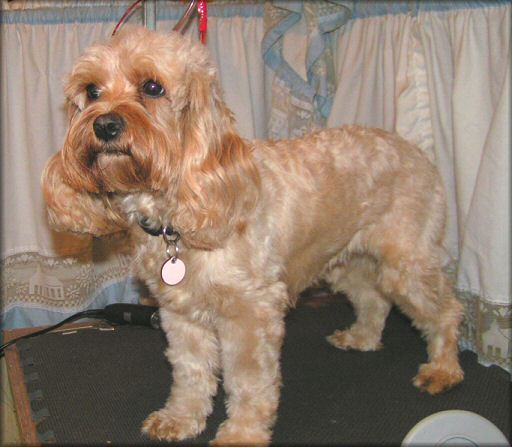
Why Your Cockapoo Needs Professional Grooming (Those Curls Aren't Self-Maintaining)
Cockapoos have a reputation as the perfect family dog: friendly, adaptable, cute as a button. But somewhere in the marketing for this beloved Cocker Spaniel-Poodle cross, the grooming requirements got seriously downplayed.
The truth is, Cockapoos are a high-maintenance breed when it comes to coat care. That soft, curly coat that makes everyone stop and ask "can I pet your dog?" requires consistent professional grooming to stay healthy, comfortable, and tangle-free. If you've been brushing occasionally and hoping for the best, this article is your wake-up call.
The Cockapoo Coat Is Designed to Tangle
Cockapoos inherit coat genetics from two breeds that both have demanding coats: the Cocker Spaniel (long, silky, feathered) and the Poodle (continuously growing, curly, dense). The resulting cross produces coats that vary widely between individuals, but nearly all of them share one characteristic: they mat.
The structure of Cockapoo hair -- whether it's curly, wavy, or somewhere in between -- naturally traps loose hair within the coat. Unlike straight-haired breeds where dead hair falls out and lands on your floor, Cockapoo dead hair wraps around the live hair next to it and starts forming tangles. Those tangles compress into mats. And mats, once they form, only get tighter.
Here's a number that should get your attention: professional groomers report that Cockapoos are among the top five breeds most commonly brought in with severe matting. That's not because Cockapoo owners are neglectful -- it's because the coat mats faster than most people realize, and surface brushing gives a false sense of progress.
Cockapoo professional grooming addresses matting from the skin outward, using techniques and tools that reach the places where mats actually form.
What Professional Grooming Actually Does for Your Cockapoo
A professional Cockapoo grooming session involves significantly more than a bath and a trim. Here's the full scope:
Pre-groom assessment and brush-out: The groomer evaluates the entire coat, checking for mats, tangles, skin issues, and overall condition. They brush through the coat from skin to tip, not just the surface. This step alone can take 20-30 minutes on a Cockapoo with moderate tangles.
Appropriate bathing: Cockapoo coats need specific products. Volumizing shampoos make curly coats frizzy and harder to manage. Conditioning formulas help maintain curl definition and reduce tangling. Your groomer knows which products work for which coat types.
Professional drying: How a Cockapoo coat is dried matters enormously. High-velocity drying straightens the coat temporarily, making it easier to cut evenly and revealing hidden tangles. Improper drying -- towel drying followed by air drying, for example -- encourages tangle formation as the coat dries in clumps.
Haircut and styling: The teddy bear cut is the most popular Cockapoo style, but there are multiple options depending on your preference and your dog's coat type. Each requires different techniques -- scissor work for blending, clipper work for body length, careful shaping around the face and ears.
Ear care: This is critically important for Cockapoos. They inherit the Cocker Spaniel's long, floppy ears AND the Poodle's tendency to grow hair inside the ear canal. The combination creates an ear infection factory. Professional groomers clean the ears, remove excess ear canal hair, and check for early signs of infection at every appointment.
Sanitary and paw pad trim: The curly coat grows everywhere, including around the rear and between the toes. Keeping these areas trimmed is a hygiene and comfort issue that's difficult to manage at home.
Total time for a full Cockapoo groom: typically 1.5 to 2.5 hours, depending on coat condition and style.
The Ear Infection Connection Most Owners Miss
Cockapoo ears deserve special emphasis because ear problems are so prevalent in this breed that they border on epidemic.
The Cocker Spaniel contributes long, heavy ear flaps that hang close to the head, blocking airflow to the ear canal. The Poodle contributes dense hair growth inside the ear canal itself. Put these together and you get an ear environment that's warm, dark, moist, and poorly ventilated -- perfect for bacterial and yeast infections.
Veterinary data suggests that Cocker Spaniel crosses have among the highest ear infection rates of any dog type. Anecdotally, groomers report that ear cleaning and hair removal is the single most impactful preventive service they provide for Cockapoos.
A professional groomer checks your Cockapoo's ears at every appointment, removes excess hair, cleans the ear canal, and alerts you to early signs of infection (redness, odor, discharge, tenderness). Catching an ear infection early means a $20-$40 ear cleaning product from the vet. Missing one means a $150-$300 vet visit for a full-blown infection.
Why Home Grooming Falls Short
Yes, you should be grooming your Cockapoo at home between professional appointments. But honest assessment of what home grooming can and can't accomplish is important:
What home grooming can do:
- Maintain the surface coat between appointments
- Catch obvious tangles before they become mats
- Keep the face clean between food bowls
- Monitor ear condition between professional cleanings
- Reach hidden mats close to the skin (especially in armpits, groin, and behind ears)
- Achieve an even, professional-quality haircut
- Properly remove ear canal hair without training
- Replicate the coat-straightening blow-dry that makes thorough brushing and cutting possible
- Provide the objective whole-body skin and coat assessment that comes from a trained professional
The Puppy Coat Change Is Coming
If your Cockapoo is under 12 months old, enjoy that soft, easy puppy coat while it lasts. Between roughly 8 and 14 months, the adult coat begins growing in, and the grooming difficulty level jumps significantly.
During the transition:
- The puppy coat and adult coat tangle together at an accelerated rate
- Mats can form within 24-48 hours even with regular brushing
- The coat's final texture (curly, wavy, or straighter) becomes apparent
- Many owners face their first shave-down during this period because they didn't anticipate the increased maintenance
A surprising fact about Cockapoos: unlike purebreds, there's no breed standard for their coat, which means variation between individual dogs is enormous. Two Cockapoos from the same litter can have dramatically different coat types, shedding levels, and grooming requirements. Your groomer's assessment of your specific dog's coat is worth more than any general breed guide.
How Often Should Your Cockapoo See a Professional Groomer?
The recommended schedule depends on coat type and style:
- Tightly curly coats: Every 4-6 weeks
- Wavy coats: Every 5-7 weeks
- Straighter coats (less common): Every 6-8 weeks
- During coat transition (8-14 months): Every 3-4 weeks
- If you keep the coat long (3+ inches): Every 4-5 weeks regardless of curl type
Professional Grooming Is Your Cockapoo's Health Insurance
Beyond the obvious coat benefits, regular professional grooming serves as a consistent health monitoring system for your Cockapoo:
- Skin checks catch allergic reactions, hot spots, and parasites hiding under the dense coat
- Ear care prevents the infections this breed is so prone to
- Nail health monitoring (Cockapoo nails can curl and grow into paw pads if neglected)
- Dental observation (some groomers offer teeth brushing and can flag dental concerns)
- Weight and body condition tracking by someone who handles your dog regularly
---
Ready to streamline your grooming workflow? PawOps Board Manager helps salons track every Cockapoo from check-in to pickup with real-time visibility. Start your free 30-day trial →