Understanding Your Chinese Crested's Coat (or Skin): What Every Owner Should Know
Understanding Your Chinese Crested's Coat (or Skin): What Every Owner Should Know
The Chinese Crested is one of the most visually distinctive breeds on the planet, and understanding what is going on with their coat -- or their lack of one -- is essential to keeping them healthy. Whether you have a Hairless Chinese Crested rocking exposed skin with decorative tufts or a Powderpuff wrapped in a silky double coat, the care approach is completely different for each. Let us get into what actually matters for your dog.
Two Varieties, One Gene
Every conversation about the Chinese Crested coat starts with genetics. The Hairless and Powderpuff varieties are not separate breeds. They are produced by the same gene -- the FOXI3 mutation -- and both can appear in the same litter.
Here is how it works:
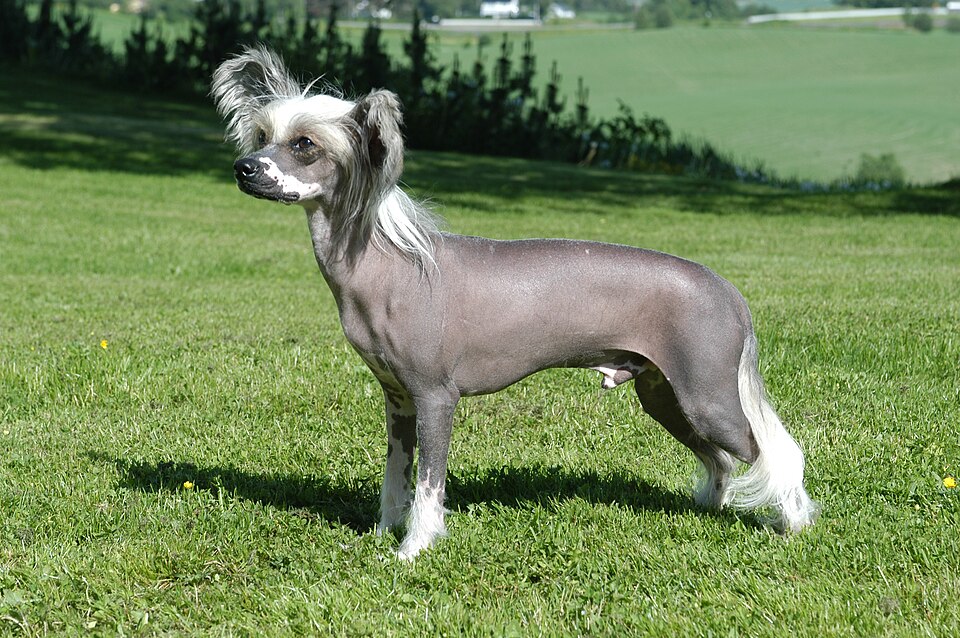
- Hairless dogs carry one copy of the FOXI3 dominant mutation. This gene suppresses hair growth over most of the body while allowing it on the head, feet, and tail.
- Powderpuff dogs carry two copies of the recessive gene (no FOXI3 mutation). They grow a full coat.
- Every Hairless Chinese Crested is heterozygous for this gene. Two copies of the hairless gene are lethal in utero, which means there is no such thing as a homozygous Hairless Crested. This is genuinely unusual in dog genetics.
The Hairless Variety: Skin Is the Coat
If you own a Hairless Chinese Crested, your grooming focus is skincare, not coat care. The skin is the outermost layer, fully exposed to everything the environment throws at it.
What the Skin Looks Like
Hairless Crested skin varies considerably:
- Color: Can range from pale pink to dark gray or black, often with spots or mottling. Skin color can change with sun exposure and age.
- Texture: Smooth, warm to the touch, often compared to human skin or soft suede. Some dogs develop a slightly rougher texture on the back.
- Pore activity: The skin produces oils and can develop blackheads, whiteheads, and acne, particularly on the back, chest, and under the chin.
The Hair That Does Exist
Hairless Cresteds are not truly hairless. They have three signature hair zones:
- The Crest: A plume of soft, flowing hair on the top of the head. This can range from a modest tuft to a dramatic mane depending on genetics.
- The Socks: Hair on the feet and lower legs.
- The Plume: A feathered tail.
The Hairy Hairless Spectrum
Not all Hairless Cresteds are equally hairless. There is a spectrum:
- True Hairless: Minimal body hair beyond the crest, socks, and plume. Smooth skin throughout.
- Moderate Hairy Hairless: Scattered patches of fine hair on the body, often on the shoulders, hips, and along the spine.
- Heavy Hairy Hairless: Significant body hair that may need regular shaving or clipping to maintain the classic Hairless look.
Common Skin Issues
Owning a Hairless Chinese Crested means being proactive about skin health:
- Acne and blackheads: The most common issue. Pores clog without fur to wick away oils. Regular gentle exfoliation helps tremendously.
- Sunburn: Light-skinned Cresteds burn quickly in direct sun. Dog-safe sunscreen is not optional for outdoor time.
- Dry skin: Especially common in winter or dry climates. A quality dog-safe moisturizer applied every few days keeps the skin supple.
- Contact allergies: Without fur as a barrier, irritants like grass chemicals, carpet cleaners, and laundry detergents contact the skin directly. If your Crested develops rashes, the culprit is often environmental.
- Wool sensitivity: Some Hairless Cresteds react to certain fabrics in dog clothing. Stick to soft cotton or bamboo fabrics.
The Powderpuff Variety: A Silky Double Coat
The Powderpuff Chinese Crested is what happens when the hairless gene stays recessive. The result is one of the most beautiful -- and most demanding -- coats in the toy group.
Coat Structure
The Powderpuff has a genuine double coat:
- Outer coat: Long, fine, silky, and straight to slightly wavy. It flows and moves with the dog.
- Undercoat: Soft, shorter, and denser. Provides insulation and body to the outer coat.
Shedding
Powderpuffs shed, but not as aggressively as many double-coated breeds. The shedding is light to moderate year-round with slightly heavier periods seasonally. The catch is that shed hair often gets trapped within the coat rather than falling free, which accelerates mat formation.
Mat-Prone Zones
Know these spots and check them daily:
- Behind the ears (the number one problem area)
- Under the front legs and armpits
- Around the collar or harness contact zone
- The groin and inner thighs
- Behind the rear legs
Coat Care by Variety
Hairless Care Routine
Daily:
- Quick visual skin check for new bumps, rashes, or dry patches
- Apply moisturizer if skin is dry (skip on oily days)
- Comb the crest, socks, and plume with a steel comb
- Apply sunscreen before outdoor time
- Gentle exfoliating bath
- Blackhead and acne management
- Skin conditioning treatment
- Crest, socks, and plume trimming
- Nail trimming
Powderpuff Care Routine
Daily or every other day:
- Full brush with a pin brush or slicker brush
- Steel comb check of mat-prone areas
- Detangling spray on dry areas
- Thorough line-brushing session (parting the coat in sections and brushing from the skin outward)
- Full bath and conditioning
- Blow-dry and thorough detangling
- Trim or haircut
- Undercoat removal
- Nail, ear, and sanitary care
A Surprising Coat Fact
Here is something that catches many owners off guard: the FOXI3 gene that causes hairlessness also affects tooth development. Hairless Chinese Cresteds commonly have missing premolars, forward-tilting canine teeth, and teeth with thinner enamel than normal. Powderpuffs from the same lines typically have normal dentition. This means the gene literally connects skin, hair, and teeth -- a phenomenon called pleiotropy. If your Hairless Crested has quirky teeth, it is not a separate problem. It is the same gene doing double duty.
Seasonal Considerations
The Chinese Crested coat (or skin) responds to seasons differently than most breeds:
Summer:
- Hairless: Sunburn risk peaks. Apply sunscreen before any outdoor time. Consider UV-protective dog shirts for extended exposure.
- Powderpuff: Lighter trims keep the dog comfortable. Watch for hot spots in humid weather.
- Hairless: These dogs get cold. Seriously cold. Dog sweaters, jackets, and blankets are not fashion -- they are necessities. The skin also dries out faster in heated indoor air.
- Powderpuff: The double coat provides more insulation than you might expect from a toy breed, but supplement with a jacket in extreme cold.
Choosing Grooming Products
The wrong products can cause real problems:
For Hairless Cresteds:
- Use a gentle, fragrance-free dog shampoo
- Avoid human skincare products (pH is different for dogs)
- Choose a lightweight, dog-safe moisturizer
- Keep exfoliating products gentle -- no harsh scrubs
- Use a moisturizing or silk-enhancing shampoo
- Always condition after shampooing -- this coat needs it
- Use a leave-in detangling spray for between-bath maintenance
- Avoid heavy products that weigh down the fine coat
The Coat Is a Window Into Health
For both varieties, the coat or skin is your best early-warning system for health issues. Changes in skin texture, new bumps, unusual shedding patterns, dullness in the Powderpuff coat, or persistent dryness in the Hairless variety all signal that something deserves attention. Paying close attention to what is normal for your specific dog makes it easy to catch what is not.
PawOps helps groomers assess Chinese Cresteds by variety and condition, using coat-type analysis and scoring to ensure your dog receives precisely the care their genetics require -- whether that means expert skincare or meticulous coat maintenance.