Understanding Your Chesapeake Bay Retriever's Coat: What Every Owner Should Know
Understanding Your Chesapeake Bay Retriever's Coat: What Every Owner Should Know
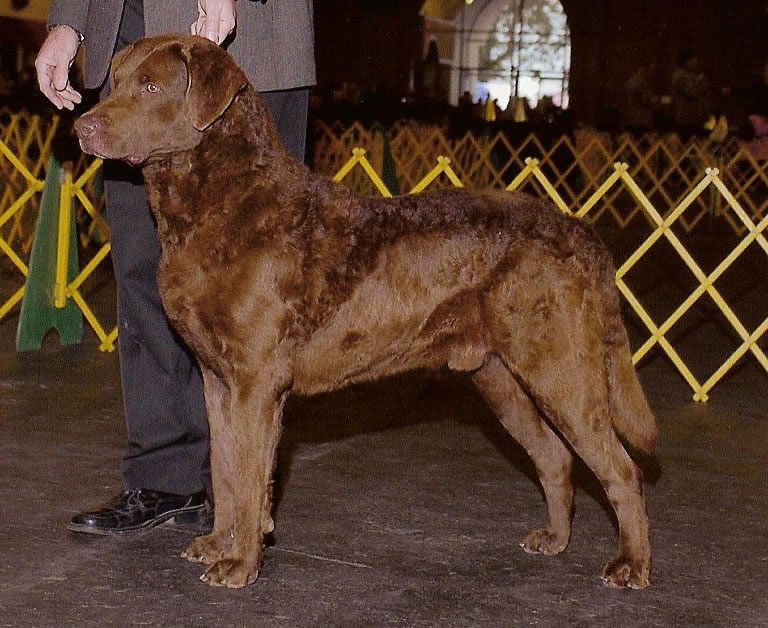
The Chesapeake Bay Retriever has the most distinctive coat in the retriever family. Oily, wavy, and waterproof to a degree that other breeds can't match — it's a coat that was engineered for the frigid waters of the Chesapeake Bay and the brutal conditions of East Coast waterfowl hunting. Understanding the chesapeake bay retriever coat is essential because this coat has rules that differ from every other breed you've probably encountered.
The Waterproof System
The Chessie coat isn't just water-resistant — it's genuinely waterproof. This waterproofing comes from a three-part system:
1. Natural oils: The Chessie's skin produces significantly more sebum than most breeds. This oil coats every hair shaft, creating a hydrophobic barrier. When you touch a Chessie's coat, that slightly oily, waxy feel is the waterproofing in action.
2. Dense undercoat: The thick, woolly undercoat beneath the outer layer creates a second barrier. Water that makes it past the outer coat hits this dense layer and can't penetrate to the skin.
3. Wave pattern: The characteristic wave in the outer coat isn't random — it creates channels that shed water away from the body. Water runs down the waves and off the dog rather than soaking in.
Together, these elements create a coat that allows a Chessie to break through ice, retrieve in 34°F water, and emerge nearly dry after one good shake. Hunters in the Chesapeake Bay region documented Chessies making dozens of cold-water retrieves in a single session without losing body heat — a testament to the coat's engineering.
The American Chesapeake Club emphasizes that the coat "should resist the water in the same way that a duck's feathers do." That's the benchmark.
Coat Color: The Deadgrass Spectrum
Chessie colors are distinctly their own:
- Deadgrass: A unique color ranging from faded tan to dull straw. Named after the color of dried marsh grass — the environment where Chessies work. This is arguably the most classic Chessie color.
- Sedge: A reddish-brown, like autumn reeds.
- Brown: From light cocoa to deep chocolate.
One color fact that surprises people: Chessie puppies are often born darker than their adult color and lighten as they mature. A pup that looks chocolate may settle into a sedge or deadgrass shade by 18 months.
Color doesn't affect coat function. A deadgrass Chessie's coat works identically to a brown one — the waterproofing, insulation, and maintenance needs are the same.
The Wave Pattern
The Chessie's outer coat has a distinctive wave that's different from curly or straight:
- Waves appear primarily on the neck, shoulders, back, and loin
- The wave is natural and should not be brushed out
- The face, legs, and belly have shorter, straighter hair
- The wave pattern develops as the puppy coat transitions to adult coat (usually by 12-18 months)
Important: if the wave pattern flattens or disappears, it usually means the coat has been over-groomed, over-bathed, or damaged by incorrect products. Restoring the wave requires letting the coat grow naturally with minimal intervention.
The Undercoat: Dense and Critical
The Chessie undercoat is denser than most retriever breeds:
- Woolly, fine-textured hair packed close to the skin
- Thickest on the chest, shoulders, and hindquarters
- Seasonal variation: significantly denser in winter, lighter in summer
- Functions as thermal insulation for cold-water work
Managing the undercoat is the primary grooming task for Chessie owners. During seasonal transitions, the undercoat releases in dramatic fashion — thick clumps of woolly hair separate from the skin and work their way through the outer coat. Without removal, this dead undercoat compacts against the skin, reducing insulation efficiency and creating moisture-trapping conditions.
What You Should Never Do to This Coat
The Chessie coat has clear do-not-cross lines:
Never shave a Chessie: The coat doesn't grow back properly. The wave pattern, the undercoat-to-outer-coat ratio, and the oil production can all be permanently disrupted. Some shaved Chessies never regain their full waterproofing.
Never over-bathe: Monthly bathing at maximum. Many experienced Chessie owners bathe only every 2-3 months, spot-cleaning as needed between baths. The oils need time to replenish.
Never use harsh shampoos: Degreasing shampoos, flea shampoos, and heavily fragranced products strip the waterproofing oils. Use mild, gentle formulas specifically.
Never use conditioner on the body coat: Conditioner coats the hair shaft and interferes with the natural oil barrier. If anything, it reduces water resistance.
Never blow-dry on high heat: Excessive heat damages the natural oils and can alter the wave pattern. Use moderate heat or cool settings.
Home Care Protocol
Weekly (10-15 minutes):
- Undercoat rake through the body, focusing on the chest, shoulders, and hindquarters
- Bristle brush to smooth the outer coat and distribute natural oils
- Quick ear check
- More intensive undercoat raking
- Bristle brush to capture loose outer coat hairs
- Consider scheduling a professional de-shedding treatment
- Shake and air dry is usually sufficient for the body — the coat does its job
- Clean and dry ears specifically — this is the one area that doesn't self-manage
- Check for debris in the coat, especially if the dog was in muddy or weedy water
- Use mild shampoo only
- Skip conditioner
- Rinse thoroughly — soap residue compromises waterproofing
- Dry moderately — the coat should feel slightly oily when done, not squeaky clean
The Smell Question
Let's address this directly: Chessies have a natural coat odor that's stronger than most breeds. The higher oil content produces a distinctive smell that some people describe as "musky" or "earthy."
This is normal. It's not a hygiene issue — it's a breed characteristic. Over-bathing to eliminate the smell strips the waterproofing. The smell and the waterproofing come from the same source.
Managing the odor:
- Regular brushing helps distribute oils and reduce concentrated odor
- Keep bedding clean and wash it frequently
- A dry shampoo formulated for dogs can reduce odor between baths without stripping oils
- Accept that your Chessie will never smell like a freshly bathed Poodle — and that's okay
---
Ready to streamline your grooming workflow? PawOps Board Manager helps salons track every Chesapeake Bay Retriever from check-in to pickup with real-time visibility. Start your free 30-day trial →
Related Reading: