Understanding Your Cardigan Welsh Corgi's Coat: Built for Welsh Weather, Living on Your Sofa
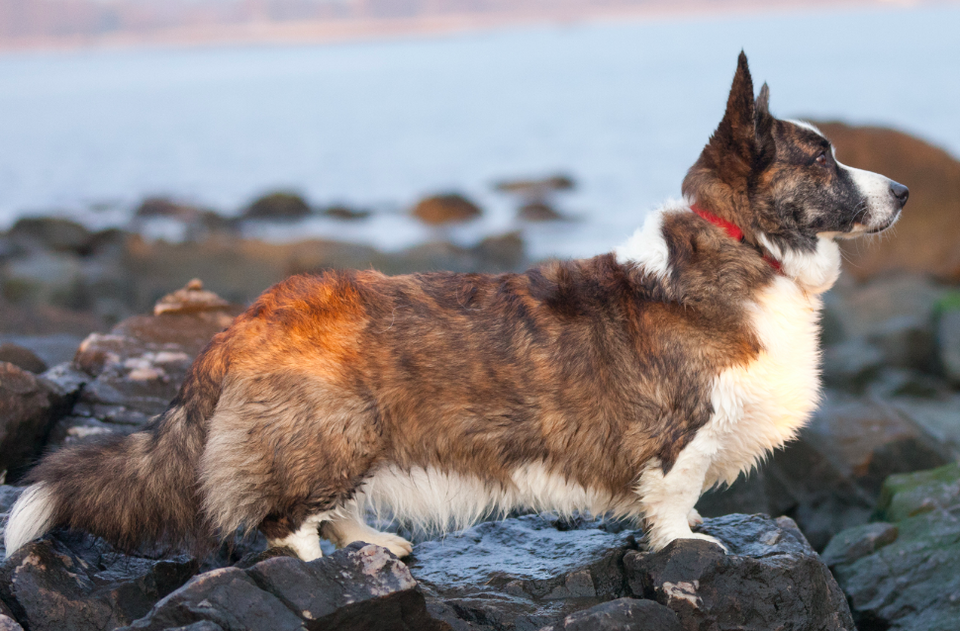
Understanding Your Cardigan Welsh Corgi's Coat: Built for Welsh Weather, Living on Your Sofa
The Cardigan Welsh Corgi's coat was engineered by centuries of Welsh weather to be functional, protective, and resilient. It was not engineered for easy maintenance on your living room furniture. Understanding what this coat is, how it works, and why it sheds the way it does will help you make peace with the fur on your couch and keep your Corgi healthy in the process.
The Coat Architecture
The Cardigan Welsh Corgi has a medium-length double coat with two distinct layers.
The Outer Coat
The outer coat is medium length, slightly harsh in texture, and lies flat against the body. It is designed to repel water and resist brush and bramble -- functional features from the breed's cattle-herding heritage in the Welsh countryside.
The outer coat is longest on the ruff (the chest and neck area), the backs of the thighs ("pants" or "britches"), and the tail. It is shorter on the face, ears, and front of the legs. The tail, which distinguishes the Cardigan from the docked Pembroke, has a full, flowing coat.
The texture is important: it should be hard and straight, not soft or wavy. A correct Cardigan coat has a natural weather resistance that keeps the dog reasonably comfortable in rain and cold. This harsh texture also naturally resists matting -- not as aggressively as a Rough Collie's coat, but better than most soft-coated breeds.
The Undercoat
Dense, soft, thick, and prolific. The undercoat is the insulation system -- warm in winter, temperature-buffering in summer. It is also the source of approximately 90 percent of the fur you find on your furniture.
The Cardigan's undercoat is genuinely impressive relative to the dog's size. If you part the outer coat and look at the skin, you will see a thick layer of fine, woolly fur that explains where all that shedding comes from.
The Shedding Reality
Cardigan Welsh Corgis shed. A lot. Year-round. With two bonus rounds of extreme shedding during seasonal coat blows.
Year-round baseline: Consistent moderate shedding. You will find fur on your clothes, furniture, car seats, and places you did not think fur could reach. This is the new normal with a Cardigan.
Spring coat blow: The heaviest shedding event. The winter undercoat loosens en masse and comes out in tufts, clouds, and entire sections. A single brushing session during peak blow can fill a grocery bag. This phase lasts two to four weeks.
Fall coat blow: A moderate shedding event as the lighter summer undercoat transitions to the heavier winter version. Less dramatic than spring but still noticeable.
Here is a number that puts it in perspective: a single Cardigan Welsh Corgi can produce enough shed undercoat during one spring coat blow to fill a standard kitchen garbage bag. For a dog that weighs 25 to 35 pounds, the ratio of fur produced to body weight is among the highest of any breed.
The Fluffy Gene
Both Cardigan and Pembroke Welsh Corgis carry a recessive gene that produces a longer, softer coat variant known as a "fluffy." A fluffy Cardigan has:
- Longer fur overall, sometimes significantly longer
- Softer texture than the standard harsh coat
- More feathering on the ears, legs, and belly
- A more dramatic tail plume
- Substantially more shedding
- Higher matting tendency
If your Cardigan's coat seems unusually long and soft compared to breed photos, you likely have a fluffy. Adjust your grooming expectations upward.
Colors and Coat Characteristics
Cardigans come in a wider range of colors than Pembrokes:
- Red/Sable: Ranges from light golden to deep reddish-brown. May lighten with sun exposure.
- Brindle: Tiger-striped pattern in various color combinations. The coat texture is identical to solid colors.
- Black and White: Including black and tan with white markings. Black coats may show sun bleaching.
- Blue Merle: A marbled gray-blue pattern. Blue merle coats sometimes feel slightly finer in texture.
The Low-Rider Factor
The Cardigan's body shape adds a dimension to coat care that taller breeds do not experience. With only about 5 inches of ground clearance, the belly coat is in constant contact with:
- Wet grass (moisture retention against the skin)
- Lawn chemicals (potential contact dermatitis)
- Dirt and mud (constant debris collection)
- Hot pavement (summer heat exposure)
- Snow and ice (winter cold and moisture)
- Matting from moisture exposure
- Skin redness or irritation
- Embedded grass seeds or debris
- Hot spots developing under damp fur
Seasonal Coat Care
- Spring: Heavy shedding. Increase brushing to daily. Professional deshedding sessions most valuable now. Check for ticks as the dog moves through spring growth.
- Summer: Watch for overheating. The dense undercoat retains heat. Never shave a Cardigan -- the coat provides UV protection and some heat insulation. Keep the belly trimmed for comfort.
- Fall: Moderate shedding as winter coat grows in. Maintain regular brushing.
- Winter: Coat at maximum density. The Cardigan is well-suited for cold weather but wet conditions can create damp undercoat that needs thorough drying.
Home Care Tools
- Slicker brush -- for daily detangling of the outer coat
- Undercoat rake -- essential for removing dead undercoat, especially during shedding season
- Steel comb -- for checking behind ears and in the pants for hidden tangles
- Rubber curry comb -- good for quick maintenance sessions and the dog usually enjoys it
- Grooming mitt -- convenient for removing loose outer coat hair during petting
When the Coat Signals a Problem
- Dull, lifeless coat -- possible nutritional deficiency (omega fatty acids)
- Excessive shedding outside normal cycles -- thyroid issues, stress, or illness
- Soft, cottony texture change -- sometimes follows spaying/neutering, requires adjusted grooming
- Bald patches -- allergies, mange, or hormonal imbalance
- Persistent belly redness -- contact allergies or environmental irritation
PawOps helps grooming salons assess herding breed double coats using density scoring and coat type identification -- ensuring your Cardigan Welsh Corgi gets grooming tailored to their specific coat, whether standard or fluffy.