Why Your Brussels Griffon Needs Professional Grooming (Rough and Smooth Coat)
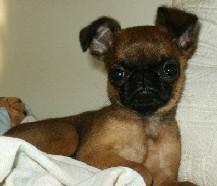
Why Your Brussels Griffon Needs Professional Grooming (Rough and Smooth Coat)
The Brussels Griffon is a breed that looks like it has opinions, and honestly, it does. That expressive face -- part monkey, part tiny philosopher -- comes packaged with a coat that needs more professional attention than most toy breed owners expect. Whether you have the rough-coated or smooth-coated variety, skipping professional grooming is not doing your Griffon any favors.
Two Coats, Two Different Grooming Needs
Here is what makes Brussels Griffon grooming unique: this is one of the few toy breeds that comes in two completely different coat types, and each one requires a fundamentally different grooming approach.
The Rough Coat
The rough-coated Brussels Griffon (sometimes called the Griffon Bruxellois) has a dense, wiry outer coat with a shorter undercoat. This coat texture is similar to what you see in terriers -- it is harsh to the touch, stands away from the body, and is meant to be hand-stripped rather than clipped.
Hand-stripping is a specialized grooming technique where the groomer removes dead outer coat hairs by hand (or with a stripping knife) rather than cutting them. This process:
- Maintains the proper wire texture of the coat
- Keeps the coat color vibrant -- clipping wiry coats often causes color fading
- Promotes healthy new coat growth from the follicle
- Preserves the breed's characteristic scruffy, expressive appearance
The Smooth Coat
The smooth-coated variety (sometimes called the Petit Brabancon) has a short, glossy coat that lies flat against the body. This coat is considerably easier to maintain than the rough variety, but it still benefits from professional attention -- particularly around the face, nails, and skin folds.
Smooth-coated Griffons often get overlooked for grooming because owners assume the short coat does not need it. But professional grooming for a smooth Griffon is not really about the coat. It is about everything else: the facial structure, the nails, the ears, and the overall skin health assessment that happens during a grooming session.
The Brachycephalic Factor
Brussels Griffons have a flat face -- not as extreme as a Pekingese or Bulldog, but enough to create specific grooming considerations. That pushed-in muzzle means:
- Facial wrinkles collect moisture, tears, and food debris
- Prominent eyes are vulnerable to irritation from loose hair and grooming products
- Breathing can be compromised if the dog overheats during grooming
Here is a data point that matters: studies on brachycephalic breeds show that dogs with regularly cleaned facial folds have significantly lower rates of fold dermatitis -- a painful bacterial skin infection that thrives in warm, moist skin creases. For Griffons, professional grooming is preventive healthcare.
What Happens When You Skip Professional Grooming
The consequences differ by coat type, but neither is pretty.
For rough-coated Griffons:
- Dead coat accumulates and traps heat and moisture against the skin
- The coat loses its texture and begins to look dull and unkempt
- Without stripping, the follicles can become clogged, potentially leading to folliculitis
- The characteristic beard and eyebrows become matted and uncomfortable
- Nails overgrow and change the dog's gait (Griffons are small and light; nails do not wear naturally)
- Facial folds develop infections from accumulated debris
- Ears build up wax and potentially develop infections
- Skin issues go undetected under even a short coat
- Anal glands may not be expressed (many groomers check these as part of service)
- Dental issues progress without the teeth brushing many grooming packages include
- Early signs of lumps, skin changes, or parasites are missed
What Professional Brussels Griffon Grooming Looks Like
Rough Coat Session (75-120 minutes)
Smooth Coat Session (45-60 minutes)
How Often Should Your Brussels Griffon Be Professionally Groomed
Rough coat: Every four to six weeks for maintenance grooming, with hand-stripping sessions every eight to twelve weeks depending on coat growth rate.
Smooth coat: Every six to eight weeks for a basic grooming session. The shorter coat is more forgiving of longer intervals, but facial fold care should happen more frequently -- daily at home, ideally.
Finding a Groomer Who Knows Brussels Griffons
This breed is not common. According to AKC registration data, the Brussels Griffon consistently ranks outside the top 30 most popular breeds. That means many groomers have limited experience with the breed, especially with hand-stripping the rough coat.
When interviewing potential groomers, ask:
- Have you groomed Brussels Griffons before? How many?
- For rough coats: Do you hand-strip, or do you clip? (If they only clip, keep looking.)
- How do you handle brachycephalic breeds during drying?
- Can you shape the beard and eyebrows to breed standard?
A Surprising Fact About Brussels Griffon Grooming
The Brussels Griffon's rough coat is so unique that it actually gets better with proper hand-stripping over time. Each stripping cycle encourages stronger, more correct wire texture to grow in. A rough Griffon that has been properly hand-stripped for years will have a dramatically better coat than one that has been clipped -- the texture, color, and weather resistance all improve with each cycle. It is one of the few breeds where professional grooming literally makes the coat better, not just cleaner.
PawOps helps grooming salons track coat type, grooming technique, and condition scoring -- ensuring every Brussels Griffon gets the specific care its coat type requires.