Why Your Black Russian Terrier Needs Professional Grooming (This Is Not a DIY Breed)
Why Your Black Russian Terrier Needs Professional Grooming (This Is Not a DIY Breed)
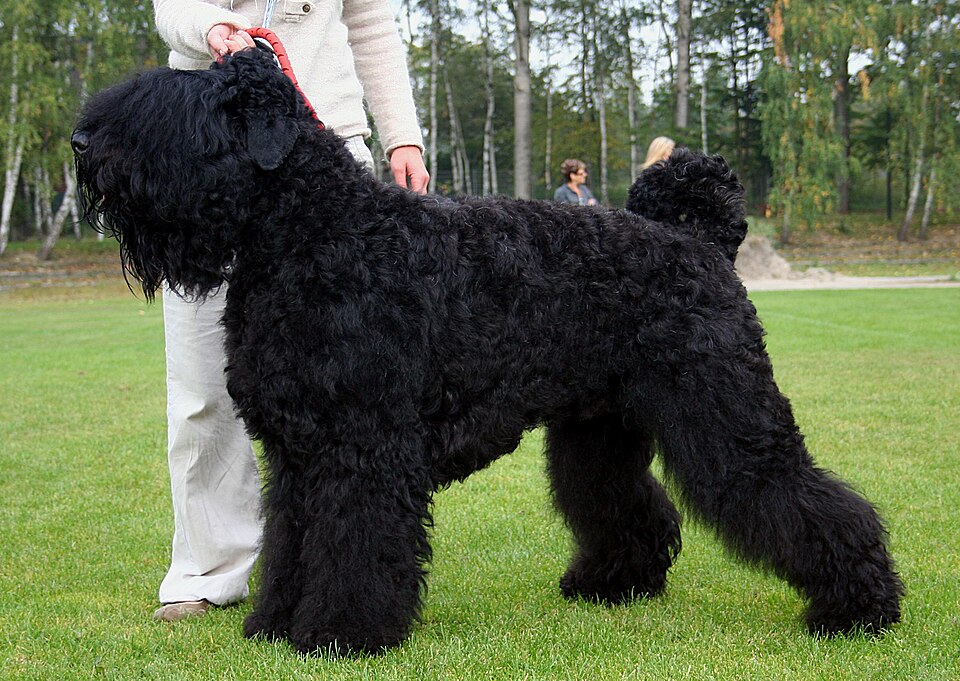
The Black Russian Terrier -- the BRT -- is a powerhouse of a dog. Bred by the Soviet military in the 1940s and 50s by crossing Giant Schnauzers, Rottweilers, Airedale Terriers, and other breeds, the BRT was engineered for guard work in brutal Russian winters. The result: a large, confident, intelligent dog wearing a thick, coarse, all-black coat that requires serious grooming commitment.
This is not a breed you can maintain with occasional home brushing. The BRT's coat is grooming-intensive by design, and professional care is not optional -- it is necessary for your dog's health and comfort.
The BRT Coat: Military Engineering
The Black Russian Terrier has a double coat with distinctive characteristics:
- Outer coat: Coarse, thick, and slightly wavy. The hair is 2-6 inches long and has a broken, tousled texture. It forms a distinct beard, mustache, and eyebrows that give the breed its imposing, dignified expression.
- Undercoat: Dense and soft, providing insulation. The undercoat is less pronounced than in some double-coated breeds but still significant.
The breed's coat was designed for a specific purpose: protection against extreme cold, wind, and working conditions. It is functional, not decorative. But that functional coat needs maintenance to continue functioning.
Why Professional Grooming Is Essential
Regular Haircuts Are Non-Negotiable
Unlike double-coated breeds that shed their coat naturally, the BRT's hair grows continuously and must be cut. Without regular trimming, the coat becomes excessively long, heavy, and impossible to maintain. The beard and eyebrows grow into the food and eyes respectively, causing hygiene problems and vision issues.
Professional BRT grooming involves specific shaping:
- The body coat is trimmed to a practical length (typically 2-4 inches)
- The beard is shaped and maintained
- The eyebrows are trimmed to allow vision while maintaining the breed's expression
- The legs are blended from body to feet
- The head furnishings are sculpted
Mat Prevention in a Non-Shedding Coat
Because dead hair stays in the coat, the BRT mats aggressively. The coarse outer coat tangles with itself, and without regular brushing and professional combing, mats form throughout the body. The most problematic areas:
- The beard (collects food, water, and tangles constantly)
- Behind the ears
- Under the chest
- In the armpits
- On the legs where the longer furnishing hair meets shorter body coat
Skin Health
The BRT's dense coat hides the skin completely. Professional groomers assess skin health at every appointment, looking for:
- Hot spots (common under mats)
- Allergic reactions
- Bacterial or fungal infections
- Parasites
- Lumps or changes
Beard and Face Hygiene
The BRT's magnificent beard is also a hygiene challenge. It collects food, water, drool, and debris. Without regular cleaning and trimming, the beard can develop yeast infections from constant dampness, harbor bacteria from food residue, and produce a persistent odor.
Professional groomers clean and shape the beard at every session. Between appointments, owners should wipe the beard after meals and check for food buildup.
Ear Maintenance
BRTs have drop ears covered in thick hair. This creates a warm, enclosed environment prone to infections. Hair may also grow inside the ear canal. Professional groomers address ear hair management and thorough cleaning at every appointment.
What Happens Without Professional Grooming
- Massive matting. Within 8-10 weeks without grooming, a BRT coat can mat through the entire body. The non-shedding coat means dead hair accumulates continuously, and without removal, it tangles.
- Skin disease. Mats against the skin in a non-shedding breed create severe skin problems. The trapped moisture and restricted airflow under dense mats leads to pyoderma (bacterial skin infection) at rates significantly above breeds with natural shedding cycles.
- Eye irritation. Overgrown eyebrows grow into the eyes, causing chronic irritation, excessive tearing, and potential corneal damage.
- Beard infections. An unkempt beard harboring food and moisture develops yeast and bacterial overgrowth.
- Full shave-down. A severely matted BRT often requires complete shaving, which removes the breed's distinctive look and takes months to grow back.
How Often Does a BRT Need Professional Grooming
| Service | Frequency | |---------|----------| | Full groom (bath, haircut, styling) | Every 4-6 weeks | | Beard trim and face maintenance | Every 3-4 weeks | | Brush-out between full grooms | Every 2-3 weeks (can be done at home) | | Full styling (show-quality shaping) | Every 4 weeks |
The BRT is on one of the most demanding grooming schedules of any breed. Missing appointments leads to exponentially more work (and cost) at the next session. Use our free pricing calculator →
Finding a Groomer for Your BRT
This is critical. Not every groomer can properly style a Black Russian Terrier. The breed's silhouette requires specific knowledge:
- Experience with terrier or schnauzer-type styling
- Understanding of the BRT breed standard and expression
- Comfort with large, powerful dogs (BRTs are 80-130 pounds)
- Knowledge of hand-stripping techniques (for maintaining coat texture in show dogs)
- Patience -- a full BRT groom takes 2-3 hours
PawOps helps grooming salons price complex breeds like the Black Russian Terrier based on coat condition and styling requirements -- because a well-maintained BRT on a four-week schedule is a completely different job than one that has been neglected for three months.