Understanding Your Black Russian Terrier's Coat: Soviet Engineering Meets Modern Grooming
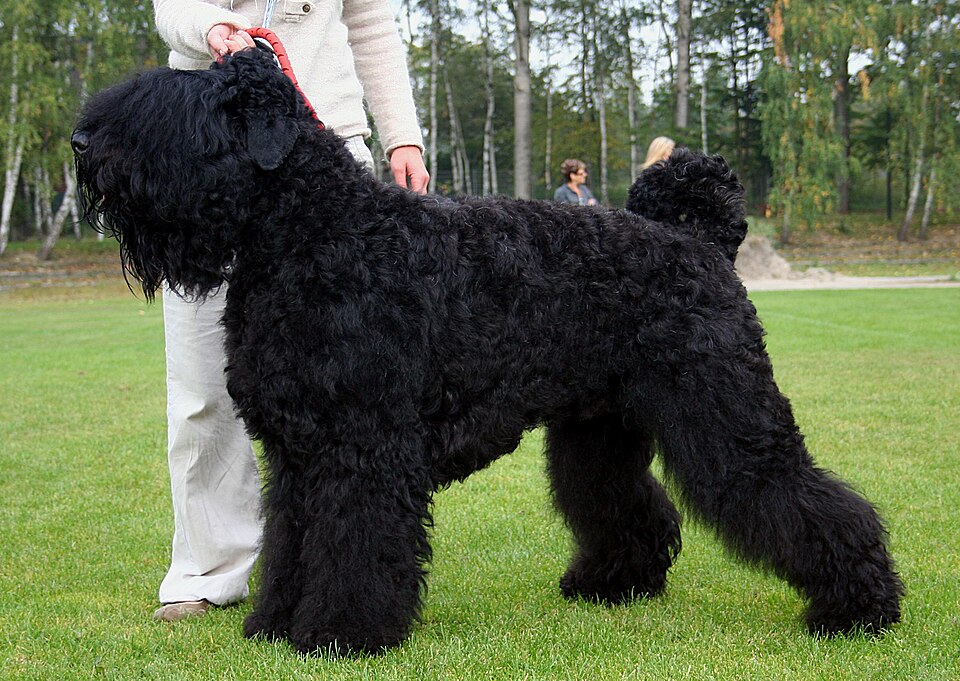
Understanding Your Black Russian Terrier's Coat: Soviet Engineering Meets Modern Grooming
The Black Russian Terrier's coat has one of the most interesting origin stories in the dog world. Created in the Red Star Kennel during the late 1940s and 1950s by Soviet military scientists, the breed was assembled from approximately 17 breeds -- primarily Giant Schnauzer, Rottweiler, and Airedale Terrier -- to produce the ideal military working dog for Russian winters. The coat was engineered, not evolved, for a specific purpose: protecting a working dog in extreme cold.
Understanding this military-designed coat helps you maintain it effectively.
The Coat's Blueprint
The BRT coat combines characteristics from its primary founding breeds:
- From the Giant Schnauzer: Harsh, wiry outer coat texture and facial furnishings (beard, eyebrows)
- From the Rottweiler: Dense undercoat for insulation
- From the Airedale Terrier: Broken coat texture and non-shedding quality
Outer Coat
Coarse, thick, and slightly wavy to tousled. The hair grows 2-6 inches on the body, longer on the legs and head furnishings. The texture is distinctive -- not smooth, not wiry in the classic terrier sense, but somewhere between. It has a "broken" quality that resists lying flat.
The head furnishings are the breed's visual signature:
- Beard: Full, extending from the jaw
- Eyebrows: Prominent, partially covering the eyes
- Mustache: Blending into the beard
Undercoat
Soft, dense, and insulating. Less pronounced than in heavily shedding double-coated breeds but still substantial enough to provide significant warmth. The undercoat density can vary by individual and by climate -- BRTs in colder regions tend to develop denser undercoats.
The Non-Shedding Reality
The BRT is often described as "non-shedding" or "low-shedding." This requires clarification.
What it means: Dead hair stays in the coat rather than falling out onto your furniture. You will not find BRT hair tumbleweeds around your house the way you would with a German Shepherd.
What it does NOT mean: The coat does not need maintenance. In fact, the opposite is true. Because dead hair stays in the coat, it must be actively removed through brushing, combing, and professional grooming. If it is not removed, it tangles with living hair and forms mats.
A study by the American Kennel Club's canine health foundation found that non-shedding breeds actually require more frequent grooming than natural-shedding breeds to maintain coat health. The dead hair that would naturally shed must be mechanically removed, or it causes skin irritation and coat deterioration.
The practical difference:
- Shedding breed: Hair falls out → lands on furniture → easy cleanup with lint roller
- Non-shedding breed: Hair stays in coat → mats form → requires active removal through grooming
Coat Growth and Maintenance Cycle
The BRT coat grows continuously, similar to human hair (though at a slower rate). This means:
- Regular haircuts are necessary -- the coat does not reach a natural length and stop
- Growth rate varies -- typically 1/4 to 1/2 inch per month on the body, faster on the head furnishings
- Coat quality improves with proper grooming -- regularly trimmed and maintained coats develop better texture than neglected ones
The First Year
BRT puppies are born with a softer, less textured coat than adults. The adult coat begins growing in between 6 and 18 months:
- 0-6 months: Soft puppy coat. Easy to maintain. Begin grooming routine to establish comfort.
- 6-12 months: Coat transition. Adult coat grows in with different texture. The puppy coat and adult coat coexist temporarily, increasing tangling.
- 12-18 months: Adult coat fully established. Characteristic texture and density are present.
Coat Colors
The breed is called the "Black" Russian Terrier for a reason -- the coat should be solid black. However:
- Some BRTs show a small amount of gray or silver, particularly as they age
- A scattering of gray hairs is acceptable in the breed standard
- Extensive graying or brown tones are undesirable but occur
- The coat can appear slightly lighter when newly trimmed (fresh-cut ends vs weathered tips)
Climate Considerations
The BRT was literally designed for extreme cold. Here is how different climates affect the coat:
- Cold climates: The coat is at its best. Dense undercoat develops fully, providing excellent insulation. The outer coat protects against snow and wind.
- Moderate climates: The coat adapts with a somewhat lighter undercoat. Functions well.
- Hot, humid climates: The most challenging. The thick coat can make the dog uncomfortable in sustained heat. Some owners in hot climates keep the coat shorter (2-3 inches rather than 4-6). Never shave completely -- the coat provides sun protection. Ensure the dog has shade, water, and avoid peak-heat exercise.
Hand-Stripping vs Clipping
This is a debate in the BRT community:
Hand-stripping: Pulling dead outer coat by hand or with a stripping knife. Maintains the coarse, wire-like texture that the breed standard calls for. Required for show dogs. Time-intensive and expensive.
Clipping: Using electric clippers to cut the coat. Faster and cheaper, but over time softens the coat texture and can change the color slightly (lighter tips from fresh cuts). Acceptable for pet dogs.
Scissoring: Using shears for finish work and styling. Most BRT grooming involves significant scissor work regardless of whether the body is clipped or stripped.
Most pet BRT owners opt for clipper body work with scissor finishing for the head, legs, and furnishings. Show dogs are typically hand-stripped to maintain correct coat texture.
Common Coat Problems
Matting
The number one coat issue. Non-shedding coat + coarse texture + dense undercoat = aggressive matting without regular maintenance. Prevention: brush 3-4 times per week with a slicker brush and steel comb.
Beard Hygiene
The beard collects everything: food, water, drool, outdoor debris. Without daily wiping, it develops odor, yeast, and bacteria. Some owners use a snood during meals to keep the beard clean.
Tear Staining
Not visible on the black coat but can cause under-eye crust and irritation. Regular face cleaning addresses this.
Coat Texture Loss
Repeated close clipping can permanently soften the outer coat texture. If coat quality matters to you, discuss clip length and technique with your groomer.
Essential Tools for BRT Owners
- Slicker brush -- daily maintenance and detangling
- Steel comb (wide and fine) -- checking for hidden mats after brushing
- Undercoat rake -- for periodic undercoat removal
- Beard comb -- daily face maintenance
- Detangling spray -- makes brushing easier and reduces breakage
- Clean towel by the water bowl -- daily beard drying after drinking
The Bottom Line
Your BRT's coat is military engineering translated into fur. It was designed for a purpose, and maintaining it properly means understanding that purpose. The coat protects, insulates, and defines the breed's distinctive appearance. It requires commitment -- 3-4 brushing sessions per week, professional grooming every 4-6 weeks, and daily beard maintenance. That is the deal you make when you choose this breed.
But when a well-groomed BRT walks into a room -- powerful, dignified, that iconic beard perfectly shaped -- you understand exactly why people make that commitment.
PawOps helps grooming salons price complex-coated breeds like the Black Russian Terrier based on coat condition, styling complexity, and time required -- because a BRT groom is skilled work that deserves skilled pricing. Use our free pricing calculator →