Understanding Your Basenji's Coat: What Every Owner Should Know
Understanding Your Basenji's Coat: What Every Owner Should Know
The Basenji is one of the oldest dog breeds on the planet, with genetic evidence placing its origins in Central Africa thousands of years before most modern breeds existed. That ancient lineage shows up in everything about the dog -- its yodeling vocalization, its cat-like personality, and especially its coat. Understanding your Basenji's coat is not just about grooming. It is about understanding what makes this breed fundamentally different from nearly every other dog you have ever owned.
The Basenji Coat: Stripped Down to Essentials
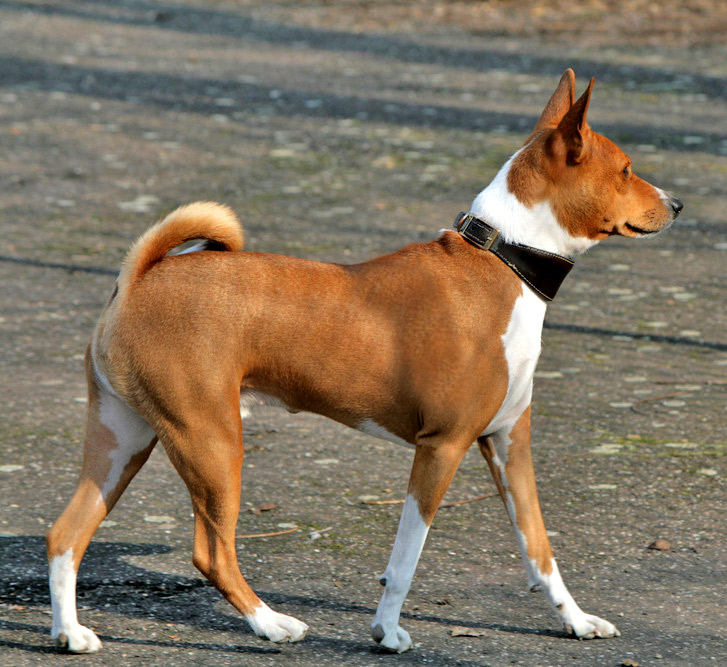
Your Basenji has a short, fine, single coat that lies tight against the body. There is no undercoat, no feathering, no furnishings, no fluff. What you see is what you get.
This coat structure is a direct adaptation to the breed's equatorial African origins. In the hot, humid forests and savannas of the Congo Basin, a heavy double coat would be a liability. The Basenji evolved a minimal coat that:
- Releases heat efficiently -- short hairs allow body heat to dissipate quickly
- Dries rapidly -- no undercoat to trap moisture in a tropical environment
- Resists parasites -- less coat means fewer hiding places for fleas and ticks
- Facilitates self-grooming -- the short, smooth texture is easy for the dog to clean with its tongue
The Self-Grooming Behavior: Nature's Design
The Basenji's famous self-grooming is not a quirky personality trait. It is an evolved survival behavior.
In their native habitat, Basenjis lived alongside humans but with significant independence. They hunted, scavenged, and survived with minimal human intervention. Self-grooming served critical functions:
- Parasite control -- regular licking and nibbling removed external parasites
- Wound care -- saliva has mild antibacterial properties
- Scent reduction -- a clean coat reduces the scent signature that could alert prey or predators
A surprising fact: researchers studying wild-living Basenjis in the Congo found that the dogs spent an average of 45 minutes per day on self-grooming behavior -- more than twice what most domesticated dog breeds exhibit. This is not learned behavior. Basenji puppies begin self-grooming at around three weeks of age, long before socialization could influence the behavior.
Basenji Shedding: The Hidden Truth
Ask the internet if Basenjis shed and you will get a lot of confident "no" answers. They are wrong.
Basenjis shed. Every dog with hair sheds. The difference is in how it presents.
Because the coat is short and fine, individual shed hairs are small and tend to embed in fabrics rather than forming visible clumps. You will not see tumbleweeds of fur rolling across your floor. What you will notice is a fine layer of short hairs on your dark clothing, your couch cushions, and your bedsheets if your Basenji sleeps with you.
Shedding increases during seasonal coat transitions in spring and fall. The coat adjusts its density (even single coats have some density variation) for temperature regulation. During these transitions, a de-shedding treatment with a rubber curry brush removes significantly more dead coat than your Basenji's self-grooming can handle.
For the numbers: the average Basenji sheds approximately the same volume of hair as a comparably sized short-coated breed like a Whippet or Italian Greyhound. The breed's reputation for minimal shedding is more about the coat's ability to hide the evidence than about actually producing less dead hair.
Skin Health: The Real Basenji Coat Concern
Because the coat is so thin and short, your Basenji's skin is more exposed to the environment than most breeds. This means skin health is a bigger concern than coat health for this breed.
Sun Sensitivity
Basenjis with lighter pigmentation -- particularly white patches -- are vulnerable to sunburn. Extended sun exposure can cause redness, peeling, and over time, increase the risk of skin damage. If your Basenji spends significant time outdoors, consider dog-safe sunscreen on lightly pigmented areas.
Dry Skin
The short coat offers minimal insulation against dry indoor air. In winter, when heating systems strip humidity from your home, Basenjis commonly develop dry, flaky skin. A humidifier in the rooms where your dog spends the most time helps significantly.
Diet also plays a major role. A diet rich in omega-3 and omega-6 fatty acids promotes healthy skin oil production, which keeps the coat shiny and the skin moisturized.
Allergic Dermatitis
Basenjis are prone to environmental allergies. Pollen, dust mites, grass, and mold can cause itching, redness, and irritation. The short coat means allergens sit directly on the skin surface with minimal barrier. Regular bathing during allergy season (every two to three weeks with a gentle, hypoallergenic shampoo) helps wash allergens off the skin.
Contact Irritation
That thin coat means your Basenji's skin contacts surfaces more directly than heavily coated breeds. Harsh detergents in bedding, chemical lawn treatments, and rough surfaces can all cause skin reactions. Use unscented, gentle detergents for anything your Basenji lies on.
Home Coat Care
Weekly Maintenance
Basenji coat care at home is simple and fast:
Bathing
Basenjis need baths less often than most breeds, but they still need them:
- Every 6 to 8 weeks under normal conditions
- Every 2 to 3 weeks during allergy season
- After exposure to mud, swimming, or something smelly
- Use a gentle, moisturizing shampoo -- the short coat means shampoo contacts the skin directly
- Dry thoroughly, especially in skin folds around the neck and underbody
Coat Supplements
A fish oil supplement (omega-3) added to your Basenji's diet does more for coat quality than any external product. It promotes skin oil production, reduces inflammation, and gives the coat that healthy gleam. Most veterinarians recommend 1,000 mg of fish oil per 30 pounds of body weight daily.
When the Basenji Coat Changes
Basenji puppies have an even shorter, softer coat than adults. The adult coat typically fills in by 6 to 8 months and reaches its full density by about a year.
Senior Basenjis may develop a slightly thinner coat, and the natural sheen can diminish. Increased omega fatty acids in the diet and more frequent moisturizing treatments during grooming help maintain coat quality in older dogs.
Some Basenjis develop minor coat thinning on the belly and inner thighs as they age. This is usually normal but worth mentioning to your vet to rule out thyroid or hormonal issues.
PawOps tracks coat condition and grooming history for every pet, helping salons deliver the right level of care whether your dog has a floor-length coat or a close-cropped Basenji jacket.