Understanding Your Australian Shepherd's Coat: What Every Owner Should Know
Understanding Your Australian Shepherd's Coat: What Every Owner Should Know
The Australian Shepherd coat is one of the breed's most striking features and also one of its most misunderstood. Whether your Aussie is a blue merle that turns heads at the dog park or a classic black tri, that coat is doing far more than looking good. It is a working system with its own rules.
Here is everything you need to know to work with your Aussie's coat instead of against it.
Australian Shepherd Coat Structure
Like most herding breeds, Aussies have a double coat consisting of two functionally different layers:
The undercoat is short, dense, and soft. It sits close to the skin and serves as insulation, keeping your dog warm in cold weather and providing a buffer against heat in summer. This layer cycles seasonally, growing thicker in fall and shedding out in spring.
The outer coat (guard hairs) is medium-length, straight to wavy, and slightly coarse. It has natural water-resistant properties that help shed rain and snow. This layer protects the undercoat and skin from UV radiation, debris, and insects.
The two layers work together as a climate control system. Air trapped between the undercoat and outer coat creates an insulating layer that works in both cold and hot weather. This is exactly why shaving the coat is counterproductive. You are removing the dog's built-in thermostat.
The Four Color Patterns
Australian Shepherds come in four recognized color patterns, each with its own visual character:
Black tri: Solid black base with white and copper trim. The most traditional Aussie look. These dogs tend to have the most consistent coat texture across the body.
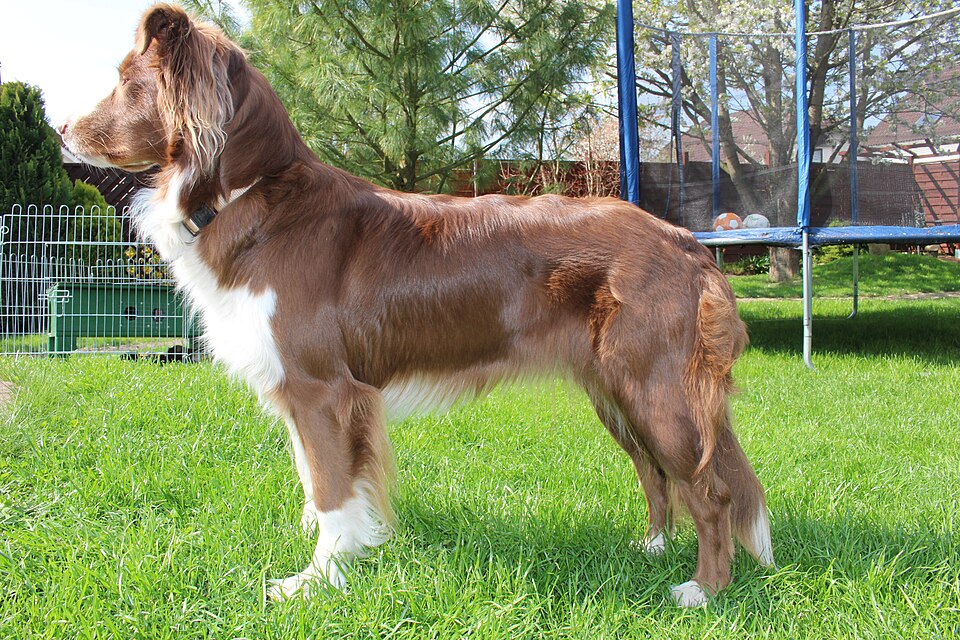
Red tri: Liver-red base with white and copper points. A striking, warm-toned coat. Red coats sometimes run slightly softer in texture than black coats.
Blue merle: Black base broken by a marbled pattern of gray and silver. Often paired with striking blue or heterochromatic eyes. The merle gene affects pigment density, which can create slight texture variations in merled versus solid areas of the same dog.
Red merle: Red base broken by a marbled cream and red pattern. Similar eye color variations as blue merles.
Here is a surprising fact that most people get wrong: the merle pattern is not a color. It is a dilution pattern created by the merle gene (M-locus) that randomly lightens patches of the base color. Each merle dog's pattern is completely unique, like a fingerprint. No two merle Aussies look exactly the same, even from the same litter.
Coat Variation Across the Body
The Australian Shepherd coat is not uniform. Different body regions have distinctly different coat characteristics:
- Head, front of legs, and ears: Short, smooth hair. Minimal grooming needed.
- Neck and chest (mane/frill): Longer, thicker fur, especially in males. This area is prone to matting where collar or harness creates friction.
- Body (back and sides): Medium-length coat that lies moderately flat. The primary shedding zone.
- Backs of front legs and rear legs (feathering/britches): Longer, flowing hair that collects debris and tangles.
- Belly: Longer, softer hair that mats easily if neglected.
- Tail: Well-feathered if natural (some Aussies have naturally bobbed tails or docked tails). Tail feathering tangles aggressively.
- Feet: Hair grows between paw pads and around toes. Needs trimming for traction and cleanliness.
Shedding Patterns and What to Expect
Aussies shed in three modes:
Daily baseline shedding happens year-round. You will find fur on your clothes, your couch, and in places fur has no business being. This is normal and manageable with regular brushing.
Seasonal coat blow hits twice a year, typically in spring and fall. The undercoat comes out in volume over a 3 to 6 week period. Spring blows tend to be heavier as the thick winter undercoat sheds. During a coat blow, daily brushing is not optional. It is survival.
Hormonal shedding occurs after spaying or neutering, during pregnancy, and sometimes during stress. Post-spay or neuter coat changes are permanent in many Aussies, resulting in a thicker, cottony texture that mats more easily.
A data point worth knowing: a study of double-coated breeds found that Aussies in temperate climates with stable indoor temperatures (think central heating and air conditioning) tend to shed more evenly throughout the year rather than having distinct seasonal blows. The artificial climate smooths out the coat's natural seasonal response.
Common Australian Shepherd Coat Issues
Matting
The most common coat issue for Aussies. Mats form in predictable hotspots: behind the ears, under the collar or harness area, in the feathering, in the armpits, and on the belly. Friction, moisture, and neglected brushing are the primary causes.Prevention: Brush 2 to 3 times per week with a slicker brush, paying extra attention to friction zones. Follow up with a steel comb to verify you have reached the skin.
Hot Spots
Aussies are active dogs that love water. A wet undercoat that does not dry completely is the most common hot spot trigger. The dense undercoat holds moisture against the skin, creating perfect conditions for bacterial growth.Prevention: Always dry your Aussie thoroughly after swimming or baths. A high-velocity dryer is a worthy investment for regular swimmers.
Coat Blowing Unevenly
Some Aussies shed their undercoat in patches rather than uniformly, creating a moth-eaten appearance for a few weeks. This looks alarming but is usually normal. If the skin underneath looks healthy (no redness, no lesions), it is just the coat cycling at different rates across the body.Sun-Bleached Tips
Aussies who spend a lot of time outdoors may develop bleached or lightened tips on the outer coat, particularly in red and black dogs. This is cosmetic and does not affect coat health, but it is sometimes mistaken for a nutritional deficiency.Your Australian Shepherd Coat Care Toolkit
Every Aussie owner needs:
The Shaving Debate: Why You Should Not Do It
Every summer, well-meaning Aussie owners consider shaving their dog to help with the heat. Do not do it.
Here is why shaving an Aussie's coat does more harm than good:
- Loss of heat protection. The double coat insulates against heat by trapping a cool air layer. Remove the coat, and your dog is exposed to direct heat.
- Sunburn risk. The outer coat blocks UV rays. Shaved Aussies can get painful sunburns.
- Improper regrowth. The undercoat and guard hairs grow at different rates. The undercoat often grows back first, creating a dense, mat-prone layer without the protective guard hairs on top.
- Potential permanent damage. Some Aussies never fully regrow their original coat texture after shaving.
Working With Your Groomer
Your groomer is your partner in coat management. Here is how to make the most of that relationship:
- Communicate your lifestyle. An Aussie that hikes daily needs different grooming than one that is primarily a house dog. Your groomer can adjust the trim and treatment plan accordingly.
- Report coat changes. If you notice thinning, texture changes, or unusual shedding patterns, tell your groomer. They may spot the cause or recommend a vet check.
- Ask about deshedding treatments. During coat blow season, targeted deshedding treatments are the single most effective service for managing your Aussie's undercoat.
Your Australian Shepherd's coat is a piece of functional engineering that deserves informed care. Understand the structure, respect the natural design, and invest in proper maintenance. The payoff is a coat that looks stunning and keeps your dog comfortable in any season.
Frequently Asked Questions
Do Australian Shepherds have hair or fur?
Aussies have fur, specifically a double coat with a soft undercoat and weather-resistant outer coat. Unlike hair (which grows continuously like a Poodle's), Aussie fur grows to a genetically determined length and then sheds.How bad is Australian Shepherd shedding really?
Moderate to heavy year-round with significant seasonal coat blows twice a year. During coat blow, expect to brush out substantial amounts of undercoat daily for 3 to 6 weeks. A good robot vacuum becomes your new best friend.Can I reduce my Australian Shepherd's shedding?
You cannot eliminate it, but you can manage it. Regular brushing, professional deshedding treatments, a healthy diet with omega fatty acids, and keeping the coat clean all reduce the amount of loose fur in your home.Why does my Aussie's coat look different after being spayed or neutered?
Hormonal changes from spaying or neutering can alter coat texture in many Aussies. The coat often becomes thicker, softer, and more cotton-like. This spay coat mats more easily and requires more frequent grooming.Is there a difference between an Australian Shepherd coat and a Mini Aussie coat?
Miniature American Shepherds have the same double coat type and color patterns as standard Australian Shepherds. The only difference is the overall amount of coat due to smaller body size. Grooming needs and approach are identical.---
Ready to streamline your grooming workflow? PawOps Board Manager helps salons track every Australian Shepherd from check-in to pickup with real-time visibility. Start your free 30-day trial →