Understanding Your Aussiedoodle's Coat: The Complete Owner's Guide
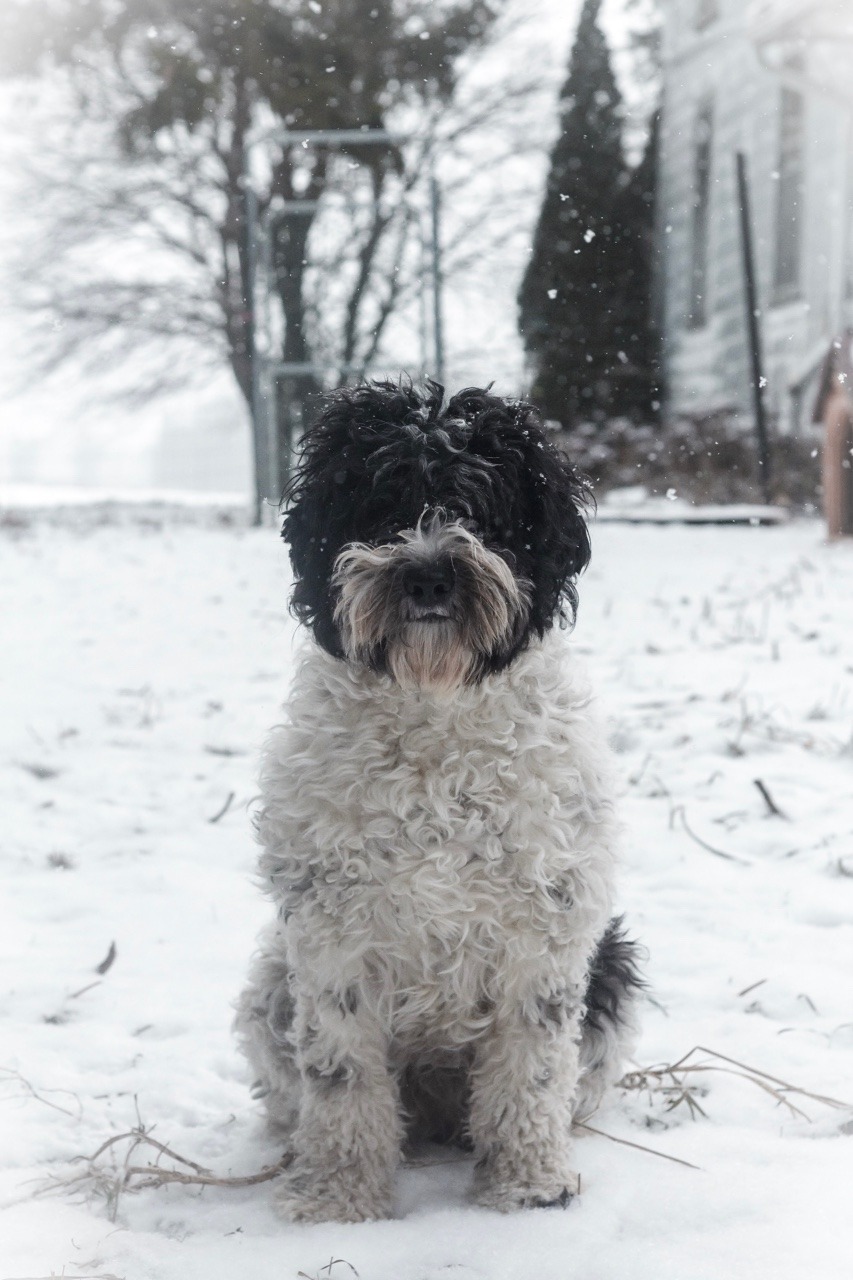
Understanding Your Aussiedoodle's Coat: The Complete Owner's Guide
The Aussiedoodle coat is one of the most visually stunning in the doodle world. Between the potential for merle patterns, tri-color markings, and that fluffy texture, they're showstoppers. But all that beauty requires understanding -- because your Aussiedoodle's coat type dictates everything from brushing frequency to grooming costs to daily maintenance. Use our free pricing calculator →
Here's what every Aussiedoodle owner needs to know about that magnificent coat.
Two Breeds, One Wildly Variable Coat
An Aussiedoodle comes from crossing an Australian Shepherd with a Poodle. Both parent breeds contribute dramatically different coat genetics:
- Australian Shepherd: Double coat with a medium-length, weather-resistant outer layer and a dense undercoat. Sheds moderately to heavily, especially seasonally.
- Poodle: Single-layer coat of tight, continuously growing curls. Very low shedding. Requires regular haircuts.
The Three Aussiedoodle Coat Types
1. Curly Coat
Closest to the Poodle parent. Tight, dense curls throughout the body.
- Sheds the least -- ideal for allergy-conscious families
- Mats the fastest without daily brushing
- Grows continuously and needs haircuts every 4-6 weeks
- Tends to be the densest and most time-consuming to groom
2. Wavy Coat
The most common coat type in Aussiedoodles. Soft, flowing waves that can range from loose to tight.
- Sheds lightly to moderately
- Mats less aggressively than curly coats but still tangles, especially in friction zones
- Needs professional grooming every 4-6 weeks
- Often has the most visually striking appearance, especially with merle patterning
3. Straight (Flat) Coat
Closest to the Australian Shepherd parent. Hair lies flat or has a very slight wave.
- Sheds the most of the three types
- Less prone to severe matting but still needs regular brushing
- May have an undercoat that blows out seasonally
- Needs professional grooming every 6-8 weeks
The Aussiedoodle Coat and Color: Why It Matters for Grooming
Aussiedoodles are famous for their color patterns, and here's something many owners don't connect: coat color can affect coat care.
Merle-patterned Aussiedoodles -- those with the swirled, marbled coloring in blue merle or red merle -- carry a gene that can also affect skin pigmentation. Areas of lighter coloring may have thinner, more sensitive skin. This means:
- Harsh grooming products can cause irritation more easily
- Matting in light-pigmented areas can lead to faster skin damage
- Sun exposure on closely-trimmed light areas may require extra attention
The Coat Transition: Puppy to Adult
Every Aussiedoodle goes through a coat change, typically between 6 and 14 months old. The timing is a bit wider than some doodle breeds because the Australian Shepherd influence adds variability.
During the transition:
- The soft puppy coat sheds out while the adult coat grows in
- Two coat textures coexist, creating a perfect storm for matting
- Brushing time doubles or triples
- Your dog may look a bit scruffy for a few weeks -- that's normal
This is exactly why professional grooming during the transition period is critical. A groomer manages the shedding puppy coat, prevents matting, and helps you adjust your care routine as the adult coat comes in.
How Aussiedoodle Generation Affects Coat
| Generation | Cross | Typical Coat | |------------|-------|--------------| | F1 | Aussie x Poodle | Most variable -- any type possible | | F1B | F1 x Poodle | Mostly curly or wavy, lower shedding | | F1BB | F1B x Poodle | Almost always curly, minimal shedding | | F2 | F1 x F1 | Very unpredictable | | Multigen | Various crosses | Depends on breeding goals |
F1B Aussiedoodles are the most popular for families who want low shedding, but they also come with the highest grooming commitment.
Daily and Weekly Aussiedoodle Coat Care
Your home care routine is the foundation that makes professional grooming effective. Without it, you're fighting an uphill battle.
Essential tools:
- Slicker brush: Your primary detangling tool. Use it on every section of the coat.
- Metal greyhound comb: The truth-teller. If the comb glides through, you've brushed thoroughly. If it catches, you've got tangles hiding underneath.
- Detangling spray: Reduces friction and makes brushing more comfortable for your dog.
- Pin brush: Useful for straight and wavy coats as a finishing tool.
- Curly: Daily brushing, 15-20 minutes. Use line-brushing technique (part the hair, brush from skin outward in sections).
- Wavy: 3-4 times per week, 10-15 minutes. Focus on mat-prone areas: behind ears, armpits, groin, and where the collar sits.
- Straight: 2-3 times per week, 10 minutes. During seasonal shedding, increase to daily.
Trouble Spots: Where Aussiedoodle Coats Mat First
Not all parts of the coat mat equally. Focus your attention on these areas:
Check these spots every brushing session. Even if the rest of the coat looks fine, these areas can go from smooth to matted in just a few days.
When to Call the Professionals
Home care keeps the coat manageable, but certain tasks belong to the pros:
- Full haircuts and shaping -- achieving an even cut on a curly or wavy coat requires professional tools and training
- Ear canal hair removal -- pulling hair from inside the ear canal prevents infections but should be done carefully
- High-velocity drying -- the only way to fully separate the coat and remove loose undercoat
- Sanitary trimming -- precise work in sensitive areas
- Coat and skin assessment -- groomers catch issues you can't see
Seasonal Considerations for Aussiedoodle Coats
- Spring/Summer: Aussiedoodles with any undercoat influence will shed more. Consider a shorter cut to keep them comfortable in heat.
- Fall/Winter: The coat thickens. Don't skip grooming -- a thicker coat mats faster if not maintained.
- Swimming season: If your Aussiedoodle loves water, rinse and dry them thoroughly after every swim. Chlorine, salt, and even lake water can damage the coat and accelerate matting.
Your Aussiedoodle's Coat Is a Conversation
Think of your Aussiedoodle's coat as an ongoing conversation between you, your dog, and your groomer. The coat tells you how your dog is doing -- a shiny, smooth coat signals good health; a dull, tangled coat signals something needs attention.
Learn to read it. Commit to the brushing routine. Partner with a groomer who understands doodle breeds and their unique coat challenges.
Your Aussiedoodle's coat is work, no question. But when it's properly maintained, it's one of the most beautiful coats in the dog world -- and your dog will be healthier and happier for the effort you put in.
---
Ready to streamline your grooming workflow? PawOps Board Manager helps salons track every Aussiedoodle from check-in to pickup with real-time visibility. Start your free 30-day trial →