Why Your American Water Spaniel Needs Professional Grooming (That Curly Coat Has Rules)
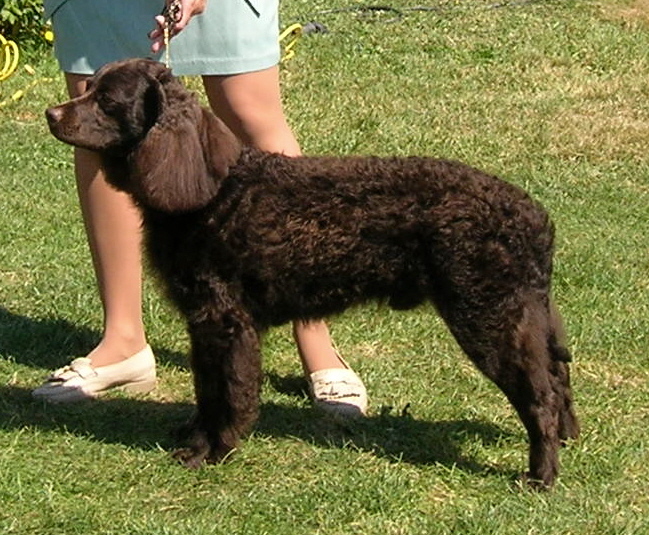
Why Your American Water Spaniel Needs Professional Grooming (That Curly Coat Has Rules)
The American Water Spaniel is Wisconsin's state dog, one of the rarest AKC breeds with only a few thousand registered in the entire country, and the owner of one of the most functionally unique coats in the sporting group. That dense, curly-to-wavy coat was engineered by decades of Midwest waterfowl hunting to repel ice-cold lake water while keeping the dog warm in freezing marshes.
It is also a coat that absolutely requires professional grooming. Here is why.
A Coat Built for Water, Not for Neglect
The American Water Spaniel's coat comes in two accepted textures: uniform curls or marcel waves (a consistent wave pattern). Both textures feature a dense, oily outer layer over a thick, protective undercoat. The coat feels different from most spaniel coats -- there is a distinctly oily, water-repellent quality that you notice immediately when you touch it.
This oiliness is not a sign of a dirty dog. It is a built-in feature. The natural oils in the coat create a waterproof barrier that allows the dog to work in cold water without the coat becoming waterlogged. It is similar in principle to the coat of a Portuguese Water Dog or an Irish Water Spaniel, though the texture is distinctly its own.
The challenge? That oily, curly, dense double coat mats easily, traps debris, and develops odor faster than flat-coated breeds. Without professional grooming, the coat's functional advantages become health liabilities.
What Professional Grooming Handles
Deep Cleaning Through the Oil Barrier
The AWS coat's natural oils resist water penetration. This is great in a duck marsh. It is less great in a bathtub. Home baths often fail to fully clean an American Water Spaniel because the water and shampoo bead off the oily outer coat without reaching the skin and undercoat.
Professional groomers use degreasing shampoos and higher water pressure to work through the oil barrier. They know to lather twice -- the first wash breaks through the oil, the second actually cleans. According to grooming professionals who work with oily-coated breeds, a single wash on an American Water Spaniel removes roughly 60% of the dirt. The second pass gets the remaining 40%.
Curl and Wave Maintenance
The curl pattern in an AWS coat is not like a Poodle's. It is looser, coarser, and sits over a dense undercoat. When the curls are not maintained, they lock together and form rope-like mats that extend from the skin outward. These mats are structurally different from the flat mats you see in straight-coated breeds -- they are cylindrical, tight, and extremely difficult to detangle without cutting.
Professional groomers use specific techniques for curly coats: they brush the curls while damp (never dry, which causes breakage and frizz), use conditioning products that maintain the curl pattern, and trim strategically to prevent matting in high-friction areas.
Undercoat Removal
The AWS undercoat is dense and insulating. During seasonal changes, dead undercoat needs to come out. If it stays, it compresses against the skin, traps moisture, and creates a breeding ground for bacteria and yeast. Professional high-velocity dryers are the most effective tool for blasting out dead undercoat without disturbing the curl pattern of the topcoat.
Ear Care for a Water Dog
American Water Spaniels have drop ears covered in curly fur. They are also dogs that love water. This combination -- pendant ears, dense fur, and frequent water exposure -- creates a nearly perfect environment for ear infections. The ASPCA and multiple breed club health resources identify chronic ear infections as one of the most common health issues in the breed.
Professional groomers clean the ear canal, remove excess curly hair from the ear opening to improve airflow, and check for early signs of trouble. For a water-loving breed, this ear maintenance is genuinely critical.
Skin Assessment on an Oily-Coated Breed
The oily coat can mask skin conditions. Seborrhea (overproduction of skin oils), hot spots, and fungal infections all develop more readily in oily, dense coats. During professional grooming, the coat is parted and the skin examined. Many skin issues in American Water Spaniels are caught by groomers before owners notice any symptoms.
The Real Consequences of Skipping the Groomer
American Water Spaniel owners who let grooming slide see these problems:
- Matting becomes structural. Curly coat mats are tenacious. Once they form, they do not loosen -- they tighten. Severe matting requires complete shave-down, which exposes skin that has no sun protection.
- Odor intensifies. The natural coat oils, combined with trapped dead undercoat and environmental debris, create a smell that gets worse over time. This is not a hygiene failure by the dog -- it is a maintenance failure by the owner.
- Ear infections become chronic. Without regular cleaning and hair management, infections recur. Chronic ear infections can cause permanent damage to the ear canal.
- Skin conditions hide. Hot spots, yeast infections, and dermatitis flourish under a neglected coat. The dense, oily coat conceals them until they are advanced.
How Often Should an AWS Be Professionally Groomed
American Water Spaniels generally need grooming every five to seven weeks:
| Lifestyle | Frequency | Notes | |-----------|-----------|-------| | House pet, minimal water exposure | Every 6-7 weeks | Standard maintenance | | Active swimmer or hunter | Every 4-5 weeks | More ear care, more thorough drying | | During shedding season | Every 5 weeks | Undercoat removal is priority |
Between appointments, brush the coat two to three times per week with a slicker brush while the coat is lightly dampened. Check ears weekly, especially after swimming.
Finding a Groomer for a Rare Breed
With only a few thousand American Water Spaniels in existence, most groomers have never worked with one. Look for experience with:
- Irish Water Spaniels or Portuguese Water Dogs -- similar coat types
- Curly-coated retrievers
- Any oily or waterproof-coated breed
- Groomers comfortable working with curl patterns rather than straightening them
An Interesting Coat Detail
Here is a fact that even some AWS owners do not know: the American Water Spaniel's coat color can appear to change depending on whether it is wet or dry. The breed comes in liver, brown, or dark chocolate, and when the coat is wet, it often looks significantly darker -- sometimes nearly black. As it dries, the color lightens. This is caused by the way water interacts with the coat's natural oil layer and the curl structure. Groomers see this shift in real-time during the bathing and drying process. It is one of the breed's more charming quirks.
PawOps helps grooming salons assess curly and waterproof-coated breeds using condition scoring and coat type analysis, ensuring your American Water Spaniel gets the specialized care their unique coat demands.
Related Reading: