Understanding Your American Water Spaniel's Coat: The Complete Guide
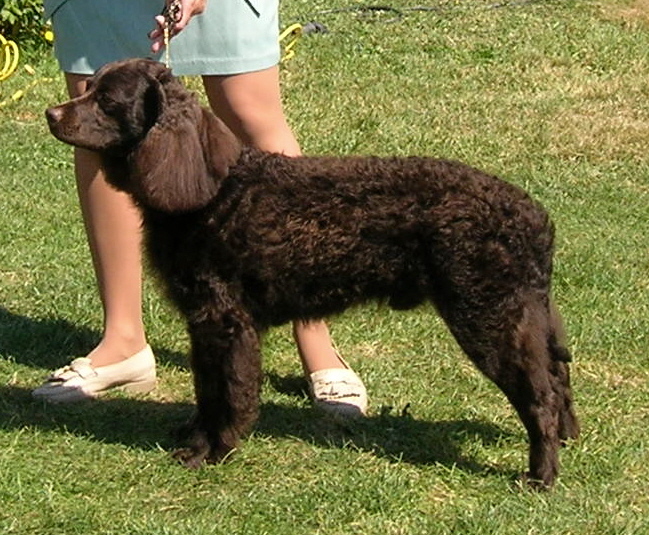
Understanding Your American Water Spaniel's Coat: The Complete Guide
The American Water Spaniel wears one of the most purposefully engineered coats in dogdom. Every curl, every oil gland, every dense undercoat fiber exists because generations of Midwest hunters needed a dog that could retrieve ducks from freezing Wisconsin lakes and keep working all day without becoming waterlogged or hypothermic.
Understanding this coat is not just about grooming -- it is about appreciating a piece of living American sporting heritage. Fewer than 3,000 of these dogs exist. If you own one, you are stewarding something genuinely rare.
Two Accepted Coat Types
The AKC breed standard recognizes two distinct coat textures in American Water Spaniels:
Marcel Wave
The marcel wave pattern is a uniform, consistent wave that runs across the entire body. Named after the marcel wave hairstyling technique from the early 1900s, this pattern creates regular, repeating waves rather than tight curls. The coat lies closer to the body than the curly variety and tends to look slightly neater.
Marcel-waved AWS coats are generally slightly easier to maintain because the waves tangle less readily than tight curls. However, they still have the breed's characteristic oiliness and dense undercoat.
Uniform Curls
The curly variety features consistent, tight to medium curls across the body. The curls are coarser than a Poodle's and looser than an Irish Water Spaniel's. They form a protective, springy layer over the dense undercoat.
Curly AWS coats mat more readily than the marcel variety because the curl structure creates more contact points between adjacent hairs. They require more frequent brushing and careful drying technique.
Both coat types are equally correct for the breed and equally functional in water. The texture your dog has is determined by genetics, and puppies from the same litter can have different coat textures.
The Oil Factor
This is what makes the AWS coat truly unique among spaniels. The breed has more active sebaceous glands than most dog breeds, producing a natural oil that saturates the outer coat. This oil is the waterproofing system.
Here is how it works: the oil coats each individual hair, creating a hydrophobic surface. When the dog enters water, the outer coat repels most of the water, keeping the dense undercoat and skin relatively dry. The dog can swim for extended periods in cold water without losing body heat the way a non-waterproof-coated breed would.
The practical implications for owners:
- The coat feels oily to the touch. This is normal and healthy. It should feel slightly greasy, not soaking wet with oil.
- Standard shampoo slides off. You need a degreasing shampoo to actually clean through the oil layer.
- The coat holds scent. The oils trap body odor and environmental smells. AWS are known for having a stronger "dog smell" than many breeds. Regular professional grooming manages this.
- Skin conditions can hide. The oily environment can mask or promote certain skin issues, including seborrhea and yeast overgrowth.
The Undercoat Layer
Beneath the oily, curly or wavy outer coat sits a dense, soft undercoat. This layer provides thermal insulation, keeping the dog warm in cold water and cool in moderate heat. The undercoat is not oily -- it is dry and fluffy, creating an air layer against the skin.
The undercoat sheds seasonally, with heavier shedding in spring as the winter undercoat releases and a lighter shed in fall as the summer undercoat is replaced. During these transitions, dead undercoat gets trapped within the curly outer coat. If not removed, it packs into dense mats against the skin.
This is fundamentally different from shedding in straight-coated breeds. When a Labrador sheds, loose fur falls away from the body (onto your couch). When an AWS sheds, loose undercoat stays trapped in the curls. It has nowhere to go without intervention.
Color Characteristics
American Water Spaniels come in three accepted colors: liver, brown, and dark chocolate. Some have small white markings on the chest or toes, though excessive white is not desirable per the breed standard.
The oily coat creates an interesting visual effect: the color appears darker when the coat is oily and lighter as the oils are reduced through bathing. A freshly degreased AWS can look noticeably lighter than the same dog with full natural oils. Similarly, the coat appears significantly darker when wet -- sometimes nearly black -- and lightens as it dries.
A Surprising Coat Fact
Here is something genuinely fascinating about the AWS coat: the oil production is partly responsive to environment. Dogs that swim regularly and are exposed to cold water tend to produce more coat oil than dogs living as indoor pets in temperate climates. Breeders and longtime AWS owners have observed this for generations, and veterinary dermatologists confirm that sebaceous gland activity can be influenced by temperature exposure and water contact. This means a working AWS and a pet AWS of the same bloodline can have noticeably different coat textures and oil levels. It also means that an AWS that transitions from a hunting lifestyle to retirement may develop a drier coat over time.
Common Coat Challenges
Matting in the Curls
The number one coat issue. Curly AWS coats mat wherever friction occurs: behind the ears, in the armpits, between the hind legs, under the collar, and around the feet. Marcel-waved dogs mat less but are still susceptible in these areas.
Prevention: brush two to three times per week with a slicker brush on a lightly dampened coat. Check high-friction areas with a steel comb after brushing.
Seborrhea
Some AWS develop seborrhea -- an overproduction of skin oils beyond the breed's normal oiliness. Signs include excessively greasy or flaky skin, increased odor, and coat that looks perpetually dirty even after bathing. This is a medical condition that requires veterinary management alongside grooming adjustments.
Post-Swimming Coat Care
After swimming, the coat holds water in the undercoat even though the outer layer appears to shed it. If not dried properly, this trapped moisture creates an environment for bacterial growth and hot spots. Always towel-dry thoroughly after swimming and, ideally, use a high-velocity dryer to remove moisture from the undercoat.
Ear Canal Moisture
Water breeds with drop ears are essentially engineered for ear infections. The curl-covered ear flaps seal moisture in the canal after swimming. Ear drying solution after every water exposure is not optional for this breed.
Home Care Essentials
Your toolkit for an American Water Spaniel:
- Slicker brush: For regular coat maintenance. Use on a dampened coat.
- Steel comb: For checking mats in tight areas.
- Undercoat rake: Essential during shedding seasons.
- Spray bottle with water or light conditioner: Dampen the coat before brushing.
- Ear cleaning and drying solution: Weekly minimum, after every swim.
- Chamois or microfiber towel: More effective than cotton towels on oily coats.
The Brushing Approach That Works
Two to three times per week (15-20 minutes):
This routine, combined with professional grooming every five to seven weeks, keeps the AWS coat functional, comfortable, and healthy.
PawOps helps grooming salons assess curly and waterproof-coated breeds using condition scoring and coat type analysis, ensuring your American Water Spaniel gets the breed-specific care their unique coat requires.
Related Reading: